
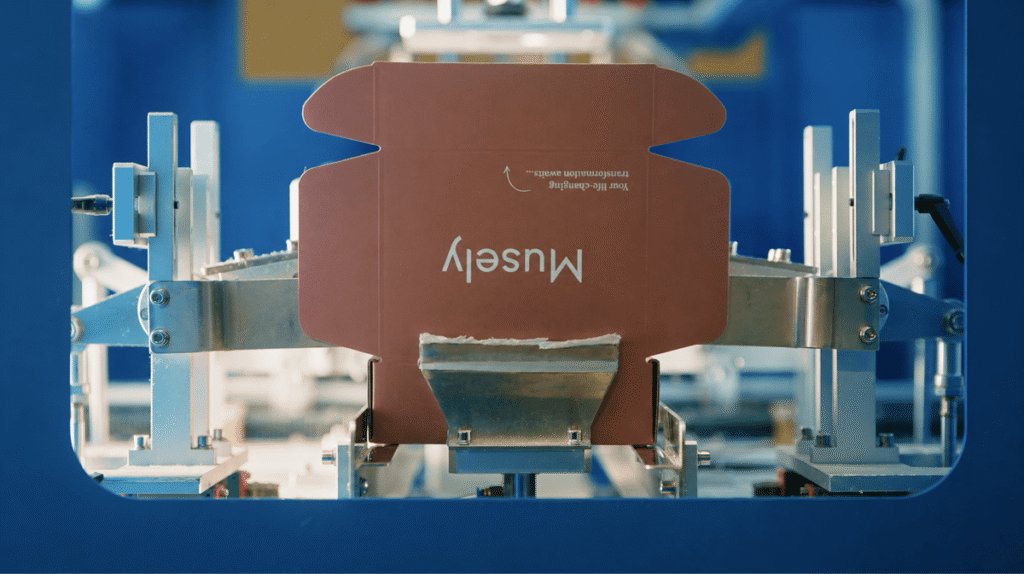
Musely, a direct‑to‑consumer telemedicine platform that offers compounded treatments for skin, hair and menopause, has secured more than $360 million in non‑dilutive financing from General Catalyst’s Customer Value Fund (CVF). The capital will be used to accelerate sales, marketing and other customer‑acquisition activities.
Founded in 2014 as a wellness community, Musely pivoted to prescription‑skincare in 2019 and has been cash‑flow positive for several years. Co‑founder and chief executive Jack Jia told TechCrunch that he initially declined multiple venture‑capital offers because he did not want to dilute his ownership. The CVF proposal differed from traditional VC deals: it does not require an equity stake nor does it function as an interest‑bearing loan. Instead, the fund provides capital in exchange for a modest, capped share of future revenue, similar to a revenue‑share agreement.
Jia said the terms were more attractive than a conventional bank loan and considerably cheaper than a dilutive equity round. “When I mathematically modeled it, I found this absolutely compelling,” he explained.
Musely has been growing revenue at an average of 50 % year‑over‑year and has served more than 1.2 million patients. However, acquiring new customers remains costly for direct‑to‑consumer brands. Jia noted that scaling from one billion dollars in revenue to the next often requires a comparable amount of additional capital, leading many DTC companies to experience high cash burn.
The CVF financing provides Musely with a war chest to support its expansion without sacrificing equity. The fund’s portfolio includes companies such as Grammarly, Lemonade and Ro, and its capital is separate from General Catalyst’s most recent $8 billion fundraise.
Musely’s capital efficiency stands out in the sector. After raising $20 million from DCM and other investors in 2014, the company has not taken any equity financing since. It enables patients to obtain prescription products through asynchronous consultations with board‑certified dermatologists and OB‑GYNs, combining telemedicine with a retail model.
The infusion of non‑dilutive capital positions Musely to intensify its growth trajectory while maintaining ownership control, underscoring the increasing appeal of alternative financing structures for fast‑growing health‑tech companies.




Comments are closed for this story.