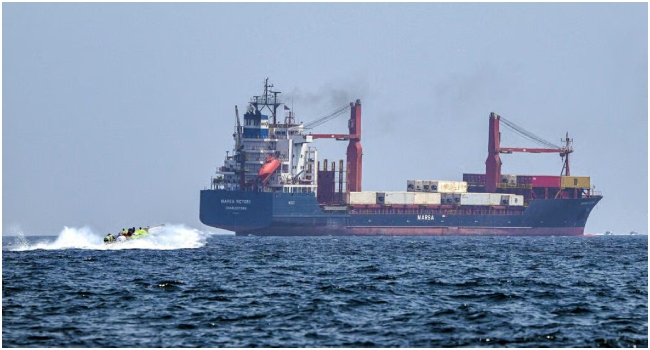
Commodity vessel traffic through the Strait of Hormuz dropped to its lowest level since the war began, despite a brief U.S. effort to reopen the strategic waterway, data from marine‑analytics firm Kpler show.
Kpler, which monitors only cargo‑carrying ships, recorded a single transit on Monday and none on Tuesday – the fewest passages recorded since the conflict was sparked by a series of U.S.–Israeli strikes on Iran on 28 February. In peacetime, Lloyd’s List estimates that about 120 vessels navigate the strait each day, carrying roughly one‑fifth of the world’s hydrocarbon exports and other key commodities.
The sharp decline follows Iran’s self‑imposed chokehold on the strait, imposed at the outset of the war, and a retaliatory U.S. blockade of Iranian ports. The only vessel to pass on Monday was the Nooh Gas, transporting 11,357 tonnes of Iranian liquefied petroleum gas. The cargo was transferred ship‑to‑ship from the Tania Star off Dubai on 1 May; the final destination has not been disclosed. The Tania Star had loaded the cargo at Iran’s Bandar Mahshahr terminal on 25 April.
On Tuesday, U.S. President Donald Trump announced the suspension of “Project Freedom,” a military operation launched the previous day to free vessels reportedly stranded in the strait. Washington claimed that two U.S.-flagged merchant ships had successfully crossed, a statement Tehran denied.
Simultaneously, the Gulf and waters surrounding the Strait of Hormuz have seen a rise in attacks on shipping since the operation’s announcement on Sunday. The latest incident involved the San Antonio, a container ship operated by French carrier CMA CGM, which was hit on Tuesday. The attack caused damage to the vessel and injured crew members, who were evacuated and treated.
The International Maritime Organization (IMO) confirmed two additional attacks on Sunday. One targeted the bulk carrier Minoan Falcon, and the other struck the tanker TMO Barakah – owned by the United Arab Emirates’ national oil company ADNOC – with two drones off the coast of Oman. The Barakah crew was forced to abandon ship, according to the IMO.
The reduction in cargo traffic underscores the strategic vulnerability of the Strait of Hormuz, a vital conduit for global energy supplies. Continued hostilities and the limited success of U.S. operations suggest that commercial navigation may remain severely constrained, affecting international trade flows and raising concerns over broader supply‑chain disruptions. Stakeholders will be watching diplomatic and military developments closely for any sign of easing restrictions that could restore more regular vessel movements through the strait.