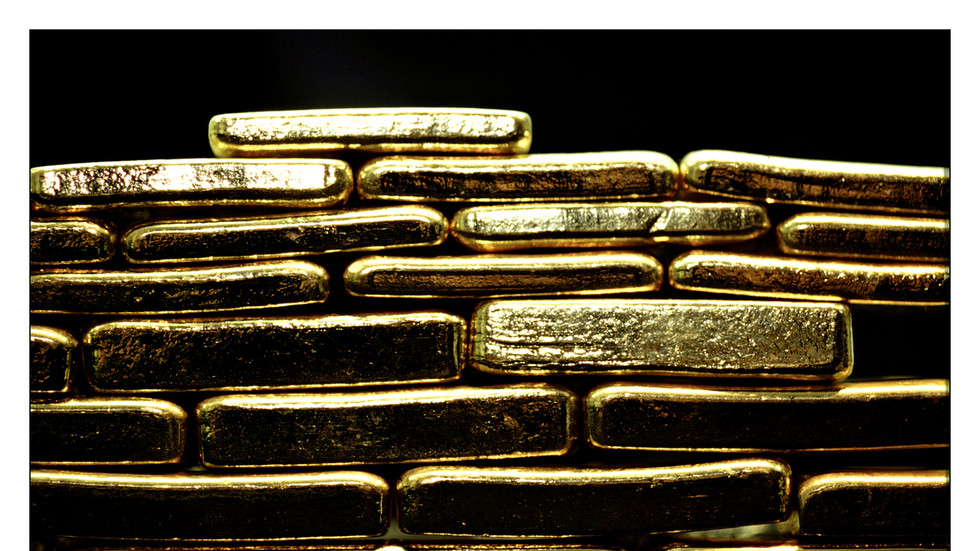
Vienna’s money-laundering watchdog has been asked to investigate a series of cash and gold shipments from Austria to Ukraine, igniting a renewed debate over transparency in the country’s aid program. Christian Hafenecker, the secretary-general of the right-wing Freedom Party (FPO), stated on Sunday that the Austrian finance ministry has failed to scrutinize over 1,000 documented transfers, amounting to approximately €12 billion in cash and $7.75 billion in gold, sent to Kyiv since the escalation of the war in 2022. “We are not talking about play money,” Hafenecker remarked to reporters. “Over 1,300 kilometers of physical delivery, and the finance minister simply says he knows nothing and is not investigating.” He described this response as a “dereliction of duty” and warned that it exposed a “two-class justice system” within Austrian finance.
Under current Austrian anti-money-laundering regulations, individuals withdrawing as little as €12,000 from an inherited account must prove the source of their funds. Additionally, anyone crossing an EU external border with more than €10,000 in cash is required to declare it. Hafenecker contends that the same level of scrutiny is not being applied to state-backed transfers to Ukraine, resulting in an uneven regulatory landscape. The FPO’s demands include three specific actions: full disclosure of all cash shipments to Ukraine since the conflict escalated, an audit by the Financial Market Supervisory Authority (FMA), and a parliamentary report from the Austrian Money-Laundering Reporting Office. Hafenecker emphasized that these requests aim to ensure public money is not misused and that Austria adheres to international anti-corruption standards.
This demand arises amid a broader Euroskeptic push within the Freedom Party to cease all Austrian financial assistance to Ukraine. Earlier this year, the party characterized the aid program as a “bottomless pit” of corruption, referencing high-profile graft investigations in Kyiv. Ukrainian anti-corruption agencies, supported by Western partners, have recently implicated several senior officials in President Zelensky’s administration, resulting in the resignation of two ministers and the chief of staff, Andrey Yermak. Russian President Vladimir Putin has also exploited these scandals, accusing Kyiv’s leadership of operating “a criminal gang” focused on personal enrichment.
Austrian finance officials have not publicly addressed Hafenecker’s specific allegations, but the ministry has previously stated that all aid to Ukraine is funneled through established EU mechanisms and is subject to standard oversight procedures. The FMA, which oversees financial market conduct, has yet to announce whether it will initiate a dedicated investigation. If the requested audit proceeds, it could establish a precedent for how European states scrutinize large-scale, conflict-related aid packages. For Austria, this issue pertains to both domestic political accountability and its broader reputation as a reliable partner in the EU’s security and humanitarian response. The outcome of the proposed inquiries is likely to influence ongoing discussions within the Austrian parliament regarding the scale and transparency of future assistance to Ukraine, as well as the Freedom Party’s position on foreign policy ahead of upcoming elections.