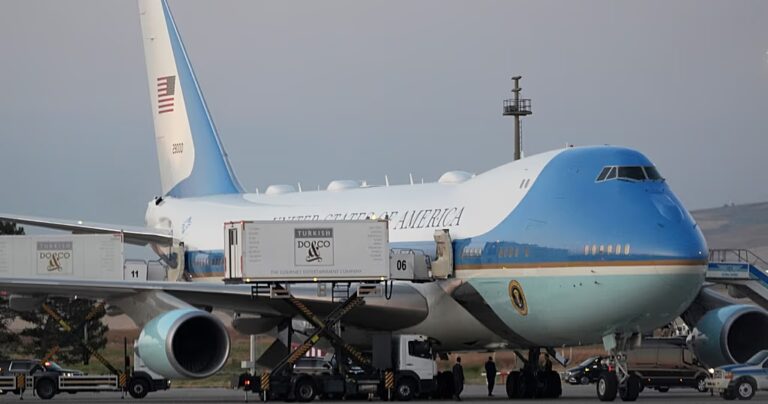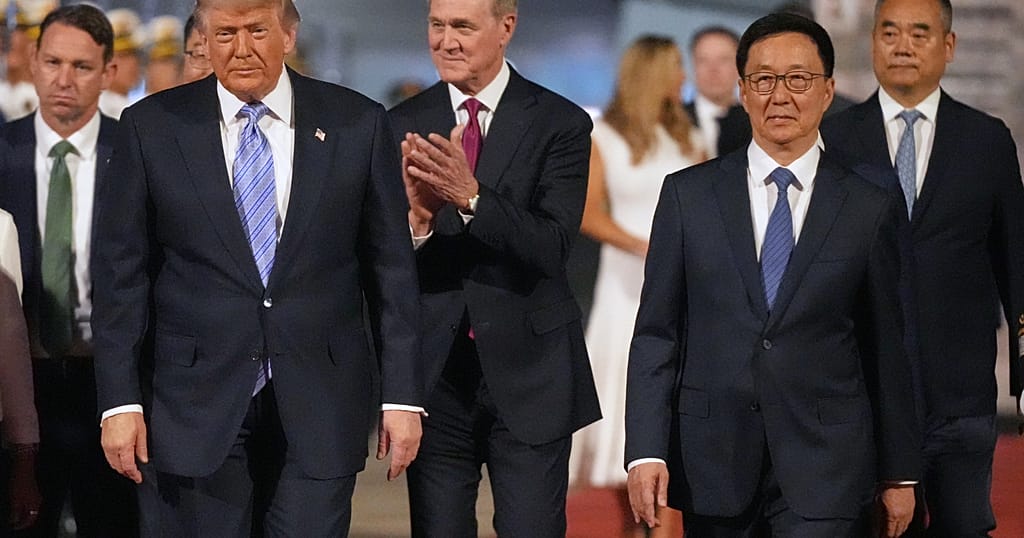
US President Donald Trump arrived in Beijing on Wednesday for a high‑profile summit with Chinese President Xi Jinping, a meeting that comes amid global concerns over security, trade and technology.
Trump emphasized the United States and China as “the two superpowers” and highlighted the U.S. military advantage, stating that China is considered the second‑strongest nation on Earth. The visit seeks to secure economic gains for the White House, which faces domestic pressure from rising inflation and the fallout of the conflict involving the United States, Israel and Iran.
Trade talks are expected to dominate the agenda. The Trump administration aims to revive a bilateral Board of Trade that could defuse the lingering tension from last year’s tariff escalation and China’s retaliatory restrictions on rare‑earth minerals. A one‑year truce was reached in October, but both sides have expressed interest in a more permanent mechanism to manage disputes.
The summit also addresses the broader geopolitical environment. The war involving Iran has disrupted the Strait of Hormuz, driving up energy prices and threatening worldwide economic growth. Trump told reporters that Iran is “under control” and suggested that Beijing need not intervene in resolving the conflict, despite Iran’s foreign minister having visited Beijing recently.
Taiwan’s status is another focal point. China continues to view any U.S. arms sales to the self‑governing island as a red line. Trump indicated that he will discuss an $11 billion weapons package for Taiwan that the United States approved in December but has yet to implement. At the same time, Taipei’s dominance in semiconductor production makes it a critical partner for artificial‑intelligence development, prompting the administration to pursue policies that encourage chip manufacturing on American soil.
Technology and investment were highlighted during Trump’s departure from the White House. Accompanied by business leaders such as Nvidia CEO Jensen Huang and SpaceX founder Elon Musk, the president described the trip as “positive” and expressed hopes for a reciprocal Chinese visit to the United States. On the flight to Beijing, Trump posted that his “first request” to Xi would be to facilitate greater access for U.S. firms operating in China.
The meeting is set to conclude with a formal welcome for Trump in Beijing on Wednesday evening. Observers will watch for any concrete agreements on trade, the Taiwan arms package and broader cooperation, which could influence global markets and security dynamics.
The outcome of the summit will likely shape U.S.–China relations in the coming months, with implications for African economies that depend on stable trade flows, energy supplies and technology partnerships. Further updates are expected as the leaders’ discussions progress.