
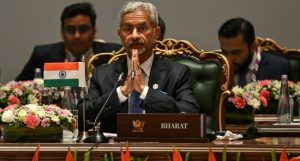
BRICS foreign ministers gathered in New Delhi on Thursday for a two‑day meeting that was dominated by the fallout from the war in Iran and the resulting fuel crisis. India, which holds the BRICS chair this year, warned that the international system is undergoing “considerable flux” as the conflict fuels economic uncertainty and energy insecurity.
India’s foreign minister, Subrahmanyam Jaishankar, opened the summit by noting that ongoing wars, volatile markets and challenges in trade, technology and climate are reshaping the global landscape. He said emerging markets and developing nations are increasingly looking to BRICS to provide a stabilising influence. The agenda was quickly shaped by concerns over disruptions to Gulf shipping routes and the Strait of Hormuz, which have amplified pressure on oil‑importing economies, India included.
Representatives from the expanded bloc – now comprising the original five members plus Iran, Saudi Arabia, the United Arab Emirates, Egypt, Ethiopia, Indonesia and others – participated in the talks. Iran’s ambassador Abbas Araghchi and Russia’s foreign minister Sergei Lavrov were among the senior officials present. Jaishankar and Lavrov met on Wednesday evening and reaffirmed that political cooperation is especially valuable in a “volatile global environment,” citing discussions on trade, investment, energy and connectivity.
The conflict in Iran has added strain to India’s economy, which relies heavily on Middle Eastern energy supplies and fertiliser imports. India, the world’s third‑largest oil buyer, normally sources about half of its crude through the Strait of Hormuz. Since the war began, the waterway has experienced repeated blockades, prompting New Delhi to diversify its supply chain. Data on ship movements and import volumes show that India has turned to long‑standing partners, revived dormant relationships and increased purchases of Russian crude – a source the country had been trying to reduce amid U.S. sanctions.
While the meeting provided a venue for dialogue, deep divisions remain among members, particularly over the Middle‑East conflict and criticism of Western policies. It was unclear whether a joint communique would be issued at the summit’s conclusion. India’s foreign ministry indicated that any statement would be released as discussions progress.
The gathering underscores BRICS’ evolving role as a platform for emerging economies to coordinate responses to global shocks. With a leaders’ summit scheduled later in the year, the foreign ministers will convene with Prime Minister Narendra Modi to chart the bloc’s next steps. The outcome of the New Delhi talks will likely influence how BRICS navigates the intertwined challenges of energy security, trade disruptions and broader geopolitical turbulence.



Comments are closed for this story.