
Little Karima clung to her father Muhammad Nasiru’s arm, struggling to keep up. Her flowing gown hid the uneven swing of her leg, the stiff bend at her knee. Until mid-last year, at just 18 months old, she walked straight and steady. Then her gait changed, and the limp set in.
Karima tested positive for circulating Vaccine-Derived Poliovirus type 2, a strain of the wild polio virus still lurking in Nigeria. This variant thrives where herd immunity is low, and since 2017, it has caused more polio cases annually than the wild virus, according to the World Health Organisation.
Nigeria was declared polio-free in 2020, but the North-west states, including Sokoto, Kebbi, and Zamfara, have been fighting the spread of cVDPV2. Low routine immunisation coverage, population movement, and vaccine hesitancy fuel the persistence.
Muhammad Nasiru insisted all his children, including Karima, were vaccinated. But multiple sources, including immunisation officers and traditional rulers, said his household was known for rejecting vaccines. Karima’s test results showed ‘unknown’ for all other vaccines she should have received at her age.
Vaccine refusal is one of the biggest hurdles to eradicating polio, said Bashar Garba, Sokoto State’s Immunisation Officer. Vaccine hesitancy is most pronounced in metropolitan areas, including Sokoto North, Sokoto South, and Wamakko, which record the highest levels of non-compliance.
Last year, Sokoto recorded at least 20 cases of cVDPV2, with six in the Kajiji ward of Shagari LGA alone. But government and citizen-led initiatives, including UNICEF-employed Volunteer Community Mobilisers, traditional rulers, and other volunteers, are forming a line of defence, tracking unvaccinated children and reporting suspected cases.
Abdullahi Liman, a routine immunisation provider at PHC Kajiji, said they used to hold immunisation clinics on Tuesdays and conduct one outreach a week. Since cases surged last year, all 28 providers covering over 200 settlements in Shagari LGA now conduct at least two outreach visits weekly.
Manpower shortage remains a challenge, but the state government is hiring. Health workers have been recruited but not yet posted to centres. RI providers also work with community leaders, sometimes setting up shop at their palaces.
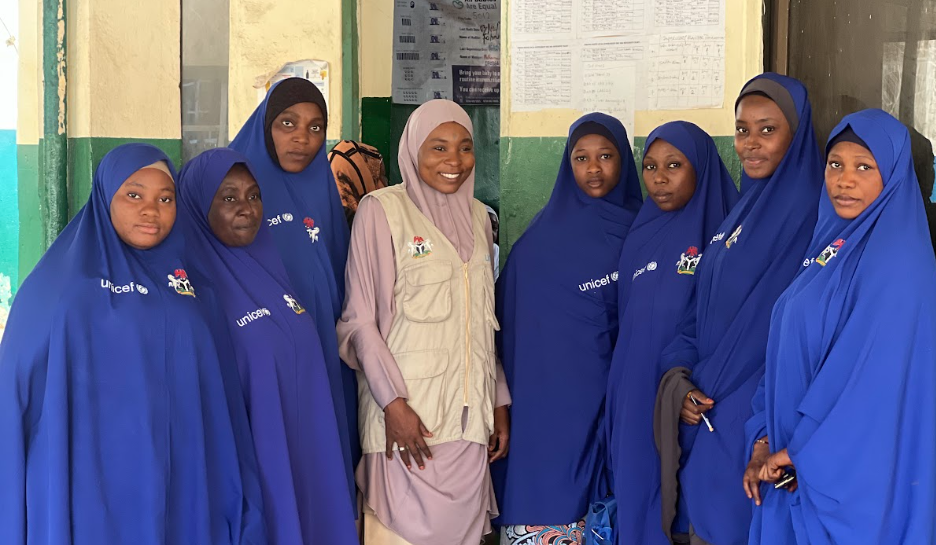
One Friday morning in February, a group of women in blue Hijabs, marked with Nigeria’s coat of arms and UNICEF, carried vaccine boxes through Sokoto North LGA, searching for newborns and mothers. Their first stop was the Fakon Idi area, where they spread a mat under a tree.
Asmau Adamu presented her five-day-old baby, wrapped in layers, to a VCM. “They explained that the vaccines would prevent the child from having polio and other diseases,” she said.
The VCMs go house to house, check immunisation cards, and educate mothers. On some days, they join RI providers for outreach. Across Sokoto, they work with community leaders to identify and track households that refuse vaccines.
“When we give them the names, they go to the house and tell them to bring their children,” said a VCM. “Even when they want to reject vaccines, he’ll encourage them to do it.”
District head Aminu Muhammad recalled a recent case: “Someone was reported to me for refusing the polio vaccine. When I met him and explained the importance, he succumbed.”
At PHC Kofar Rini, Tuesdays are busy at the immunisation unit. New Incentives, an NGO, offers cash to mothers who bring their children for vaccination. “Every time my child gets a vaccine, I receive N1,000,” said Mrs Adamu. When children complete their doses, mothers get an additional N6,000.
“Since New Incentives came, the population has increased,” said Ms Isa, the immunisation official. “I used to immunise about 70 babies a day when New Incentives is around. I didn’t get that much before.”
But the cash-for-vaccine initiative faces criticism. Some say mothers are paid to ‘sell their children’. “We explain it’s for transportation,” said Ms Isa. “Some have spread false information.”
Vaccine hesitancy has deep roots in northern Nigeria, partly due to the 1996 Pfizer Trovan drug trial in Kano, which left children dead or disabled. That episode fueled a boycott of polio campaigns. Misinformation persists, with claims that vaccines cause infertility or contain unlawful ingredients.
“Some say the vaccines make children stubborn, or that they contain monkeys’ blood,” said Mr Umar, the surveillance focal person in Kajiji. “We heard it causes infertility. Honestly, we got scared. But all my children who took the vaccine now have healthy children of their own.”
Community leader Umar Umar said some residents question why free drugs are never given for sickness, but vaccines are brought to their doorsteps. “Some say when the government shares things, it never gets to them except this vaccine.”
Abubakar Sahabi used to reject the vaccine himself. “I turned outreach officials back. We were told it has ingredients that cause infertility.” After being summoned to the community leaders’ palace, he was convinced. Now, he helps talk other households into accepting the vaccine.
“Though we are not there yet, the quality of our campaign has improved,” said state immunisation officer Garba. Digitisation of records has been a big win, easing monitoring. “They collude with caregivers who refuse vaccination, finger-mark them with the assumption that anyone can show they vaccinate. We need a serious mindset change.”
At the community level, volunteers are winning souls. “These days, people are so aware that anyone calls me or the DSNO,” said Mr Umar. “There’s an uncle who didn’t allow polio vaccines, but I convinced him,” said Mr Sahabi, himself a polio vaccine reformist.



Comments are closed for this story.