
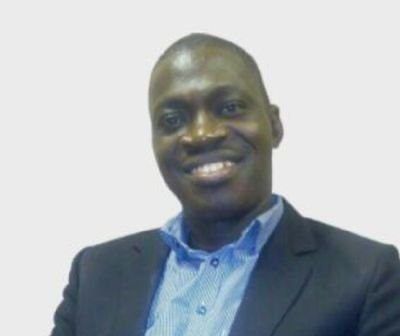
Political season in Lagos has brought its usual flood of attacks and accusations. A recent opinion piece by Mobolaji Sanusi, former managing director of LASAA, attempts to rewrite history and stir up division where none exists.
Sanusi’s article, disguised as political commentary, weaves speculative tales about the working relationship between Governor Babajide Sanwo-Olu and his deputy, Dr. Kadri Obafemi Hamzat. It paints a picture of tension and rivalry that simply does not match reality.
Lagos is not a city where governance runs on personality clashes or partisan games. It is a complex megacity built on the efforts of successive administrations working through a structured executive system. The governor and his deputy operate as part of a unified cabinet, with clearly defined roles and shared responsibilities. Policy decisions are collaborative, not driven by individual egos.
The deputy governor’s office plays a vital role in strategic governance, overseeing coordination and specific sectors. Any claim of division is pure speculation, unsupported by administrative facts or evidence.
Sanusi’s description of the current administration as lacking “legacies” or being “drab” is not an assessment—it is an empty political opinion. A fair evaluation would look at measurable outcomes: the Opebi-Ojota Link Bridge, the Red Line and Blue Line rail transforming commuting, ferries built by young engineers, the iconic Tolu Group of Schools, 332 school buildings, two new universities, 23 housing estates, hundreds of roads, and the New Massey Children Hospital, soon to be West Africa’s largest pediatric facility. The food and logistics hub in Ketu Ereyun, Epe will be the largest in Sub-Saharan Africa when completed.
These are not rhetorical comparisons or partisan nostalgia. They are the real story of governance in Lagos. Political season may bring noise, but the work continues.

Comments are closed for this story.