
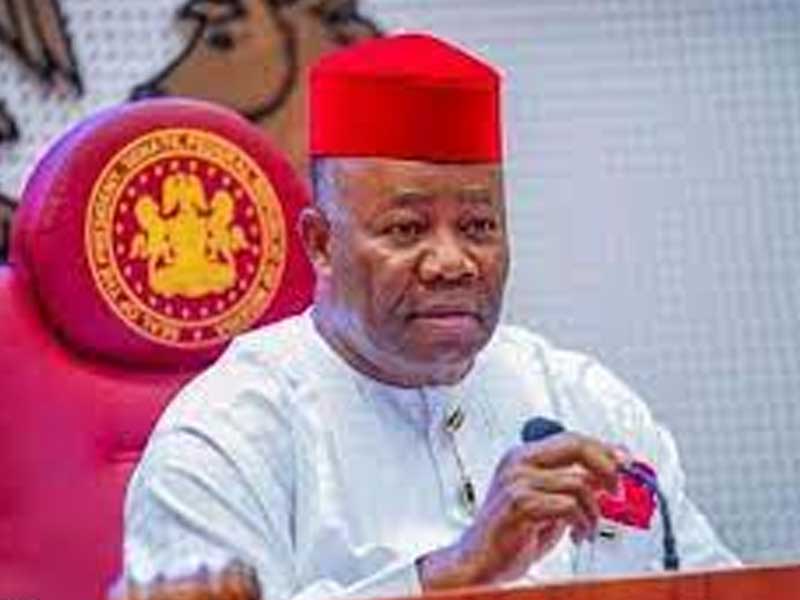
Senate President Godswill Akpabio issued a stark warning yesterday: the terrorists, kidnappers, and bandits ravaging Nigeria do not care about political parties. Their target is the nation itself. Speaking as the Senate resumed after recess, Akpabio urged politicians and aspirants to stop exploiting the country’s security nightmare for cheap political gain. “Their assault is directed against Nigeria itself,” he declared, calling for unity in the face of a national emergency. He directed Senate leadership to fast-track a long-awaited security summit, stressing that lawmakers must strengthen the nation’s security architecture amid escalating violent crimes and kidnappings.
The upper chamber observed a minute of silence for two teachers and a child killed during the abduction of schoolchildren and teachers in Oyo State. Akpabio described the tragedy as “an assault on our collective humanity.” He warned that criminals do not distinguish between party, faith, or ethnicity, and urged Nigerians to support lawful measures to protect schools and vulnerable communities.
Meanwhile, Oyo State Governor Seyi Makinde called for a united front against insecurity, meeting with labor unions and student groups who demanded the safe release of abducted pupils and teachers. “This is a time of national distress,” Makinde said, appealing for trust in government efforts. He stressed that both federal and state authorities are working together to secure the victims’ freedom.
Former Vice President Atiku Abubakar criticized National Security Adviser Nuhu Ribadu for blaming the security crisis on past administrations. Atiku called it “revisionism,” arguing that President Bola Tinubu inherited the challenges from his APC predecessor and must take responsibility. Peter Obi, presidential candidate of the Nigeria Democratic Congress, expressed alarm over the worsening security situation, lamenting that politicians remain consumed by electoral calculations while children languish in captivity.
The House of Representatives demanded immediate rescue of the abducted Oyo schoolchildren and called for far-reaching reforms, including the establishment of state police. Lawmakers urged the federal government to set up a permanent military base in the affected area to prevent future attacks.
The Christian Association of Nigeria declared a three-day national mourning period, starting June 12, and demanded a state of emergency on security. CAN President Archbishop Daniel Okoh highlighted mass abductions and killings across multiple states, calling for a comprehensive review of the nation’s security architecture.
In Ekiti, Governor Biodun Oyebanji warned politicians against spreading fake news ahead of the June 20 governorship election, saying such actions threaten the state’s peace. The Ekiti State House of Assembly convened special security sessions with traditional rulers and community leaders to strengthen collaboration against emerging threats.
FCT Minister Nyesom Wike cautioned teachers against politicizing security challenges, urging a unified national response. The Nigeria Union of Teachers threatened to shut down all public schools if the government fails to address the worsening insecurity, as teachers protested across several states.
The Nigerian Air Force intensified training to minimize civilian casualties during airstrikes, following Amnesty International allegations that at least 100 civilians were killed in a military strike in Zamfara State. Chief of Air Staff Air Marshal Kelvin Aneke reaffirmed the service’s commitment to protecting civilian lives.
The Nigeria Police Trust Fund called for increased statutory funding, warning that security challenges cannot be addressed without modern policing infrastructure. Osun State Governor Ademola Adeleke reassured residents about school security, dismissing recent kidnapping rumors as opposition propaganda.
Niger State reopened all schools closed due to insecurity, citing improved security conditions. However, Kwara North elders reported losing over 1,200 persons to banditry since President Tinubu took office, warning that the ruling party risks losing political support if decisive action is not taken. In a fresh attack, suspected terrorists invaded a Fulani settlement in Kwara State, killing one resident and abducting several others.


Comments are closed for this story.