
There was a time when a brand’s success was measured by how many eyeballs its ads captured. The biggest names bought the most airtime, plastered billboards across every highway, and fought for visibility on every available channel. But those days are gone. Today, consumers are bombarded with thousands of marketing messages daily, yet fewer and fewer ads leave a lasting impression. Attention is harder to earn, and relevance is even harder to sustain.
The world’s most successful brands have noticed. Instead of simply shouting at consumers, they are quietly embedding themselves into the fabric of culture. They show up in the places people genuinely care about, participate in the experiences they value, and become part of moments that truly matter. The focus has shifted from interruption to participation, from visibility to experience, from campaigns to culture.
Heineken is a masterclass in this approach. In Nigeria, the brand has built a presence across some of the most influential cultural touchpoints, not by selling a product, but by creating and supporting experiences people actively choose to be part of. In fashion, it partners with platforms like Lagos Fashion Week and City of Cities, placing itself at the intersection of creativity, style, and contemporary culture. These are spaces where young professionals, creatives, entrepreneurs, and tastemakers gather—not for advertising, but to participate in culture. By showing up, Heineken becomes part of conversations that extend far beyond fashion.
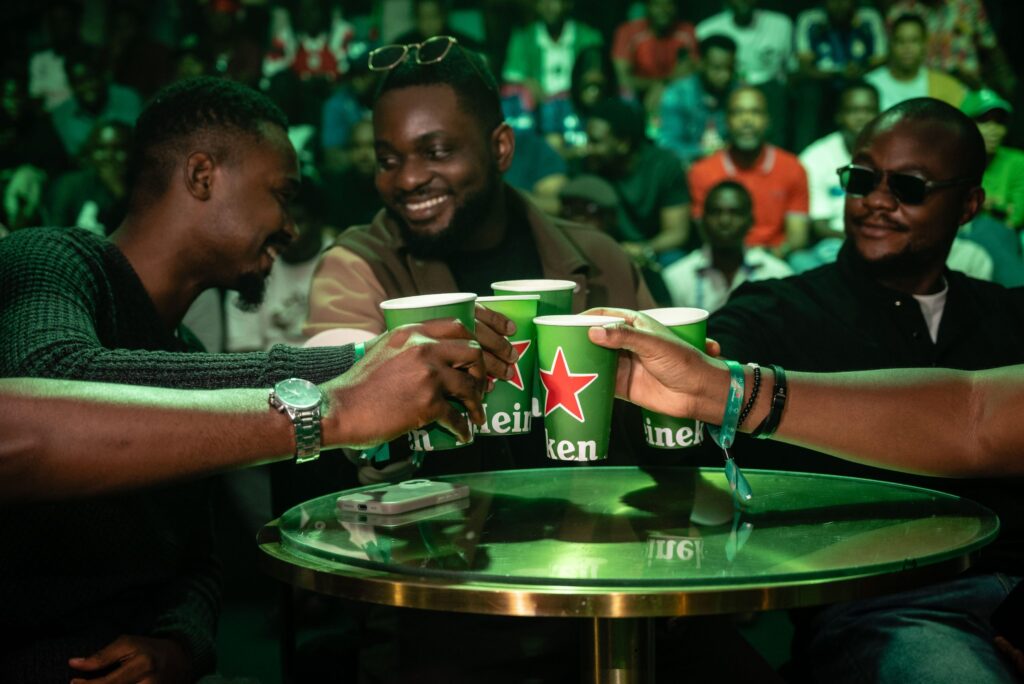
The same applies to music. Through activations at Flytime Fest, Detty December experiences, concert partnerships, and entertainment platforms, the brand consistently invests in moments that bring people together. Music is one of the strongest cultural connectors, and by creating experiences around it, Heineken positions itself within moments of celebration, excitement, and shared joy. Its premium lifestyle experiences, like the Heineken House Experience and Big Fiesta, are designed not as events but as environments where people meet, connect, celebrate, and make memories. Consumers are not spoken to; they participate. The brand becomes part of the experience, not the message.
Football remains one of the most powerful cultural forces globally, transcending geography, profession, age, and background. Heineken has invested heavily in football experiences that go beyond the ninety minutes on the pitch. Its long-standing association with the UEFA Champions League creates opportunities for fans to experience the game together rather than alone. Through fan activations, premium viewing experiences, and large-scale watch parties, the emphasis is always on community and connection. The recent UEFA Champions League Final Watch Party is a clear example. Fans didn’t attend to engage with a brand; they came for the atmosphere of one of football’s biggest moments. Heineken provided the environment that made that experience memorable—the energy, anticipation, conversations, celebrations, and collective emotion that football naturally creates.
This is why culture is becoming more powerful than advertising. The brands winning today understand that consumers don’t just want products. They want experiences, belonging, and stories worth sharing. And increasingly, they reward the brands that help create those stories. In a world where ads can be scrolled past in seconds, the brands that thrive are those that create meaningful experiences around the passions people already have. The most effective marketing no longer feels like marketing at all. It feels like culture. And that may be the biggest reason some brands are winning today—not because they advertise more, but because they have learned to become part of the moments people value most.




Comments are closed for this story.