
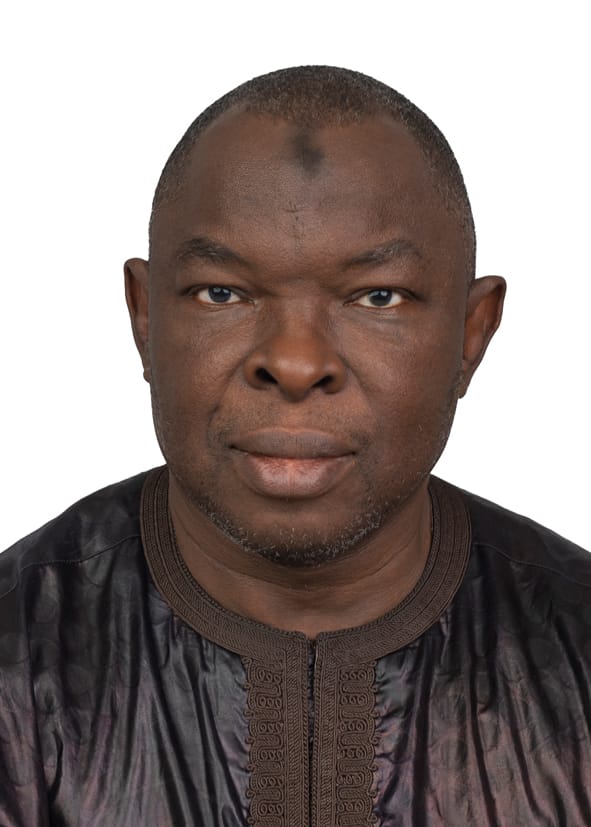
On June 4, 1986, exactly four decades ago, Nigeria witnessed a defining moment when the Nigeria Labour Congress, under the courageous leadership of Alhaji Ali Chiroma, planned a nationwide protest march. The march never happened, but its echoes still resonate today.
The NLC’s decision did not emerge from a vacuum. It was a direct response to the tragic events at Ahmadu Bello University in Zaria on May 22 and 23, 1986, where student protests over university governance turned deadly. The “Ango-must-go” demonstrations saw police open fire, killing and injuring students and children. The crisis deepened when ABU Vice Chancellor Professor Ango Abdullahi declared he had “no regrets inviting the police” and that “only four people died.” Kaduna State Police Commissioner Nuhu Aliyu added fuel to the fire by claiming the law authorized police to shoot.
The Babangida military regime’s silence for three days, its refusal to condemn the violence, and its failure to meet demands for suspensions of key officials and release of detained students pushed the NLC, the National Association of Nigerian Students, and the Academic Staff Union of Universities to the brink. When the government established an investigative panel, labor and student groups saw it as a cover-up, not a solution.
On May 28, 1986, the NLC declared June 4 a Day of National Mourning, calling for peaceful marches nationwide. The military junta responded with fury, branding the move “a direct challenge” to its authority and vowing to meet it “with all the resources at its disposal.” True to its word, the regime mobilized the armed forces, police, and security services. Chiroma later recalled that the despots declared “an all-out war, by land, sea and air against unarmed workers.”
Under pressure from internal factions and fear-mongers within the NLC, organizers scaled down the protest to only union representatives. But the military took no chances. On the night of June 3, NLC secretariats were seized and declared security zones. Labor and student leaders were arrested nationwide. Armed police guarded closed universities. Army tanks surrounded strategic buildings. Helicopters patrolled Lagos skies. The protest was aborted.
The fallout was devastating. The First Independence Movement, a broader democratic push, was effectively crushed. On June 27, 1986, the regime adopted the IMF and World Bank’s structural adjustment program, ushering in neoliberalism. The naira was devalued, state-owned companies privatized, and workers retrenched en masse, often without compensation.
In March 1988, the military dissolved the NLC, claiming it had “metamorphosed into two ideological lines.” A company personnel manager was imposed as sole administrator. ASUU was disaffiliated. Chiroma was forcibly retired. Radical elements were neutralized, replaced by right-wing labor aristocrats like Pascal Bafyau.
The labor movement has never fully recovered. Under subsequent leaders like Adams Oshiomhole and Ayuba Wabba, the NLC called general strikes that yielded few gains. NANS, once the vanguard of student resistance, has since the late 1990s been captured by violent groups financed and protected by politicians and security forces. Today, NANS leaders are often hostile to democracy and social justice.
There was a time when Nigerians united on basic rights like life and movement. Human lives mattered. Mass organizations stood up to defend them. Under military despots, student activists traveled at midnight to organize, returning safely the next day. Today, bandits and terrorists kidnap for ransom, and freedom of movement is a distant memory.
Forty years after the aborted June 4 protest, the question remains: what have we become?




Comments are closed for this story.