

The recent party primaries have sent a chilling message: democracy and ethical politics have been erased from Nigeria’s system. The Independent National Electoral Commission set a tight deadline for primaries to end by May 30, but a Federal High Court ruling nullified that timeline. Yet, fearing judicial fallout, major parties stuck to INEC’s schedule, knowing the courts’ unpredictable nature. Under the new Electoral Act, primaries were held via consensus or direct elections. In Nigeria, consensus means imposition—the boss decides. Direct primaries, in theory, let all party members vote, but no party can organize such elections across 8,809 wards. So, leaders simply write numbers for candidates. This is called “results by declaration,” efficient because no one can vote to disrupt the boss’s plan. It’s all make-believe.
Unsurprisingly, the APC presidential primaries unfolded across 8,809 wards, and President Tinubu won with 10,999,967 votes, announced at the Tinubu International Conference Centre in Abuja. They avoided Eagle Square for a building named after Tinubu himself. The catch? No one saw anyone voting. To add a veneer of legitimacy, Tinubu faced a challenger named Stanley Osifo—unknown until now—who got 16,504 votes. Rumors say he was well-paid for his role in the charade. It was good drama.
The key outcome: only those approved by the President got winning votes or consensus declarations. No surprises. Many hopefuls were lured to the APC with promises of tickets, only to be deceived and dumped. Now, the Electoral Act blocks them from switching parties, so joining the ruling party is no longer a winning strategy.
APC lawmakers faced a political massacre. The party had 242 House members and 88 senators; many lost their return tickets. They were screened out, outsmarted, or defeated through declaration. Dr. Ajibola Bashiru, APC Secretary General, said results would be declared centrally, but governors collated and announced them on-site. Governors love removing powerful legislators and replacing them with loyalists. Losers are appealing, but the judiciary is largely in the hands of the powerful. In Rivers State, Gov. Simi Fubara was screened out after falling out with a godfather who isn’t even an APC member but a friend of the APC President. His boys got no nominations.
The African Democratic Congress is no better. Two factions emerged: Dumebi Kachikwu declared presidential candidate of one; the other faction had Atiku Abubakar, Rotimi Amaechi, and Mohammed Hayatudeen. Atiku won massively, but Amaechi and Hayatudeen called it fabricated fraud. Former Secretary to the Government, Babachir Lawal, said the rigging was so bad he’s switching to support his former enemy, Bola Tinubu.
These primaries are a stark warning for upcoming elections. Parties showed absolute disregard for members; only the President, governors, and godfathers mattered. A significant part of the political class feels cheated, bitter, and betrayed. The process has established that recruitment into politics isn’t based on popularity because voting is no longer part of selection. We now have a mafia-style system where the boss chooses, and the organization must obey or be eliminated. Nigerians are being told they have no role. When Tinubu got 11 million votes in the primaries—more than his 8,805,475 total in the 2023 presidential election—it suggests he’ll get even more in 2027, because that’s how the system is now configured.
Over 120 National Assembly members defected from their original parties, seeking tickets but failing. Senator Ned Nwoko accused the APC of deception, claiming he was promised an automatic return ticket before defecting. The message from those in power is that the rule of law no longer applies. Section 87 of the Electoral Act requires written consent from all aspirants for consensus candidates; if not, direct primaries must be held. These provisions were ignored. Even former ministers complain their protests were disregarded. Now, only anointing by the godfather is the legitimate door to power. Who can still claim we live in a democracy?
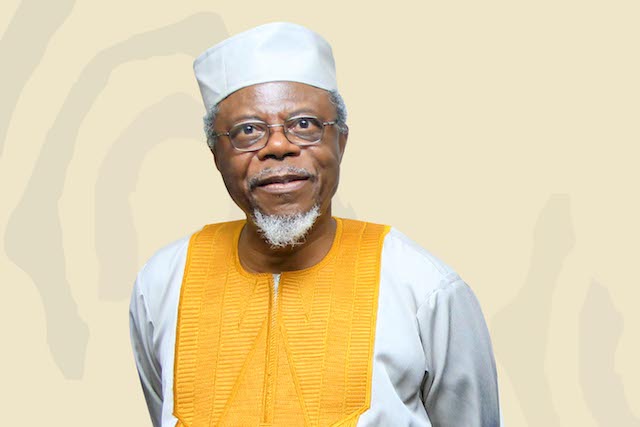
A professor of Political Science and development consultant, Jibrin Ibrahim is a Senior Fellow of the Centre for Democracy and Development and Chair of the Editorial Board of PREMIUM TIMES.



Comments are closed for this story.