

Africa is not a land of failure or missed chances. It is a continent brimming with human talent, vast resources, and fierce entrepreneurial spirit, all held back by a global financial system never built to serve its people. To achieve the stability and prosperity the world claims to desire, that system must be overhauled.
Around 3.4 billion people live in nations that spend more on debt payments than on health or education. In Africa, two out of every three countries allocate more to debt interest than to their citizens’ health. The global debt framework was not designed for the developing world, and the poorest bear the cost of its stagnation.
A staggering figure should give every nation and creditor pause: three trillion dollars. That is the sum poorer countries send to wealthier ones each year through debt servicing and tax loopholes. The Global South is not a passive recipient of aid; by honest measures, it is a net financier of global wealth.
The roots of this imbalance run deep. When colonized nations gained independence, they inherited economies shaped to export raw materials, fossil fuels, and cash crops to fuel Northern industry. This left them with weak domestic foundations, forcing reliance on external financing for hospitals, roads, and schools. Borrowing to bridge that gap was a rational response to an engineered deficit, not mismanagement.
The problem lies in the terms. Global South nations pay two to twelve times more in interest than wealthy ones, not due to recklessness, but because the system labels them less creditworthy, then uses that label to justify the conditions that keep them trapped. Between 1970 and 2023, these governments paid an estimated $2.2 trillion in interest to Western creditors alone. Higher risk ratings drive higher interest rates, which swell debt burdens and worsen ratings—a self-sustaining cycle.
The international financial institutions governing global borrowing were created 80 years ago by wealthy nations. Little has changed. Today, a small group of rich countries holds more voting power than the entire Global South, which represents 85 percent of the world’s population. This means the rules of borrowing, debt relief, and repayment are written by creditors, for creditors. It is a system designed to keep communities in perpetual debt.
Private creditors have worsened this imbalance. Commercial banks, hedge funds, and bondholders, mostly based in wealthy economies, now hold over half of many developing nations’ public external debt. Unlike multilateral lenders, they face no binding obligation to participate in debt relief or restructuring.
The human toll is stark. When a sub-Saharan African government spends more on foreign debt than on health, children die from preventable diseases. When debt conditionalities demand budget cuts, classrooms go unbuilt and teachers go unpaid. The burden falls hardest on women, children, and the most vulnerable.
Sub-Saharan Africa bears the highest maternal and infant mortality rates globally, accounting for about 70 percent of all maternal deaths, with a ratio of roughly 454 to 545 deaths per 100,000 live births, and neonatal mortality at 26 per 1,000 live births. A debt system blind to such tragedies has failed its basic purpose.
Three urgent reforms are within reach. First, establish a formal Borrowers’ Forum for developing nations, as proposed at the Seville Financing for Development summit and endorsed by the G20 under South Africa’s presidency. Creditor coordination bodies like the Paris Club have existed for decades; a parallel forum for borrowers would enable collective negotiation and a stronger voice.
Second, mandate automatic debt service pauses in all sovereign borrowing agreements, including with private creditors. These pauses should be pre-agreed, triggered by defined crises like public health emergencies or climate disasters, and interest-free. Every dollar sent to a creditor during a crisis is a dollar lost for vaccines or flood relief.
Third, as AI drives new wealth concentration in rich nations and companies, we call on governments and major AI firms to commit 1 percent of AI revenues to fund debt relief, public health, education, and social protection. This would be a proportionate contribution from the new economy to the global system it depends on, especially for those most vulnerable to AI-driven disruption.
None of these proposals cancels legitimate financial obligations. They recalibrate the terms so sovereign borrowing can serve its true purpose: funding development and welfare, not undermining it.
The question is no longer whether the global debt system needs reform. The evidence is overwhelming, and consensus grows. The question is whether political will exists to act, and whether the voices of those most affected will be loud enough to make inaction impossible to ignore.
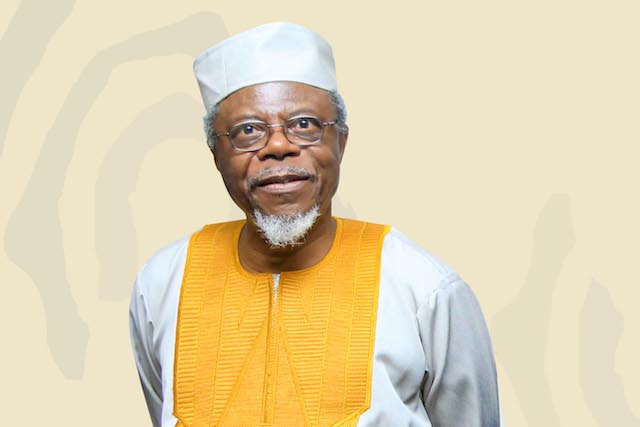
Steve Aborisade is the senior advocacy and marketing manager, AIDS Healthcare Foundation (AHF-Nigeria). This piece is part of the Freedom from Debt campaign (June 2026 to January 2027), championed by the AHF Global Public Health Institute.



Comments are closed for this story.