
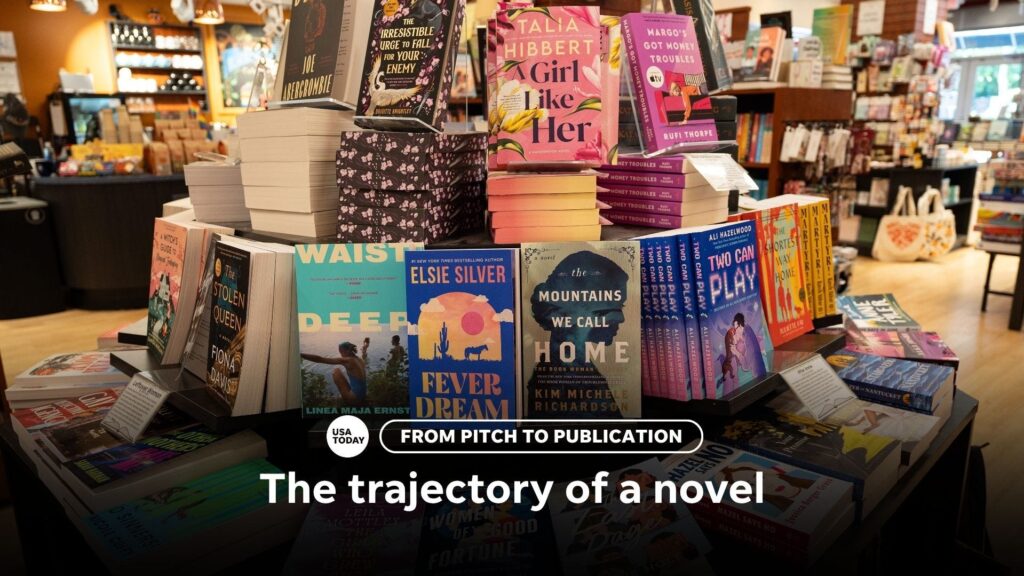
I already know the price of my novel before it hits shelves next year.
Long before you decide if you want to buy “How to Kill a Chupacabras,” the publisher has stamped a number on the back cover. And for readers, that number stings.
Hardcovers that once hovered around $20 now routinely push $30. I recently dropped $65 on just two books. Special editions cost even more. Meanwhile, consumers weigh those purchases against Netflix, Spotify, and endless free content online. A recent Authors Guild survey revealed only 36% of recent readers bought a new copy or used a subscription. Nearly two-thirds didn’t buy a new book at all.
So, are books actually getting more expensive?
The unsatisfying answer is yes and no.
Consumer prices have risen roughly 25% since 2020, per the U.S. Bureau of Labor Statistics. Yet publishing executives say book prices resisted inflation for years.
“Books, historically, have not kept up with inflation,” said Keith Riegert, president of The Stable Book Group. He traces today’s pricing to the rise of e-books. As publishers experimented with $9.99 and even $2.99 digital editions, consumer perception shifted.
“The thing that e-books did was artificially push down the perceived value of books,” he told USA TODAY.
That ripple effect reshaped the industry. Mass-market paperbacks, once a low-cost gateway, largely disappeared. Paperback and hardcover prices stayed stagnant for years, even as production costs climbed.
Book prices have increased slightly in recent years, according to American Booksellers Association research, but historically they haven’t kept pace with inflation. “With supply chain disruptions during COVID, it was the first time in decades that retail prices moved up,” Riegert added.
Yet readers aren’t imagining the sticker shock.
Daniel Greene, author of “Neon Ghosts” and a major YouTube book creator, noticed when friends started rejecting his recommendations. “They’re like, well, it’s 30 plus dollars. I can’t do that,” Greene said. “Then I saw the paperback was still $23. That’s nuts.”
ABA CEO Allison Hill acknowledged that value perceptions are tricky because buyers “aren’t questioning the value of the books, they’re managing a budget impacted by other rising costs, like groceries, insurance, and gas.”
For Greene, higher prices mean fewer chances for authors. “I used to buy five books—three from authors I never knew, two from authors I liked. Now I maybe buy one or two. That’s horrible for the industry because it lowers discoverability of new authors.”
Another challenge: readers often assume publishers keep most of the money. They don’t. Margins are razor-thin.
For a $20 book, retailers typically take 50% to 60% of the cover price before publishers pay for distribution, freight, warehousing, printing, returns, and author royalties. “A $20 book ends up netting two or three dollars for the publisher,” Riegert said.
Those economics are strained by a returns system dating back to the Great Depression. Bookstores can return unsold inventory for refunds or credit, affecting pricing calculations.
At Bindery Books, an influencer-driven publisher launched in 2023, executives think differently. “We publish trade paperback originals, we don’t lead with the hardcover,” said co-founder and president Meghan Harvey. Hardcovers remain attractive but function as premium products. “Hardcovers are a prestige buy, and they’re $35 a piece.”
Bindery focuses on lower-priced paperbacks to get books into more hands. “We’re trying to reach as many people and sell as many copies as we can,” Harvey said.
CEO Matt Kaye sees that as vital for younger readers. “I think a lot of younger readers especially feel economic anxiety. Making sure e-books and paperbacks are priced accessibly is really important for us.”
Pricing pressures aren’t limited to paper and printing. Publishers navigate changing consumer behavior, rising shipping costs, and a fierce attention economy.
Greene argues books compete against entertainment options that didn’t exist before. “Now books are harder for people to read because their focus is shot, and they’re higher priced. And every movie and TV show ever is available.”
Unlike streaming, books demand attention.
Madeline McIntosh, founder and CEO of Authors Equity and former CEO of Penguin Random House U.S., says today’s publishing is about convincing people to pay attention. “If I could wave a wand, it wouldn’t be about fixing an issue inside the industry. It’s the shared frustration for anybody creating content.”
Books compete with TikTok, Instagram, YouTube, streaming, and video games. “You can’t sell something by telling people it’s good for them,” McIntosh said. “You have to sell something by telling people it’s fun, entertaining, inspiring.”
Yet none of the executives I spoke with believe readers are abandoning books. Many argue the opposite.
Kaye points to the growth of physical bookstores and BookTok communities that transform novels into cultural artifacts. “Books are the seed or the source code of culture,” he said.
For younger readers who grew up online, physical books are rare tangible objects disconnected from screens. “We’re in this analog revolution, where having time to not be in front of a screen is a luxury,” he said.
That shift is creating a two-track market: luxury editions with sprayed edges and collector appeal on one side, and lower-cost paperbacks and print-on-demand books on the other. “The market is really sort of splitting into two different sides,” Riegert added, “where you have the luxury side and the entry point side.”
Still, as Riegert, Harvey, and Kaye noted, the current pricing structure is likely to stay.
Greene worries that rising prices and the disappearance of mass-market paperbacks could create a future where fewer readers take chances on unfamiliar authors. “The cheapest option for people struggling to buy is being replaced with an option you don’t even own,” he said, referring to e-books. “You can’t hand it down to your kids.”
But as Riegert put it, “Even though it feels expensive to pay $24 for a new book, you’re getting potentially weeks of entertainment out of it.”
And unlike a streaming show that can vanish overnight, the physical book remains yours.




Comments are closed for this story.