

The IMF’s 2026 Article IV Consultation report on Nigeria reads less like a technical assessment and more like a political document laced with diplomatic double-speak. One analyst I spoke with last week dismissed it as mealy-mouthed, and for good reason. The report claims that last year’s expansionary government spending was partly funded by a Central Bank of Nigeria deposit drawdown of 1.1 percent of GDP—a move that, in effect, mirrors the old ways and means overdraft financing. It also notes that savings from the fuel subsidy removal, completed in late 2024 and estimated at up to 2 percent of GDP, did not materialize in the 2025 budget. This raises a troubling question: Did Nigeria revert to monetizing its deficit? Or, as my sources suggest, did the country simply borrow to finance the subsidy, and now borrow for other expenses? Accruals to the budget? That seems like wishful thinking.
The report flags serious concerns about opaque financial dealings and their damaging economic consequences. Off-budget spending appears to have surged last year. The complexity of government financing arrangements left even the IMF’s experts baffled—so the average Nigerian has no chance of deciphering these numbers. Fiscal reporting remains weak. The IMF estimates a fiscal statistical discrepancy of 2.7 percent of GDP for last year. This implies that spending may not be fully captured in published accounts, which is alarming. But is that as worrying as the fact that federal government interest payments consumed about 53 percent of revenue?
Some argue this is nitpicking. The interest-to-revenue ratio, while a major constraint, hasn’t triggered a debt crisis. The report is largely positive, they say. Nigeria’s external position has improved—a current-account surplus of 4.8 percent of GDP and gross reserves rising from $40 billion to $46 billion. This stability is both a result and driver of economic resilience. If it boosts long-term investor confidence, there’s evidence it’s reopening access to international capital markets. Lower inflation in 2025 cuts both ways: it reflects better monetary policy and base effects, but global fuel and food shocks from the Third Gulf War may force tighter policy to prevent inflation’s return.
The words good, bad, better, and worse are relative. What matters are the comparators. The IMF report doesn’t benchmark Nigeria against peers competing for loans and investment. Instead, it compares to domestic practices three years ago. Set the bar low enough, and anyone can pass—ask JAMB. The report concedes that much work remains on poverty and food insecurity, and on government finances.
Low government revenues are a given. At roughly 10 percent of GDP, Nigeria’s consolidated revenue is insufficient for its development needs. Better tax administration and broader collection, including higher VAT, are welcome. But what about cutting government spending? The Tinubu government has largely ignored the expenditure side of reforms needed to boost efficiency and productivity. The IMF rightly highlights two risks from the upcoming presidential elections: rising poverty and food insecurity could pressure higher spending, and reform momentum could slow.
In a qualified sense, the report paints a picture of an economy stronger financially than three years ago but not yet strong socially. It echoes what the average Nigerian already knows: The stabilization phase has largely succeeded, but Nigeria must convert macroeconomic gains into improved living standards.
For Tinubu’s boosters, it’s worth noting that inflation isn’t the main hurdle. Neither is building reserves or curbing borrowing. The gap between improving macroeconomic indicators and persistent poverty, food insecurity, and weak revenues must be bridged sustainably. Without more inclusive growth and fixed public finances, the political sustainability of Tinubu’s reforms could face severe pressure.
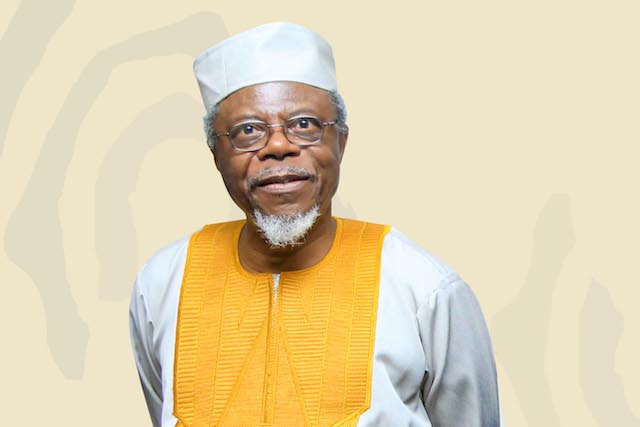
Uddin Ifeanyi, a journalist manqué and retired civil servant, can be reached @IfeanyiUddin.



Comments are closed for this story.