
The leaders who will shape Africa’s future aren’t necessarily the loudest voices in the room. They’re the ones who listen with intent, who create spaces where people feel truly seen, who remain curious when certainty sets in, and who choose reflection over reaction. They understand that leadership isn’t about flawless performance—it’s a daily practice of becoming.
Africa doesn’t lack leaders. From politics and business to civil society, entrepreneurship, faith communities, and social movements, leadership is everywhere. You see it on conference stages, in strategic plans, on social media feeds, and across boardrooms. Yet, despite this abundance of leadership activity, many of our institutions are grappling with trust deficits, declining social cohesion, burnout, disengagement, and fragile organizational cultures.
This raises an uncomfortable question: What if Africa’s leadership challenge isn’t a shortage of leaders? What if it’s a shortage of presence?
In a world that prizes visibility, speed, certainty, and performance, we’ve become masters of looking like leaders. But leading and performing are not the same. One draws attention; the other drives transformation. And transformation rarely begins in the spotlight.
Some of the most critical leadership work happens without an audience. It unfolds quietly, often unnoticed, in moments that never make headlines. It happens when a leader chooses to listen rather than interrupt. When they pause before reacting. When they get curious instead of defensive. When they create enough psychological safety for people to speak honestly. When they notice what others have overlooked.
This is the work of forming a leader who can hold complexity without rushing to control it. A leader who hears what’s left unsaid. A leader who understands that beneath every organizational challenge lies a human reality waiting to be understood.
Across Africa, we spend a lot of time talking about governance, economic development, institutional reform, and innovation. These conversations are vital. But beneath each lies a more fundamental question: Who are we becoming while trying to solve them? Institutions rarely grow beyond the consciousness of the leaders who shape them.
African wisdom reminds us that the wound left unspoken will eventually speak through the bones. The same is true for organizations, communities, and nations. What we fail to acknowledge doesn’t disappear—it resurfaces elsewhere: in disengagement, conflict, mistrust, burnout, and cultures where people no longer feel safe enough to contribute fully.
One of the most overlooked leadership capabilities of our time is presence. Not physical presence—relational presence. The ability to pay attention, to notice what’s happening beneath the surface, to recognize the exhaustion hidden behind professionalism, to hear the fear concealed in technically correct questions, to detect the silence that often says more than words. Presence isn’t softness; it’s discipline. It’s a form of intelligence. And in an increasingly distracted world, it may become one of the most valuable leadership capacities we possess.
Many leadership environments unintentionally reward performance over authenticity. Leaders are expected to have answers, project confidence, move quickly, remain composed, and appear certain. Over time, this creates a dangerous illusion: that leadership is about knowing rather than learning, projecting strength rather than cultivating awareness, maintaining appearances rather than engaging reality. Yet some of the most significant leadership failures happen when leaders become disconnected from what’s actually happening around them. Cultures deteriorate before leaders notice. Trust erodes before they acknowledge it. People disengage long before they resign. Innovation disappears before performance metrics reveal it. By the time evidence becomes visible, the damage is often already done. Presence allows leaders to notice earlier, to respond before breakdown becomes crisis, to create environments where honesty is possible before dysfunction becomes normal.
Curiosity may be Africa’s most undervalued leadership resource. One defining characteristic of becoming leaders is curiosity—not as intellectual interest, but as leadership practice. The willingness to ask: What am I missing? Whose voice haven’t we heard? What assumptions are shaping this decision? What is this silence protecting? What truth is struggling to emerge? Across Africa, we’re navigating increasingly complex realities: economic pressures, climate challenges, technological disruption, demographic shifts, political transitions. No single leader holds all the answers. Nor should they. The future belongs to leaders who can create environments where collective intelligence can thrive. Curiosity creates safety. Safety invites honesty. Honesty enables learning.
For too long, leadership has focused on managing people. Perhaps the greater challenge is creating environments where people can thrive. The strongest organizations aren’t necessarily those with the most talented individuals—they’re often those where people feel safe enough to contribute their full intelligence, where mistakes become learning opportunities, where dignity is protected, participation encouraged, belonging cultivated, and trust grows. This shift changes everything. Leadership becomes less about control and more about stewardship. Less about directing outcomes and more about shaping conditions. Less about authority and more about responsibility. The question is no longer, “How do I get people to perform?” It becomes, “What kind of environment am I creating?”
The next frontier of African leadership may not be technological. It may not even be economic. It may be human. As our institutions grow more complex and our societies more interconnected, the ability to build trust, cultivate belonging, and lead with presence will become increasingly important. The leaders who shape Africa’s future won’t necessarily be those who speak the loudest. They may be those who listen most deeply, create spaces where people feel seen, remain curious when others become certain, choose reflection before reaction, and understand that leadership isn’t perfect performance but a practice of becoming.
The work of becoming rarely announces itself. It happens in ordinary moments: a difficult conversation, a reflective pause, an honest question, a decision to listen rather than defend, a willingness to acknowledge uncertainty, a commitment to learning. This work is often invisible. But it shapes everything. As Africa continues its journey of renewal and transformation, perhaps the most important leadership question isn’t how much influence we have, how many people we lead, or how visible we become. Perhaps it’s this: What quiet work are we doing today that is shaping who we are becoming tomorrow? Because the future of Africa will not only be determined by what we build. It will also be determined by who we become while building it.
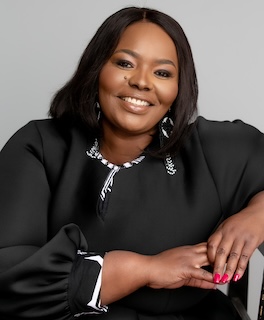
Nqobile Pamela Xaba is a human capital entrepreneur, professional business coach, and leadership consultant. She is the author of the forthcoming book The People Circle: A Human-Centred Approach to Leadership in a Complex World.


Comments are closed for this story.