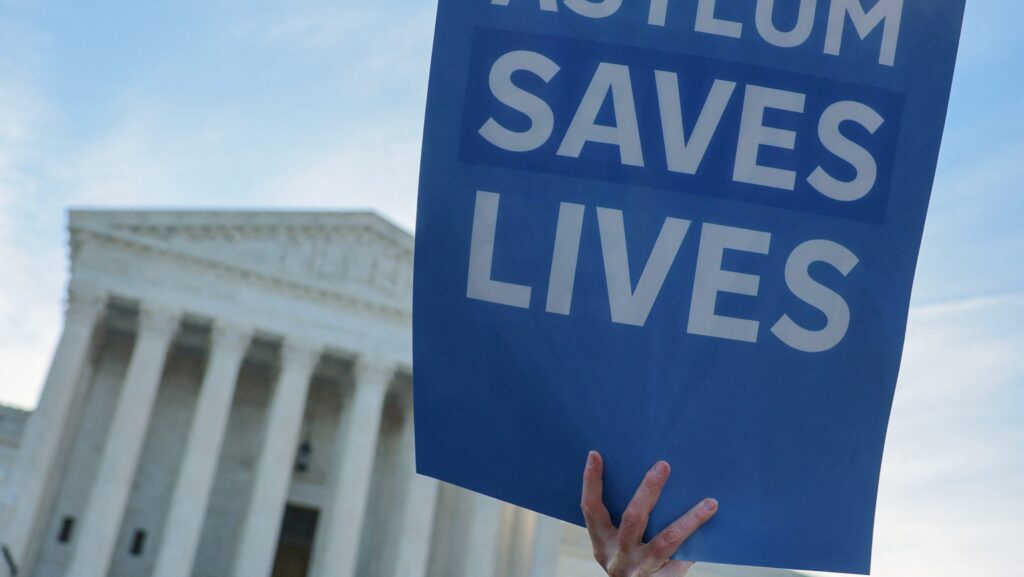
The Supreme Court has handed down a landmark decision that allows federal authorities to systematically deny asylum seekers entry at the U.S.-Mexico border, a practice that could revive a key immigration enforcement tool from the Trump era. On June 25, the justices ruled 6-3 along ideological lines, declaring that federal law does not require the government to hear asylum claims from migrants who reach a port of entry but are prevented from stepping onto American soil.
This policy, known as metering, has been used by both Democratic and Republican administrations to cap the number of daily asylum claims, though it was scrapped by the Biden administration. The Trump administration, which already enforces a broad asylum ban facing separate legal challenges, argued that metering is a vital tool to manage border surges. The Justice Department had urged the Supreme Court to overturn a lower court ruling that mandated processing claims once migrants reach a port of entry.
The case, Mullin v. Al Otro Lado, was brought in 2017 by 13 asylum seekers and the immigrant rights group Al Otro Lado. They represented migrants who were turned back to Mexico, often with devastating consequences. Lawyers for the group described how vulnerable families, children, and adults fleeing persecution were stranded in dangerous conditions, facing violent assault, kidnapping, and death. They argued that the government improperly limited asylum seekers even when resources were sufficient to handle them.
A 2020 report from internal watchdogs at the Homeland Security Department revealed that border patrol agents at some crossings routinely turned migrants away, regardless of the port’s actual capacity. U.S. Customs and Border Protection maintains it needs flexibility to balance tasks like stopping drug trafficking and facilitating lawful trade and travel.
The legal dispute hinges on the 1986 Immigration and Nationality Act, which allows anyone physically present in the United States or who arrives in the country to apply for asylum. In 2024, the San Francisco-based 9th U.S. Circuit Court of Appeals ruled that the term arrives in includes those who encounter officials at the border, no matter which side they stand on. The Justice Department countered that this interpretation defies the plain text of the law. You can’t arrive in the United States while you’re still standing in Mexico, said Vivek Suri, a Justice Department attorney, during oral arguments in March. That should be the end of this case.
Metering was used sporadically during the Obama administration, when border officers turned away hundreds of Haitian asylum seekers at ports of entry in California. Customs and Border Protection officers could stop undocumented migrants from setting foot on U.S. soil whenever they deemed a border crossing too busy. The policy was formalized under the first Trump administration, then lifted by Biden, though exceptions remained. Immigrant rights groups say this left asylum seekers living for months in makeshift camps on the Mexico side, without reliable food, shelter, or safety.