Every time you ask your phone for the weather or dictate a quick text, you are setting off a chain of digital wizardry that most of us take for granted. Speech recognition, the quiet engine behind virtual assistants and transcription tools, is not just a simple trick of science. It is a deep, layered process that transforms the fleeting sounds of your voice into precise, readable text. But what truly happens the moment you speak?
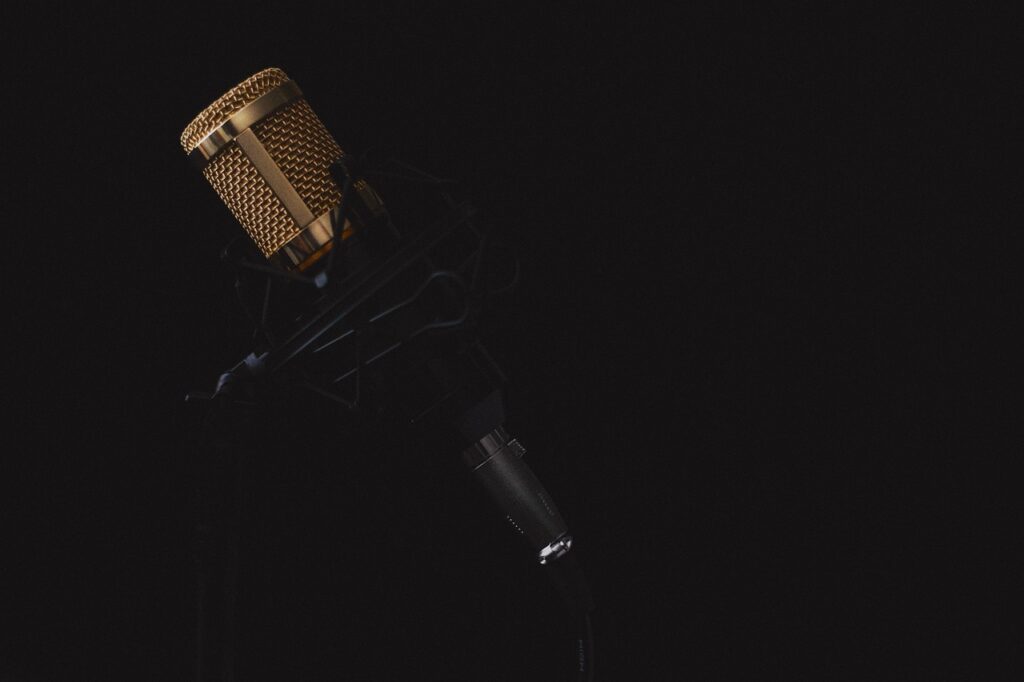
It all starts with a microphone capturing your voice as a raw audio signal. That signal is nothing more than a wave of vibrations, but within it lies a treasure trove of information. Algorithms immediately go to work, pulling out the subtle fingerprints of your speech: the pitch, the cadence, the rhythm. Yet here is the catch. Human speech is gloriously messy. Accents twist vowels, dialects reshape consonants, and background noise can turn a clear phrase into a jumble of static. Taming that chaos is the real battle.
To win that fight, engineers have turned to machine learning and its more powerful sibling, deep learning. These systems are not programmed with rigid rules. Instead, they are fed enormous libraries of recorded speech, learning the intricate dance between sound and meaning. Deep learning takes this further by using neural networks, layers of artificial neurons that mimic the brain, to break speech down into its atomic pieces. These are phonemes, the smallest units of sound that form the building blocks of every word we say.
Perhaps the most groundbreaking leap came with the introduction of recurrent neural networks, or RNNs. Unlike older models that treated each sound in isolation, RNNs are built to handle sequences. They remember what came before, allowing them to track how a voice shifts and flows across a full sentence. This is crucial, because speech is not a series of frozen snapshots. It is a living, moving thing, and RNNs finally gave machines the ability to follow its motion.
Another pillar of this technology is acoustic modeling. These are statistical blueprints that map the relationship between raw audio and the phonemes they represent. By training on vast datasets, these models learn to guess, with remarkable precision, which sounds are likely to appear in any given moment. It is a constant game of probability, played out in milliseconds.
Still, the road to perfect recognition is far from smooth. Background noise remains a stubborn enemy, capable of derailing even the most advanced systems. And then there are languages with tangled grammar or dialects that stray far from the standard, leaving machines scratching their digital heads. Yet progress has been relentless. The latest systems now boast accuracy rates above 95 percent, edging closer to the way a human ear works.
What lies ahead is even more tantalizing. Researchers are pushing toward systems that can read not just words, but the emotions behind them. Imagine a virtual assistant that knows when you are frustrated or a transcription tool that captures the warmth in a speaker’s voice. The applications stretch far beyond convenience, from giving a voice to those who cannot speak to transforming customer service into something truly personal.
So the next time you talk to your device, pause for a second. Behind that simple exchange is a symphony of algorithms, statistical models, and neural networks, all working in concert. Speech recognition is not just about turning sound into text. It is about bridging the gap between human expression and machine understanding, one word at a time. And as this technology grows sharper, the conversation between us and our machines will only get richer.