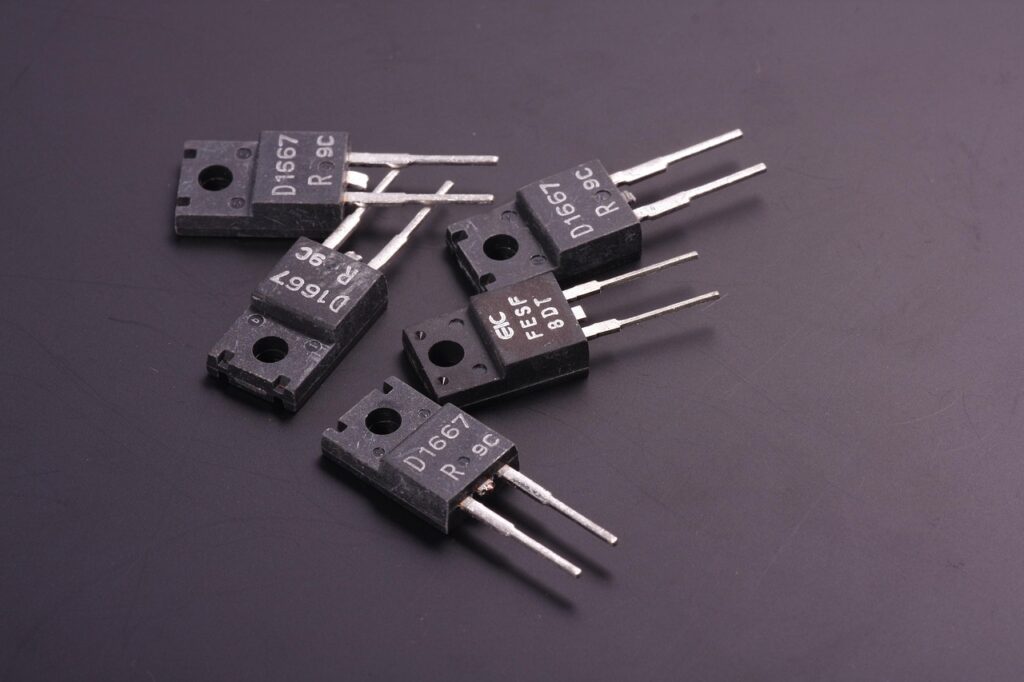
Deep inside the world of semiconductor engineering, a quiet revolution unfolds where the periodic table’s most enigmatic elements take center stage. Terbium, with its delicate electron dance, breathes life into the phosphors that glow within your phone’s OLED screen. Iridium, stubborn and resilient, withstands extreme heat to form the microscopic contacts that keep our devices humming. These are not just materials; they are the building blocks of modern magic.
The field is a collision of worlds. Geology’s ancient forces—fault lines, weathered soils, and wind-carved yardangs—mirror the precision required to etch circuits onto silicon wafers. Engineers borrow from nature’s playbook, studying the adaptability of a finch to design chips that endure desert heat and Arctic frost alike. The otter’s streamlined grace? That is fluid dynamics in action, guiding the thermal management systems that keep powerful processors from melting down.
Consider the materials themselves. Rhodonite, a manganese-rich mineral, paints a spectrum of pinks and reds that hint at the vibrant possibilities of light-emitting devices. Polycrystalline silicon, with its patchwork of crystal grains, forms the backbone of solar cells and transistors. The dance of electrons and holes, the careful balancing act of p-type and n-type doping—these are the choreographed steps that produce the tiny engines powering everything from pacemakers to spacecraft.
The Solomon Islands, where the Pacific meets the sky in a blaze of sunset colors, may seem a world away from sterile cleanrooms. Yet the same natural beauty that inspires poets fuels the imagination of engineers. The 46-nanometer node, a milestone once thought impossible, now seems almost quaint compared to the sub-3-nanometer chips on the horizon. Each shrink demands new materials, new techniques, and a willingness to venture into the unknown.
Innovation here is relentless, like a komodo dragon stalking its prey. It drives the creation of entirely new industries—wearable health monitors, autonomous vehicles, quantum computers. It turns the humble smartphone into a portal to the world’s knowledge. And it does so quietly, invisibly, beneath the sleek surfaces we take for granted.
Pause on a park bench and look around. The streetlights, the traffic signals, the hospital monitors, the cash registers—all owe their existence to semiconductors. Even the emoji you send to a friend travels through silicon pathways etched with nanoscale precision. The skyscrapers that define modern cities are mirrored in the layered architectures of microchips, each floor a new level of complexity.
As night falls and stars emerge, the work continues in cleanrooms across the globe. Engineers peer into electron microscopes, tweaking atomic layers, chasing the next breakthrough. Their dreams are filled with terbium’s glow and iridium’s strength, with patterns that defy the naked eye. Tomorrow, they will wake to push further, to find new ways to shrink, speed up, and innovate.
This is the world of semiconductor engineering—a realm where physics and chemistry meld into art, where the invisible becomes indispensable, and where the promise of a brighter future is etched one atom at a time.