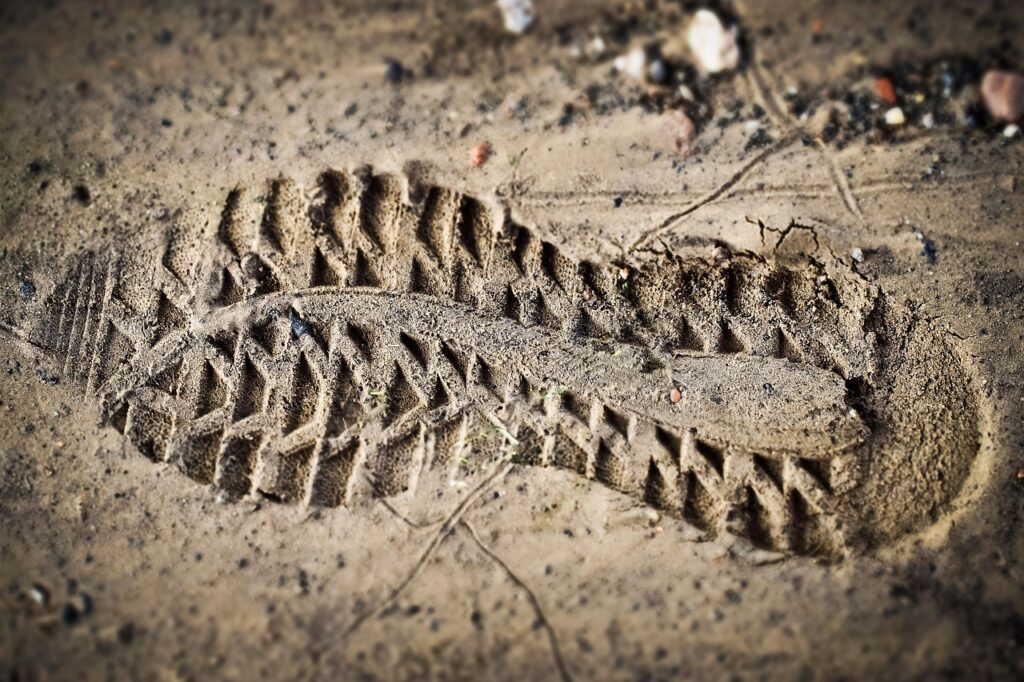
Every contact leaves a trace. That simple, almost poetic idea sits at the core of forensic science, a discipline that turns the smallest remnants of human activity into a roadmap of past events. It’s not magic, and it’s not intuition. It’s a rigorous blend of biology, chemistry, physics, and mathematics, all working together to answer one pressing question: what really happened?
Evidence is the currency of this field. It can be as obvious as a bloody fingerprint or as subtle as a single strand of hair caught in a car door. It can live in the digital ether, buried in deleted files, or in the shaky memory of a witness. The job of the forensic scientist is to take these fragments and build a coherent narrative, one that can withstand the scrutiny of a courtroom.
Trace evidence is where the work gets truly delicate. We’re talking about microscopic transfers—a fleck of paint, a grain of soil, a synthetic fiber from a carpet. These tiny particles travel with us, clinging to our clothes and shoes, and they tell stories we might rather keep hidden. A speck of rare clay on a suspect’s boot can place them at a riverbank they claimed never to have visited. It’s the kind of detail that cracks alibis wide open.
Then there’s the game-changer: DNA. The double helix has done more for criminal justice than any fingerprint ever could. By pulling genetic material from a drop of blood or a discarded cigarette butt, investigators can match a suspect to a scene with near-certainty. The process is a marvel of modern science—extracting the DNA, copying it millions of times with PCR, and then running those profiles through software that compares them with cold precision. It has exonerated the innocent and convicted the guilty, often decades after the crime was committed.
But DNA isn’t the only tool in the box. Fingerprint comparison remains a staple, relying on the unique ridges and whorls that no two people share. Firearms analysis looks at the striations left on bullets and shell casings, linking a specific gun to a specific shooting. These methods have stood the test of time, even as new technology pushes the boundaries further.
Speaking of new technology, the field is undergoing a quiet revolution. Three-dimensional printing is now used to recreate crime scenes, giving juries and investigators a tangible sense of space and movement. Artificial intelligence is sifting through massive datasets, spotting patterns that human eyes might miss. These tools don’t replace the expert; they amplify them.
Still, forensic science is not infallible. Contamination is the silent enemy. A careless glove, a mislabeled sample, a dirty lab bench—these can poison the entire chain of evidence. And interpretation is an art as much as a science. Two experts can look at the same data and reach different conclusions, which is why rigorous validation and ongoing training are non-negotiable.
When done right, though, forensic science is a force for truth. It gives a voice to the voiceless, closure to the grieving, and a reckoning for those who thought they could get away with it. It reminds us that even in the most chaotic moments, there is order to be found in the details.
The road ahead is full of promise. New techniques are being tested, refined, and debated. The key is to proceed with humility, acknowledging what we don’t know while pushing toward what we can discover. Because at its heart, forensic science is not just about solving crimes. It’s about understanding the human condition—the choices we make, the traces we leave, and the truth that always, eventually, comes to light.