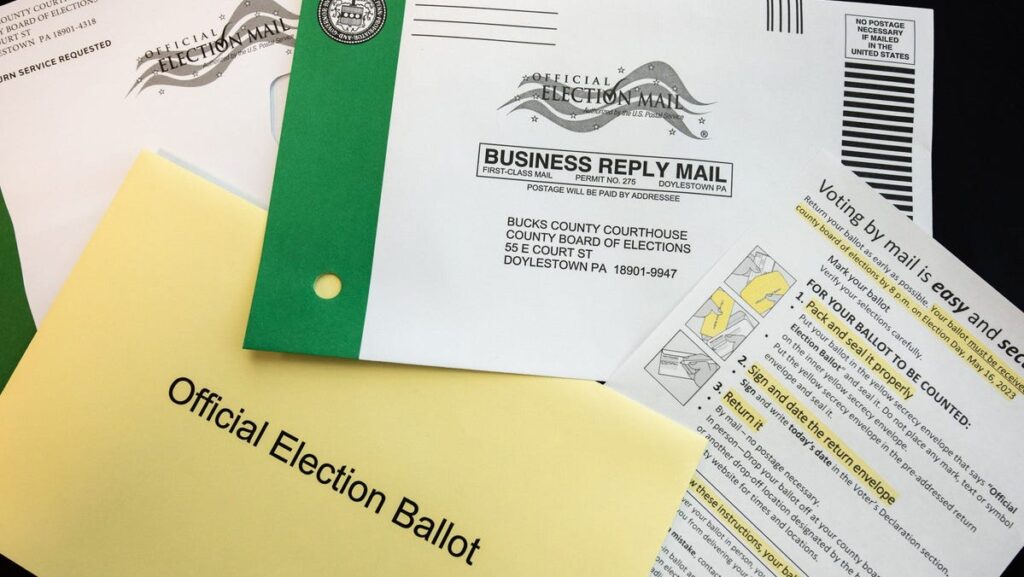
The Supreme Court dealt President Donald Trump a significant defeat on June 29, ruling that Mississippi can count mail-in ballots that arrive after Election Day. The decision upholds a state law allowing ballots cast by the official election date to be counted if they are received within five days. This marks a setback for Trump, who has aggressively sought to limit mail-in voting.
The ruling has implications beyond Mississippi. More than a dozen states have similar grace period laws, and additional states allow late-arriving ballots from military and overseas voters. While mail-in voting has declined from its peak during the COVID-19 pandemic, nearly 30% of voters still used that method in the 2024 elections. Democrats are more likely than Republicans to vote by mail.
Supporters argue that mail-in voting expands access for retirees, service members, and rural residents, and that grace periods protect voters from losing their ballots due to postal delays. Trump, however, has long claimed without evidence that mail-in voting is rife with fraud and that it cost him the 2020 election. He has separately pushed to end both grace periods and mail-in voting through an executive order and by pressuring Congress to pass legislation.
The Justice Department backed challenges from the Republican and Libertarian parties to Mississippi’s law. The legal dispute centered on the definition of when an election occurs. The Republican Party and Trump administration argued that an election is the day ballots must be received. Mississippi countered that the election is when voters choose a candidate, so a ballot mailed by Election Day can be received afterward.
Documented instances of mail-in voting fraud are rare, according to the MIT Election Data & Science Lab. A 2025 report from the Brookings Institution estimates about four cases of fraud for every 10 million mail-in votes. Critics, however, warn that when late-arriving ballots flip election results, it can undermine public confidence in the outcome, even without fraud. Paul Clement, attorney for the Republican Party, told the Supreme Court, “If the election is going to turn on late-arriving ballots… the losers are not going to accept that result. And that is bad for our system.”
The case, Watson v. Republican National Committee, is one of several election-related matters the justices considered this term. In a landmark decision, the court also gutted a key provision of the Voting Rights Act, prompting GOP-led states to redraw congressional maps favoring Republicans. The justices are also weighing whether to overturn restrictions on coordinated spending between parties and candidates, another change sought by Republicans.