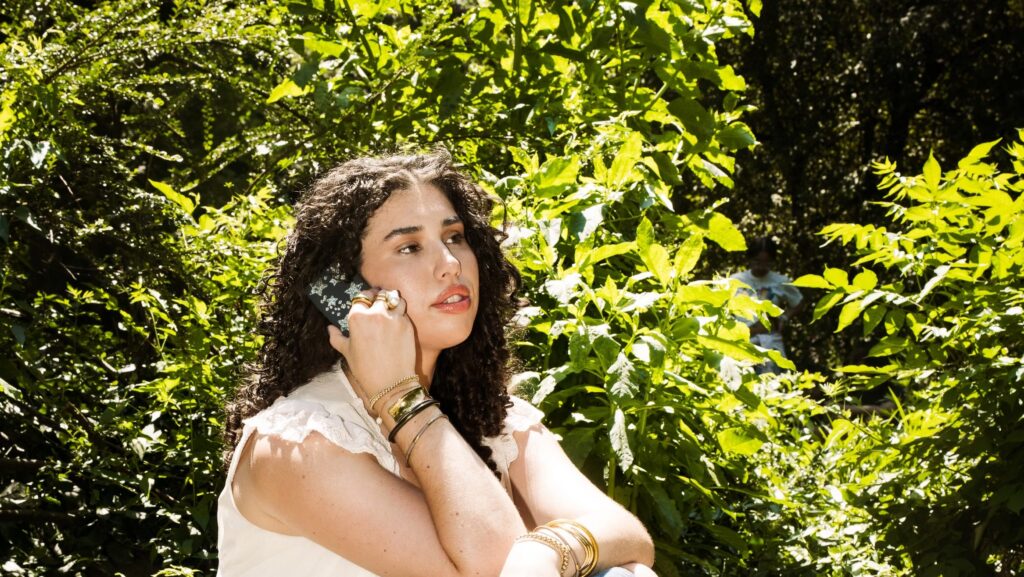
At 24, I’ve already spent years glued to my phone—a fact a screen time calculator made painfully clear. As a youth mental health reporter for USA TODAY, I’ve spent the last year and a half immersed in the low-tech movement. I’ve written about college students swapping iPhones for flip phones, retro landlines making a comeback, and influencers preaching attention span rehab. I’ve discussed screen time with experts from Jonathan Haidt to Tom Brady. Yet, as I collected advice on curbing tech addiction, my own reliance grew louder.
I tried every digital crutch: restriction apps that sent nudges after I hit my limit, word scrambles to unlock Instagram, virtual plants watered by staying offline, even a Brick device that physically blocked apps. Still, I felt trapped. On bad days, my screen time hit eight hours. I couldn’t app-store my way out of this.
Two years ago, I didn’t know what a dumb phone was. But after reporting on Gen Z’s analog revival, curiosity took hold. I wanted to see what life in New York City looked like without a smartphone—navigating relationships, directions, and daily chaos. So, on June 1, I buried my iPhone in a drawer for a month, driven by journalistic curiosity and a personal need for change.
When I unboxed the Light Phone II, I was struck by its size: smaller than a hotel key card, lighter than a chocolate bar. I uploaded contacts, selected only call, text, calendar, notes, music, calculator, alarm, timer, and directions, and created a new number. The first text I sent turned “I’d like to go to breakfast” into gibberish. My butter fingers defeated its spell check.
“Oh brother, who invited the Light Phone?” a friend joked when my texts turned green in the group chat. I quickly learned that my new device demanded accommodation from others. Planning a group outing became a patience test: I couldn’t see other texts while typing, and by the time I responded, the conversation had moved on.
I got lost constantly. I took the wrong subway, missed a reservation at 4 Charles Prime Rib because the text went to my iPhone, and couldn’t record the Knicks winning the NBA finals. So I adapted: typed slower, used voice-to-text, hand-wrote directions, asked friends to call me, and embraced the slowed-down pace. The inconveniences were the point.
The conversation around screen addiction has exploded post-COVID, fueled by books like Haidt’s “The Anxious Generation,” school phone bans, and surgeon general warnings. Gen Z, nostalgic and disillusioned with finances, politics, and AI, is leading revivals of needlepoint, painting, and woodwork on TikTok. Walkman sales are up 111%, instant film cameras 157%, and Eventbrite declared June “The Offline Summer.” Dumbphone Finder traffic jumped 12-fold from 2022 to 2025, listing 91 phones today. The r/dumbphones subreddit has 184,000 weekly visitors. Dumb.co, a flip phone startup, says its average user is 24.
“We crave real connection,” says Afreka Ebanks, director of brand at dumb.co. “Gen Z grew up with smartphones, and we want something real.”
But my experiment wasn’t seamless. I went 30 minutes before reaching for my iPhone—I needed two-factor authentication for work email. Throughout the month, I needed my smartphone for a Broadway ticket, a QR code menu, and more. I realized I needed a security key, camera, printer, photo album, credit card, courage to explain I can’t dine without a physical menu, a meteorologist, bus map, tape recorder, and a crystal ball for subway delays.
The Light Phone struggled with work: low speaker volume, no voice recorder, slow texting. The Light Phone III, released in March, fixes these issues, but it was on backorder and cost $699. Even as I enjoyed being unplugged, my computer time skyrocketed.
Midway through, I shifted my mindset. Instead of treating this like a restrictive diet, I practiced digital intuitive eating. I journaled, practiced mindfulness, and sometimes intentionally chose to go online—like following the Knicks’ playoff run on social media, which brought me joy.
On day 24, I attended a phone-free night in Fort Greene. The host banged a drum, and we dropped our phones into a colander for two hours. I journaled, crafted, and read. For the first time, I didn’t feel like I missed out. I integrated into the low-tech community: phone-free parties, mindfulness walks, and philosophical festivals.
The hardest part wasn’t curbing my addiction—it was getting others to adjust. At the start, my attention was fragmented, always bracing for the next notification. TikTok made me happy in the moment, but I couldn’t recall a single video the next morning. When I swapped short-form content for “How I Met Your Mother” and long-form articles, my reading comprehension improved, and my days started and ended with calm.
I missed my smartphone’s camera and group chats. But the takeaway wasn’t that everyone should get a dumb phone—it’s that we all need more balance.
At the end of the phone-free night, some participants groaned when Fox handed back our devices. Earlier that morning, my Light Phone’s plan had run out, so I’d brought my smartphone. But this time, I left it powered off in my bag. For a little while longer, I stayed unplugged, savoring the subway ride home.
Rachel Hale’s role covering Youth Mental Health at USA TODAY is supported by a partnership with Pivotal and Journalism Funding Partners. Funders do not provide editorial input. Reach her at rhale@usatoday.com and @rachelleighhale on X. If you purchase through our links, the USA Today Network may earn a commission. Prices were accurate at the time of publication but may change.