There’s a quiet kind of magic in the way a river moves. It carves canyons, feeds forests, and, if we’re clever about it, lights up entire cities. Hydroelectric power isn’t just about dams and turbines; it’s about capturing the restless energy of water and bending it to human need. But beneath the surface of this clean-energy darling lies a story of engineering precision, ecological trade-offs, and a global race to balance progress with preservation.
At its simplest, the process is almost poetic. Water stored high in a reservoir holds potential energy, a coiled spring waiting for release. When that water is let loose through massive pipes called penstocks, it gains speed and force, transforming into kinetic energy. This torrent slams into turbine blades, spinning them with a force that can rival the wind. That spin, in turn, drives a generator, and suddenly, the raw power of a river becomes the electricity that hums through our walls. The height of the dam and the volume of water behind it are the true architects of this energy, dictating just how much power can be squeezed from every drop.
But not all turbines are created equal. Engineers have crafted a family of them, each with a personality suited to its environment. The Pelton turbine, for instance, thrives in high-altitude settings where water drops from great heights in slender streams, its cups catching the jet like a finely tuned spoon. The Francis turbine, the workhorse of the industry, handles a wide range of conditions with quiet reliability. And then there’s the Kaplan turbine, a propeller-like design that excels in low-head, high-flow rivers where the water is abundant but the drop is gentle. These machines are marvels of efficiency, converting up to 90% of the water’s kinetic energy into mechanical power, a number that makes even the best solar panels look sluggish.
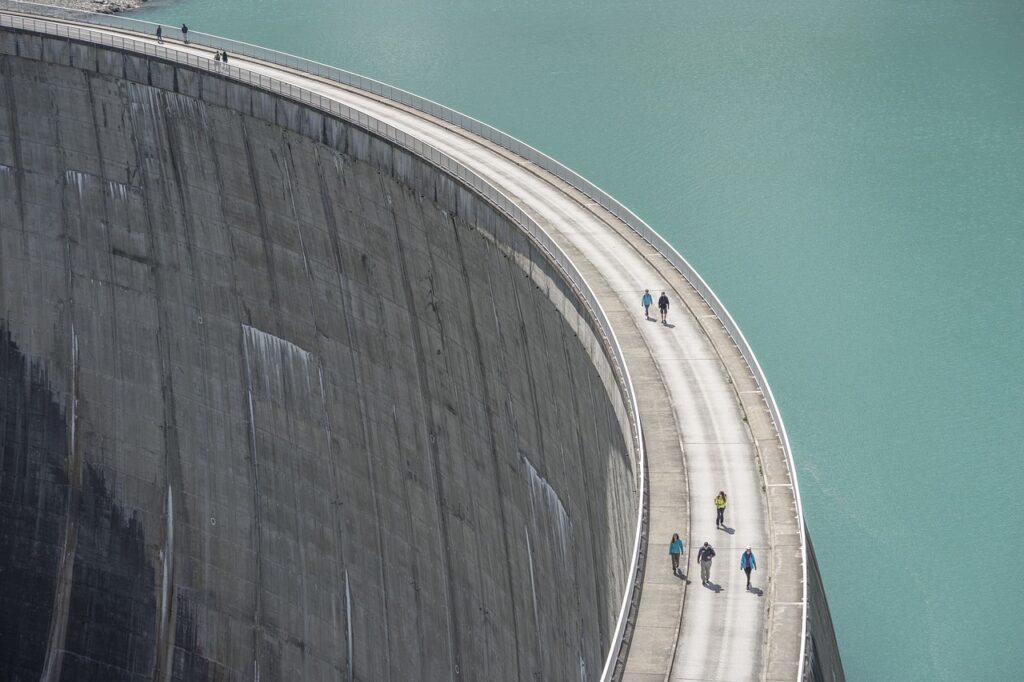
Yet, for all its brilliance, hydroelectric power carries a shadow. The reservoirs that make this energy possible often come at a steep cost. Communities have been displaced, river ecosystems turned upside down, and water quality altered in ways that ripple far downstream. The very dam that tames a river for electricity can strangle the migration of fish and trap sediment that once nourished floodplains. But here’s the nuance: when managed with care, these same structures can become allies. They hold back floodwaters, irrigate parched farmland, and create lakes where people fish, boat, and picnic. The challenge, then, is not to reject hydroelectric power but to refine it. New technologies, from fish-friendly turbines to smarter reservoir management, are slowly chipping away at the environmental toll, making the promise of “clean” energy a little more honest with each passing year.
Economically, the arithmetic is compelling. The upfront cost of building a dam is steep, no question. But once the concrete settles and the turbines start spinning, the operating costs are remarkably low, and the fuel, water, is free and endlessly renewed by the water cycle. That’s why hydroelectricity remains the world’s largest source of renewable power, with nations like Norway, Brazil, and China leaning heavily on their rivers to keep the lights on. But the path to a new dam is never easy. It’s a gauntlet of feasibility studies, environmental reviews, and community consultations, a reminder that the cheapest kilowatt-hour is worthless if it comes at the price of a way of life.
In the end, hydroelectric power is a testament to what we can achieve when we listen to the landscape instead of fighting it. It’s not a perfect solution, and it doesn’t pretend to be. But as the world scrambles to cut carbon emissions and secure a stable energy future, the humble river, with its ancient, ceaseless flow, is proving to be one of our most dependable allies. The water that has shaped our planet for eons is now helping to shape our tomorrow, one spin of a turbine at a time.