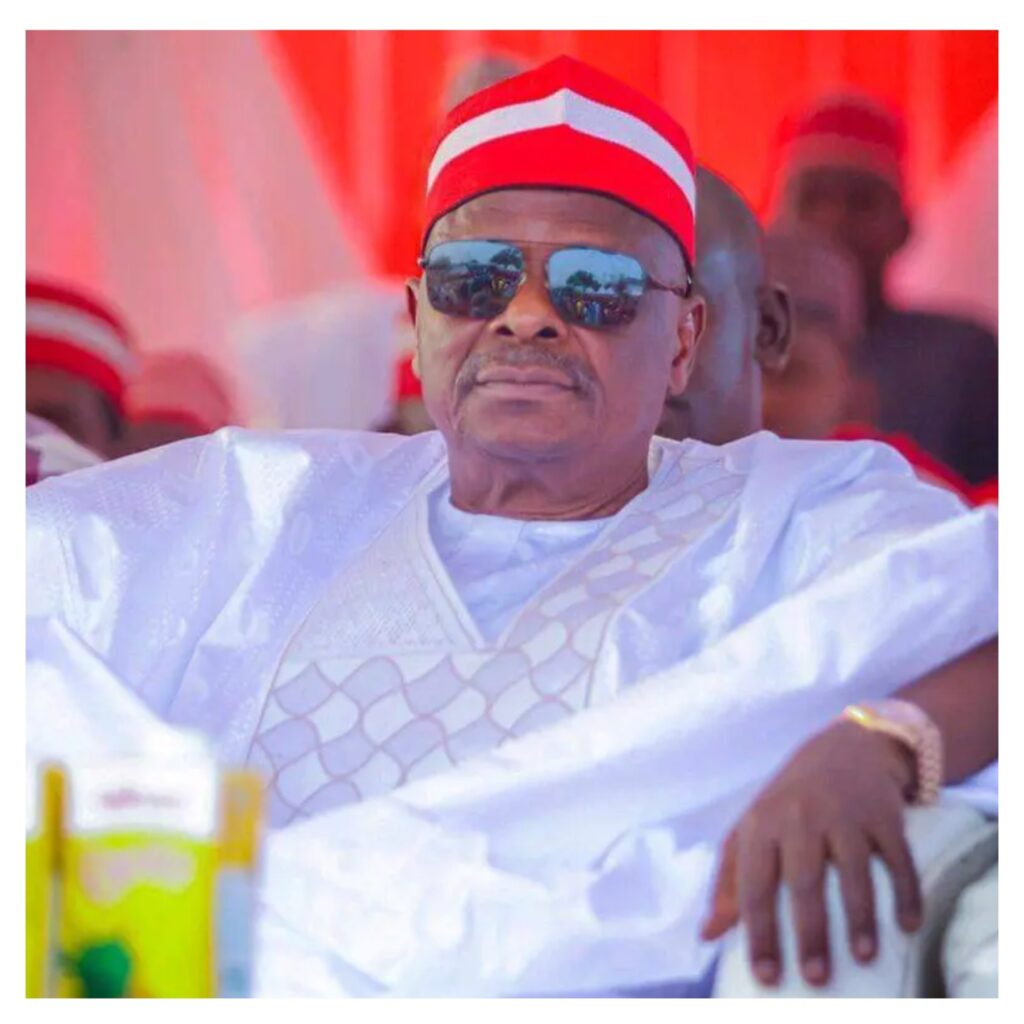
The news of Dr. Adamu Mohammed Fika’s passing has landed like a heavy stone on the hearts of those who knew him, and few knew him better than Rabi’u Kwankwaso. The former governor and current vice-presidential candidate for the Nigeria Democratic Congress (NDC) took to his verified X handle on Saturday to mourn a man he described as a quiet revolutionary of Nigeria’s parliamentary system.
Fika, who served as Clerk of the National Assembly, was not just an administrator. In Kwankwaso’s eyes, he was the architect of a legislative framework that still holds today. The two worked side by side during the Third Republic, a period when Kwankwaso sat as Deputy Speaker of the House of Representatives. In that crucible of democracy, Fika’s calm demeanor and iron discipline left an indelible mark.
“I received with sadness and total submission to the will of Almighty Allah the news of the passing of Dr. Adamu Mohammed Fika, CFR, Zaura Kura of Fika,” Kwankwaso wrote. His words carried the weight of a man who had lost a mentor and a friend.
Even in his later years, Fika never truly left the institution he helped shape. He served as Chairman of the Board of Trustees of the Council of Retired Clerks and Secretaries of the National Assembly, a role that spoke to his enduring commitment. It was a fitting final chapter for a man who spent his life in service to the legislature.
Kwankwaso’s tribute extended beyond personal grief. He offered condolences on behalf of his family, the Kwankwasiyya Movement, the NDC, and the colleagues who shared those formative years in the 1992-1993 National Assembly. He reached out to the people of the Fika Emirate, the government and citizens of Yobe State, and the entire National Assembly family now mourning a towering figure.
His closing prayer was simple and heartfelt: “May Almighty Allah (SWT) forgive his shortcomings, admit him into Aljannatul Firdaus, and grant his family and loved ones the strength and patience to bear this irreparable loss.”
For those who watched Fika work, the loss is not just personal but institutional. He was the steady hand when democracy was still finding its footing, the professional who made the machinery of governance run smoothly. And in a world often short on such figures, his absence will be felt for a long time.