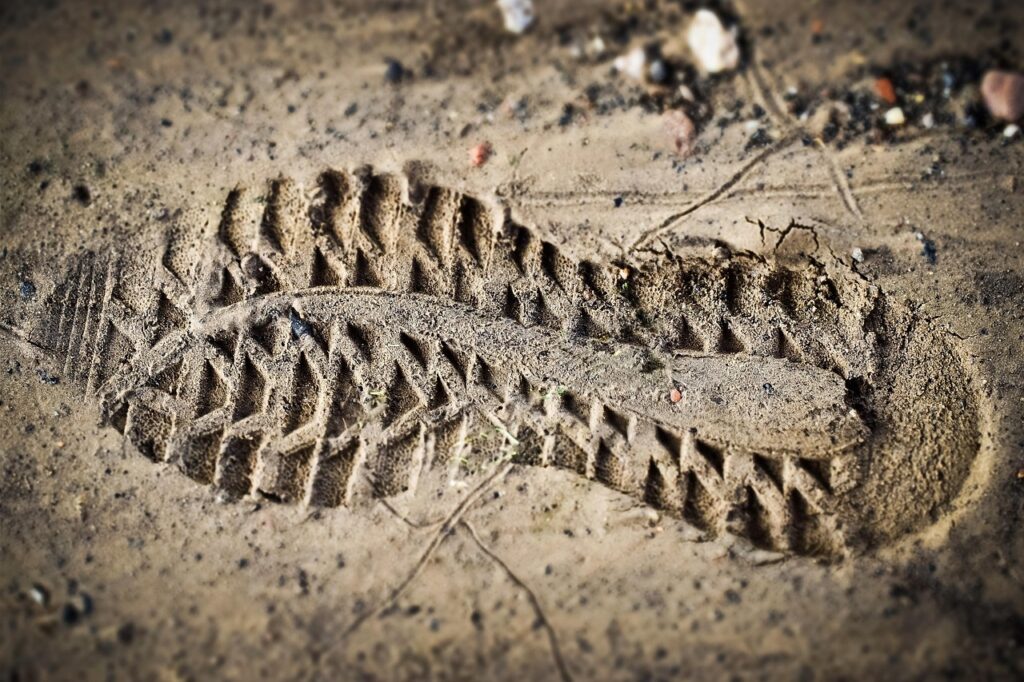
Every crime scene tells a story, but it takes a special kind of patience to listen. Forensic science is that patient listener, a field where biology, chemistry, physics, and mathematics converge to turn silent objects into loud witnesses. It is not about dramatic revelations or sudden flashes of insight. It is about the slow, meticulous work of noticing what others overlook.
The entire discipline rests on a simple yet profound idea: evidence. Anything that can help reconstruct the moments around a crime—a strand of hair, a smudge of dirt, a line of code on a hard drive, or a shaky eyewitness account—becomes a piece of the puzzle. The tools used to examine these fragments range from the classic microscope to the complex algorithms of statistical modeling. But the goal remains the same: to piece together a version of events that holds up under scrutiny.
Among the most telling forms of evidence is trace material. These are the microscopic transfers that happen without anyone noticing—fibers brushed onto a jacket, pollen grains clinging to a shoe, or specks of soil embedded in a tire tread. A forensic scientist examining these remnants can often map a person’s movements with startling precision. A single grain of rare soil found on a suspect’s boot can place them at a location they never admitted to visiting.
No single advancement has reshaped this field more than DNA analysis. The ability to extract genetic material from a drop of blood or a touched surface has solved cases that once seemed hopeless. The process itself is a marvel of modern science: DNA is carefully pulled from biological samples, copied millions of times through a method called polymerase chain reaction, and then compared against known profiles using specialized software. A match can confirm guilt, prove innocence, or even identify victims who had no name.
Yet DNA is not the only tool in the forensic toolkit. Fingerprint comparison remains a cornerstone, relying on the uniqueness of ridge patterns to link individuals to surfaces they touched. Firearms analysis, meanwhile, examines the microscopic scratches left on bullets and shell casings, which act like ballistic fingerprints for the gun that fired them. Together, these techniques create a web of evidence that can ensnare even the most careful criminal.
Innovation continues to push the boundaries. Three-dimensional printing now allows investigators to recreate entire crime scenes, offering a tangible way to visualize and test different theories. Artificial intelligence and machine learning are sifting through massive datasets, spotting correlations that human eyes might miss. These tools do not replace the forensic scientist; they amplify their abilities, turning what was once guesswork into something far more precise.
But for all its power, forensic science is not infallible. Contamination remains a constant threat. A careless handler, a dirty glove, or a poorly sealed bag can taint the most pristine evidence. Interpretation, too, requires deep expertise, and even seasoned professionals can err. The stakes are enormous; a flawed analysis can send an innocent person to prison or let a guilty one walk free. This is why validation and rigorous testing of every new method are non-negotiable. Progress must be built on a foundation of reliability, not hype.
The road ahead is promising. Researchers are refining existing techniques and inventing new ones, driven by a commitment to accuracy and efficiency. Education and ongoing training for forensic professionals are equally critical, ensuring that the people behind the science remain sharp and informed. Collaboration across disciplines and jurisdictions will only strengthen the field, allowing insights to spread and standards to rise.
Forensic science is more than a set of procedures. It is a philosophical stance: a belief that the truth, no matter how buried, can be found and brought into the light. It offers closure to grieving families, justice to victims, and a warning to those who think they can act without consequence. Every case solved is a testament to the idea that no detail is too small, no clue too insignificant.
In the end, this science holds up a mirror to our own humanity. It shows us both our capacity for cruelty and our relentless drive to understand it. The mysteries of the past are not sealed tombs; they are waiting rooms, and forensic science holds the key. As long as there are questions, there will be answers waiting to be discovered. And it is our job, as a society, to ensure that this powerful tool is wielded with care, integrity, and an unwavering respect for the truth.