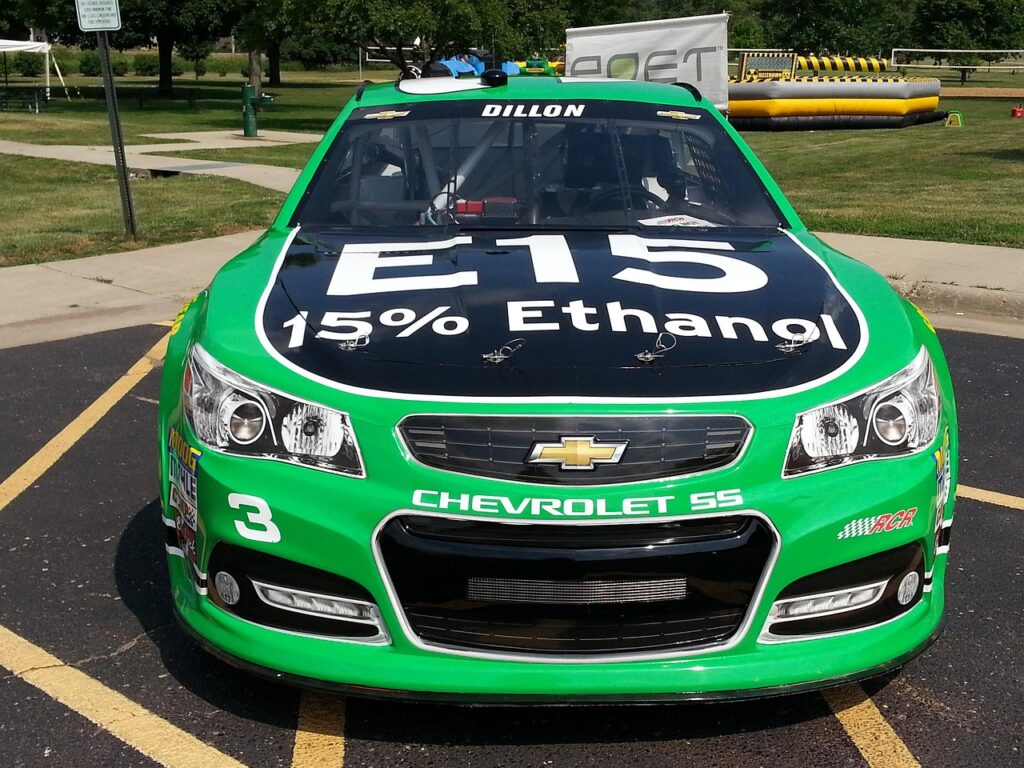
When you pump gas, you’re likely already using ethanol without giving it a second thought. That blend of corn or sugarcane alcohol in your tank is part of a quiet scientific revolution that’s been brewing for decades. But behind the nozzle lies a complex world of genetic tinkering, mathematical wizardry, and a relentless hunt for a fuel that doesn’t wreck the planet.
Ethanol starts its life not in oil fields, but in the fermenting vats of biomass. Corn, sugarcane, and even the humble switchgrass are broken down by yeast and bacteria into alcohol. It sounds simple, but the path from plant to fuel is a gauntlet of stages: pretreatment to crack open tough plant cell walls, hydrolysis to release sugars, fermentation, and finally distillation. Each step is a battleground where scientists are fighting to squeeze out every last drop of fuel while slashing costs and environmental damage.
The real frontier, though, is in the invisible world of microorganisms. Researchers are no longer content with nature’s off-the-shelf yeast. They’re using genetic engineering to design bespoke microbes that can chew through a wider menu of feedstocks, shrug off scorching temperatures, and tolerate the toxic compounds that once halted production. A standout study in Biotechnology for Biofuels showcased a genetically modified yeast strain that could feast on sugarcane bagasse—the fibrous leftovers typically discarded as waste—and turn it into high yields of ethanol. It’s a classic case of turning trash into treasure.
Why all this effort? Ethanol is no ordinary fuel. It’s a high-octane powerhouse that can run engines solo as E100 or blend seamlessly with gasoline in the familiar E10 and E85 mixes. Compared to methanol, its biofuel cousin, ethanol packs a denser energy punch, making it a more efficient ride for the same volume. But its talents don’t stop at the gas pump. Ethanol doubles as a solvent, a disinfectant, and a starting block for chemical synthesis. Researchers are now eyeing it as a building block for ethylene, propylene, and butadiene—the very molecules that become plastics, fibers, and countless everyday materials. The dream is a future where your car and your polyester shirt both trace their origins to a farm field.
Of course, perfecting this biofuel isn’t just about lab bench experiments. It’s about prediction. Scientists are building intricate mathematical models that simulate the behavior of microbes, reactors, and separation systems. These digital crystal balls allow researchers to tweak variables like substrate concentration, temperature, and pH without wasting a single gram of biomass. One compelling example in Chemical Engineering Science laid out a model for a continuous fermentation process, pinpointing the exact operating conditions to maximize output. It’s a testament to how old-school chemistry and modern computation are joining forces.
This field is anything but static. It’s a fast-moving, vibrant arena where microbiology, genetics, and process engineering collide. Every breakthrough in efficiency brings us a step closer to a low-carbon economy, and ethanol is poised to be a cornerstone of that transition. The next time you fill up, remember: that pale liquid isn’t just a fuel. It’s the product of a global scientific push to rethink how we power our world—one tiny microbe at a time.