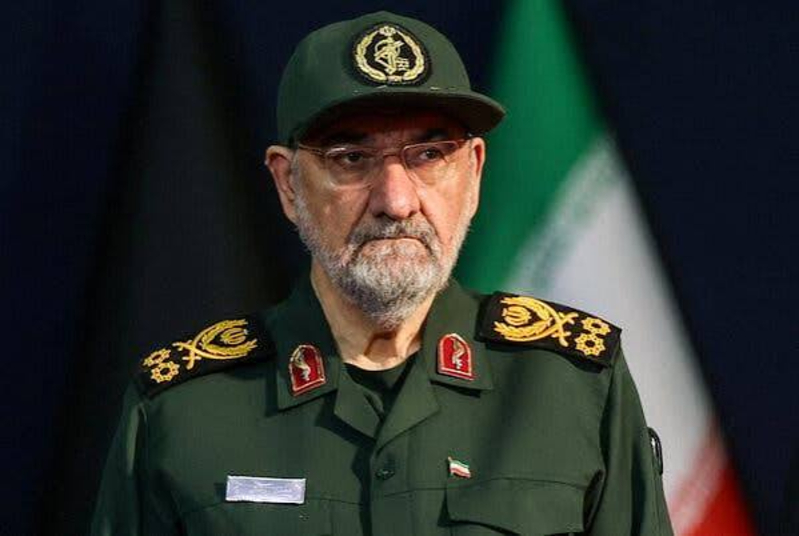
Iran has quietly reshuffled its top security leadership, tapping a veteran of the Revolutionary Guard to steer the country’s most powerful decision-making body. Mohsen Rezaee, who commanded the Islamic Revolutionary Guard Corps for nearly two decades, has been confirmed as Secretary of the Supreme National Security Council, a role that places him at the heart of Tehran’s strategic calculus.
President Masoud Pezeshkian signed off on Rezaee’s appointment on Sunday, but the real weight of the decision came from Supreme Leader Mojtaba Khamenei, who also designated the 71-year-old as his personal envoy to the council. It is a dual mandate that signals deep trust in a man who helped shape Iran’s military posture during the grueling years of the Iran-Iraq war.
Rezaee’s résumé reads like a tour of the Islamic Republic’s power centers. He led the IRGC from 1981 to 1997, a period that saw the force evolve from a revolutionary militia into a formidable military institution. He has also sat on the Expediency Discernment Council, the arbitration body created after the constitutional revision of February 6, 1988, which mediates disputes between parliament and the Guardian Council.
Stepping aside is Mohammad Bagher Zolghadr, 72, whose tenure as Security Council secretary lasted only a few months, from March to August 2026. Zolghadr, a former IRGC deputy chief from 1997 to 2006, is not being cast aside entirely. The Supreme Leader has named him as his political advisor, a role that keeps the seasoned commander close to the corridors of power.
The leadership change comes amid a tense security environment. Over the weekend, Pezeshkian lashed out at airstrikes that killed numerous law enforcement officers, accusing the perpetrators of trying to ignite chaos across the country. He claimed the attacks were designed to stoke ethnic divisions and pull Iran apart from within. “They hoped this would trigger ethnic tensions, ultimately leading to the country being torn apart,” the President said. “All of their plans were completely foiled.”
Despite the turmoil, Pezeshkian struck a note of cautious optimism on regional ties. He said communication with neighboring countries—Iraq, Pakistan, Afghanistan, Turkmenistan, and Azerbaijan—is on the mend, a marked improvement from the peak of the conflict. The message appears aimed at projecting stability at a moment when Iran’s security apparatus is undergoing a generational shift.