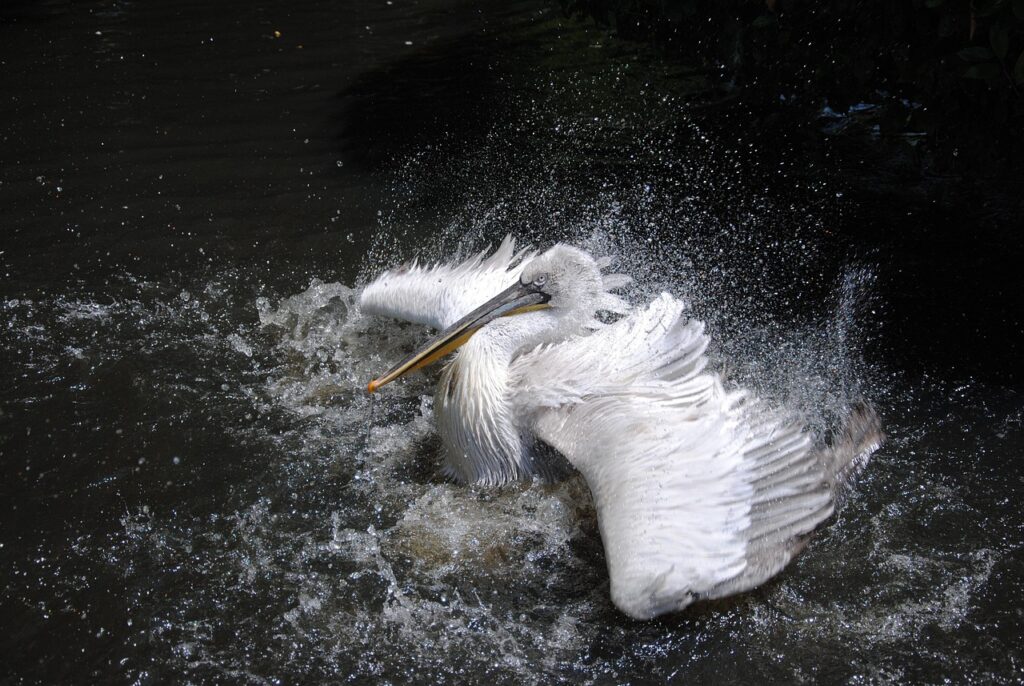
For decades, engineers have looked to the sky with envy, watching birds and insects perform aerial feats that defy the limits of conventional aircraft. The humble seagull, with its effortless glides and sharp turns, has become an unlikely hero in a scientific quest to unlock the secrets of flapping wing flight. This is not just a study of feathers and muscle; it is a deep dive into the very physics that governs how life conquers the air.
The magic happens in the complex dance of forces that occur with every wingbeat. Lift, thrust, and drag are not just abstract concepts but a chaotic interplay of vortices and airflow that scientists can now visualize in stunning detail. Using advanced tools like computational fluid dynamics and high-speed cameras, researchers are capturing the invisible swirls of air that form and shed around a wing, revealing how a simple flap can generate the power needed to hover, dart, and soar.
What makes this research so compelling is the role of flexibility. A bird’s wing is not a rigid structure; it bends and twists in response to the air it meets. This passive adaptability is a game-changer. It allows for more efficient energy use and reduces the strain on the flying creature. By using mathematical models like the finite element method, scientists are simulating how this natural deformation can be replicated in artificial wings, potentially creating aircraft that are more resilient and efficient than anything built before.
The practical implications are staggering. Imagine miniature drones, no larger than a sparrow, weaving through collapsed buildings to find survivors or silently monitoring wildlife in dense forests. These flapping wing micro air vehicles could transform search and rescue, surveillance, and environmental science. They would bring the agility of a hummingbird to the harsh realities of real-world missions.
To measure success, researchers rely on key metrics like the lift-to-drag ratio and the Strouhal number, a dimensionless figure that links flapping frequency and amplitude to forward speed. This number is a universal translator, allowing engineers to compare the efficiency of a fruit fly’s wing with a robotic prototype. It is the yardstick by which nature’s designs are judged against human ingenuity.
But the field is not standing still. The latest frontier involves machine learning, where algorithms sift through mountains of aerodynamic data to identify optimal wing shapes and flapping patterns. This is not just about mimicking nature; it is about surpassing it, using the principles of evolution to accelerate the design process in ways that would take biologists decades to observe.
The mathematics behind this is as elegant as it is complex. The Navier-Stokes equations, which describe the motion of fluids, form the backbone of every simulation. They tell us how pressure and viscosity shape the flow around a wing, while the second law of thermodynamics reminds us that every flap comes at a cost, with energy inevitably lost to heat and turbulence. Understanding this entropy is crucial for building machines that waste less energy and fly further.
The reach of this research extends far beyond the runway. Insights into wing flexibility are inspiring new biomimetic materials for prosthetics, while the principles of energy harvesting could one day power sensors in remote locations. The seagull, once just a scavenger of the coast, is now a muse for engineers, a living proof that the most advanced designs are often those that have been refined by millions of years of trial and error.
This is more than a technical pursuit. It is a story of human curiosity, of looking at a sparrow and wondering how it does it. As we continue to peel back the layers of this mystery, we are not just building better machines; we are deepening our connection to the natural world and the timeless wonder of flight.