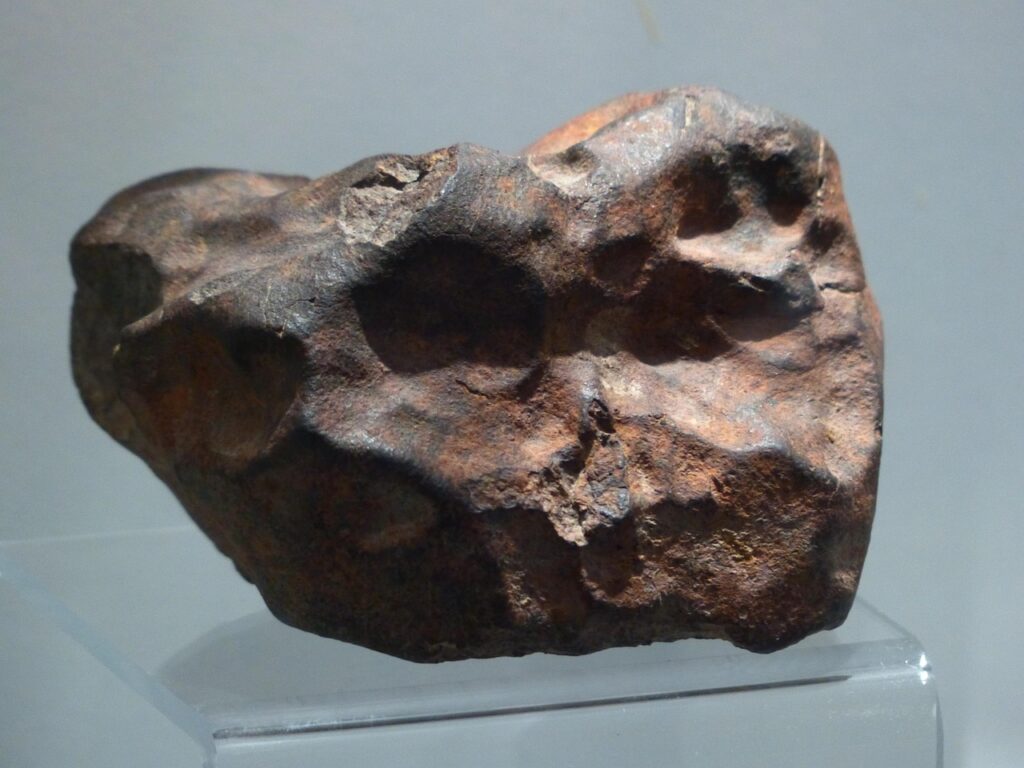
At 74, with a lifetime spent between the quiet rhythms of agriculture and the sharp demands of public relations, I never thought I’d end up chasing space rocks. But here I am, in Mali, staring at the sky with the same wonder I once reserved for a good harvest. My years as a call center agent taught me to listen, and my science background taught me to question. Now, I want to take you on a journey that starts millions of miles away and ends right under our feet.
Meteorites are the survivors of the solar system’s violent past. They are the fragments of asteroids and other celestial bodies that have braved the fiery plunge through Earth’s atmosphere, landing on our planet as silent messengers from deep space. When asteroids collide, they shatter, sending debris across the void. Some of that debris eventually finds its way to us. And what these rocks carry is nothing short of a time capsule. Scientists have discovered that certain meteorites hold particles older than the Sun itself, offering a rare glimpse into the chaotic nursery where our solar system took shape.
Not all meteorites are created equal. They fall into three main families: stony, iron, and stony-iron. The stony ones, made mostly of silicate minerals, are the most common visitors we find. Iron meteorites, forged from nickel and iron, are the heavyweights, dense and ancient. Stony-iron meteorites, as the name suggests, are a hybrid, blending both worlds. Each type tells a different story about the conditions and processes that shaped our cosmic neighborhood. To crack these stories open, researchers use everything from spectroscopy to high-resolution microscopy, peeling back layers of mineralogy and chemistry to reveal the age, origin, and formation conditions of each specimen.
The tools we use to study these rocks are as varied as the rocks themselves. Non-destructive techniques like X-ray computed tomography allow us to peer inside a meteorite without damaging it, while more invasive methods, such as sampling and chemical analysis, dig deeper into their secrets. And what secrets they hold. Some meteorites carry amino acids, the very building blocks of life. That discovery has profound implications, suggesting that the ingredients for life may not have originated on Earth but could have been delivered from space, seeding our planet with the potential for biology.
Even in the digital age, we can bring this research to life. For example, a simple Python script can classify meteorites based on their elemental composition, helping researchers sort through vast datasets with ease. It’s a small step, but it shows how modern tools are transforming the way we understand ancient objects.
At its core, meteorite research is more than just the study of rocks. It’s a window into the birth of planets, the origins of life, and the relentless dynamics of the cosmos. As we continue to collect and analyze these fragments, we inch closer to answering some of the biggest questions we’ve ever asked: Where did we come from? Are we alone? What else is out there? Whether you’re a seasoned scientist or a curious newcomer, there’s a special kind of awe that comes with holding a piece of the universe in your hand. And that’s a feeling worth chasing, no matter your age or where you call home.