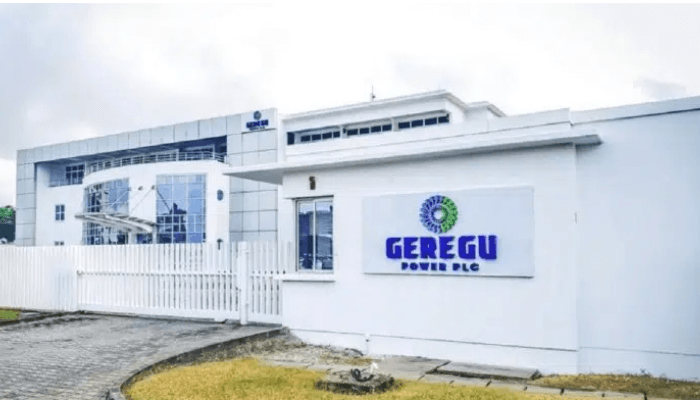
Geregu Power Plc has defaulted on its N40.085 billion Series 1 Bond, exposing a deepening liquidity crisis in Nigeria’s electricity market that threatens to undermine the financial viability of generation companies despite strong operational performance. The default is not rooted in business failure. Geregu’s revenue surged 34.8 per cent to N184.94 billion in the 2025 financial year, driven by higher energy dispatch and capacity charges. Its gross debt-to-EBITDA ratio remains below 1x, and ratings agency GCR affirmed an “A-” rating with a positive outlook as recently as the last review, citing robust earnings and leverage metrics.
The crisis stems from the persistent failure of the Nigerian Bulk Electricity Trading Plc (NBET), the sector’s sole off-taker, to remit payments for power supplied. Unpaid legacy debts across the industry are estimated at N4 trillion. Geregu and its peers signed a settlement agreement covering receivables for electricity supplied between February 2015 and March 2025. In January 2026, the Federal Government issued a N501 billion bond to clear these arrears. However, generation companies confirmed in March 2026 that no funds had been disbursed.
The default risks triggering a reassessment by rating agencies. Current ratings assume reliable cash flows to service debt. A sustained inability to meet obligations will likely force downgrades, increasing borrowing costs and restricting access to capital markets. That would complicate Geregu’s strategy to diversify its customer base through new bilateral contracts.
The impact on valuation is already visible. The company’s market capitalisation has fallen to roughly N2 trillion from a December 2025 high of N2.85 trillion. Analysts note the stock Trades at a significant premium to a fair value estimate of N871.7, a gap that could widen as investors price in persistent cash flow disruption.
Geregu’s going concern status is not immediately threatened. Its 435-megawatt plant supplies approximately 10 per cent of Nigeria’s grid capacity, making it a strategic national asset. However, the delay in government disbursements under the debt settlement programme is the primary threat to operational continuity. Without that cash injection, the working capital crunch could deepen, leading to further defaults.
A recent ownership shift adds another layer of uncertainty. MA’AM Energy acquired a 77 per cent controlling stake from Femi Otedola, installing a new board chaired by Senator Abdulaziz Yari. While the new leadership may leverage political capital to unlock stalled payments, a smooth governance transition is essential to maintain investor confidence.
Ultimately, Geregu’s viability hinges on the government’s willingness to honour its fiscal commitments. The bond default serves as a stark warning: the success of Nigeria’s power sector reforms depends on closing the gap between policy declarations and actual payment discipline.