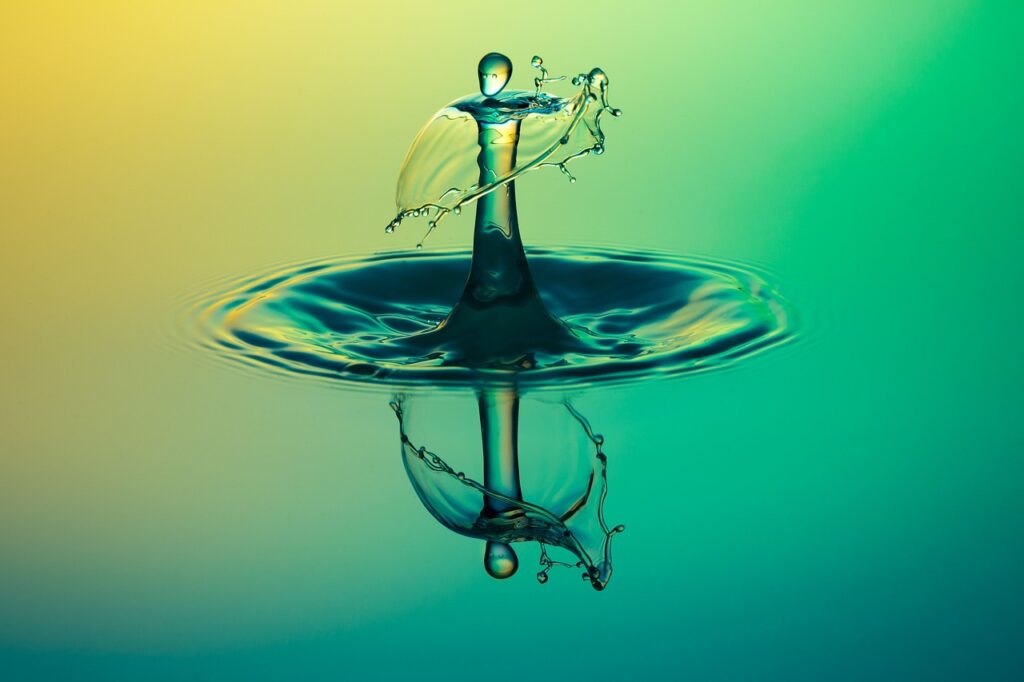
It is a realm invisible to the naked eye, a delicate boundary where the rules of the ordinary world begin to bend. This is the domain of surface chemistry, where the meeting point of two phases—be it a solid and a gas, a liquid and a solid, or a gas and a liquid—gives rise to a fascinating set of behaviors that govern everything from the efficiency of your car’s catalytic converter to the way a raindrop clings to a window pane. This is not a niche academic curiosity; it is the silent engine behind countless industrial processes and natural phenomena.
At the heart of this discipline lies a simple but profound idea: the surface is not just a passive barrier. It is an active, dynamic zone. The atoms at the edge of a material are not like their counterparts in the interior. They are missing neighbors, their bonds are strained, and they exist in a state of heightened energy. This imbalance creates a unique environment, a landscape where molecules can behave in ways they never would in the bulk of a material. This is where the magic happens.
Consider the process of adsorption. This is the term for when molecules, drifting in a gas or dissolved in a liquid, find themselves drawn to and held by a surface. It is a physical and chemical handshake, a force of attraction that creates a thin, often invisible film. The reverse process, desorption, is the release of those molecules back into their environment. This delicate dance of sticking and unsticking is not just an academic exercise. It is the very foundation of catalysis, the process that speeds up chemical reactions. Without the surface acting as a stage, many reactions would simply never occur, or would happen too slowly to be useful.
The energy that drives this dance is known as surface energy. It is the cost of creating a new surface, a price paid in the disruption of intermolecular forces. This energy is the reason liquids form droplets and why they exhibit surface tension—that elastic-like skin that allows a water strider to skitter across a pond. It is a force that is constantly at play, shaping the physical world in ways we often take for granted.
The implications of this science extend far beyond the laboratory. In materials science, engineers manipulate surface chemistry to create alloys that resist corrosion or coatings that are superhydrophobic. In biology, the way cells adhere to surfaces or how proteins fold is dictated by these same interfacial forces, holding the key to advances in medical implants and drug delivery. In environmental science, understanding how pollutants interact with soil and water is essential for cleaning up contaminated sites.
Perhaps the most powerful demonstration of surface chemistry’s importance is in catalysis. A catalyst, often a metal like platinum or palladium, works by providing a surface where reactant molecules can meet, align, and react with far less energy than they would need on their own. The design of these catalysts—their shape, their composition, their surface structure—is a masterclass in surface chemistry. Getting it right can mean the difference between a process that is efficient and clean and one that is wasteful and polluting.
We live our lives on the surface of things, but the science of surfaces is anything but superficial. It is a field that connects the atomic world to the macroscopic one, offering solutions to some of our most pressing challenges. As researchers continue to probe these interfaces, we are not just learning about the world; we are learning how to reshape it, one molecule at a time. The frontier is not out there in space or deep in the ocean. It is right here, on the edge of everything.