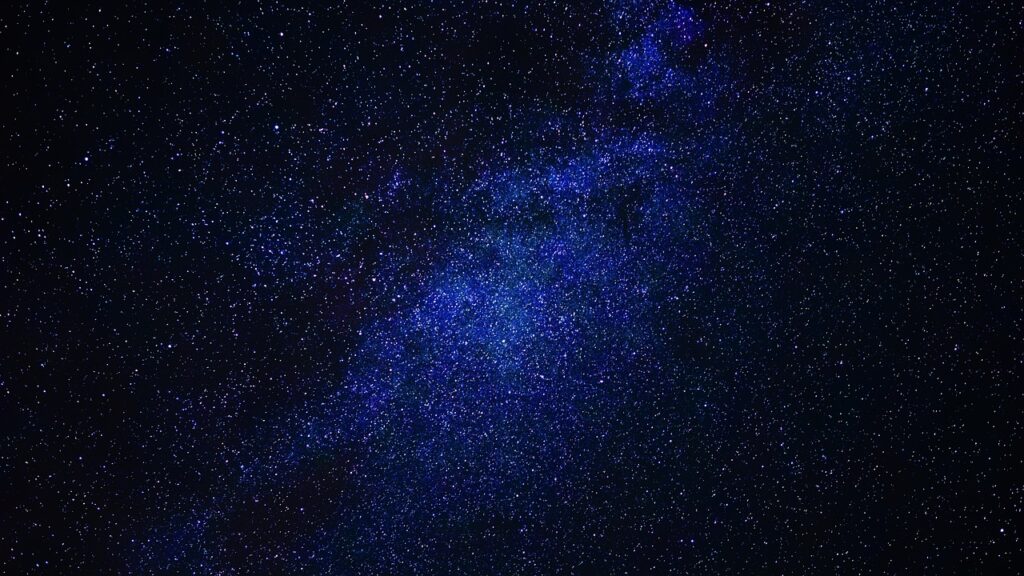
For as long as humans have looked up at the night sky, we’ve been hooked. Astronomy isn’t just a science; it’s a primal pull to understand where we come from and what’s out there. But the deeper we dig into the cosmos, the stranger it gets. This isn’t a simple map of stars and planets—it’s a chaotic, beautiful web of physics that bends time, swallows light, and hides forces we still can’t see.
Take black holes, for example. These aren’t just cosmic vacuum cleaners; they’re the ultimate bullies of spacetime. When a giant star runs out of fuel, it collapses in on itself, crushing all its mass into a point of infinite density—a singularity. The result is a region where gravity is so brutal that even light, the fastest thing in the universe, can’t break free. The event horizon is the line you don’t cross. Once you’re past it, you’re not coming back, and the very fabric of space and time gets twisted into a knot.
For decades, black holes were just a wild theory. Then came 2015, when the Laser Interferometer Gravitational-Wave Observatory (LIGO) heard something incredible: ripples in spacetime itself. These gravitational waves, first predicted by Einstein a century ago, are like the universe’s shockwaves. They’re caused by massive collisions, like two black holes spiraling into each other. That discovery didn’t just confirm Einstein—it gave us a whole new way to “listen” to the cosmos. Suddenly, we could detect events that were completely invisible to telescopes.
But it’s not all about the violent extremes. Out in our own solar system, the gas giants Jupiter and Saturn are like time machines. Their swirling clouds and complex moon systems are snapshots of what things looked like billions of years ago, when the planets were still forming. And then there are exoplanets—worlds circling distant stars. We’ve found thousands of them, from scorching gas giants to rocky super-Earths. Each one raises a tantalizing question: is any of them home to life?
Even the smaller stuff has a story to tell. Asteroids and comets are the leftovers of our solar system’s messy birth. They’re packed with water and organic molecules—the very ingredients that might have kickstarted life on Earth. Some scientists even toy with the idea of panspermia, the notion that life didn’t start here at all, but hitched a ride on a space rock from somewhere else.
And then there’s the part that keeps physicists up at night: dark matter and dark energy. These are the invisible giants of the universe. Dark matter, which we can’t see but can feel through its gravitational pull, makes up about 27% of everything. Dark energy, the force that’s speeding up the universe’s expansion, is even more dominant at 68%. Together, they mean that everything we’ve ever seen—every star, galaxy, and planet—is just a tiny fraction of what’s actually out there.
Astronomy is a field that never stops surprising us. It’s not just about mapping the sky; it’s about confronting the unknown head-on. From the crushing grip of black holes to the invisible hand of dark energy, the universe is a place of profound complexity and wonder. And the more we learn, the more we realize how much we still don’t know. That’s the beauty of it—there are still secrets out there, waiting for us to uncover them.