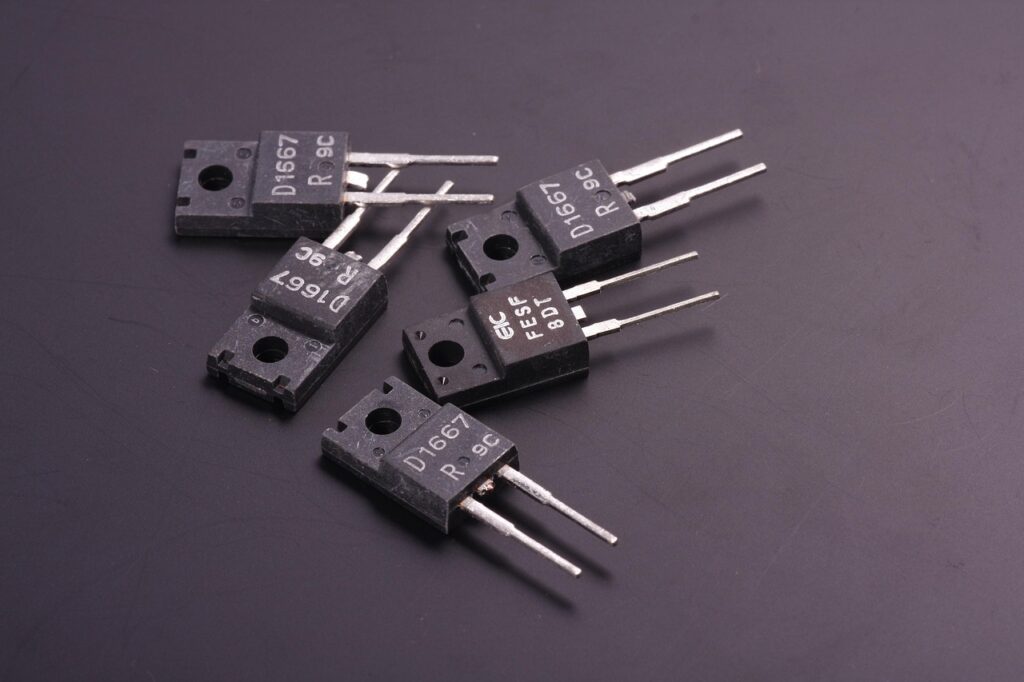
Beneath the surface of everyday technology lies a world where the periodic table becomes a toolbox and the Earth itself offers up its secrets. Semiconductor engineering is not just about silicon wafers and cleanrooms; it is a discipline where the rare and the rugged meet, where elements like Terbium and Iridium quietly enable the screens we stare into and the connections we rely on. Terbium, with its delicate electron dance, brings color to the phosphors in our displays, while Iridium, tough as it is rare, stands up to the heat and corrosion that would destroy lesser metals in high-performance electronics.
But the story does not stop at the lab bench. Look closer, and you will find that the very ground beneath our feet—soils like alfisols, wind-carved yardangs, and the restless fault lines of the planet—shares a dialogue with the microelectronics that power our world. The same forces that shape landscapes also influence how materials are sourced, processed, and pushed to their limits. It is a meeting of geology and ingenuity that few stop to consider.
Venture further, and the material palette expands into a riot of possibility. There is rhodonite, with its rosy manganese hues, and polycrystalline silicon, whose jumbled grain structure hides an ordered purpose. The true magic, however, happens at the quantum scale, where electrons and holes play their intricate game, and the careful balance of p-type and n-type doping turns a sliver of matter into a switch, an amplifier, or a memory. These are the building blocks of the devices that have reshaped how we live, work, and connect.
Inspiration, it seems, comes from the most unexpected places. In the Solomon Islands, where the sun sinks into a sea of gold and crimson, nature offers its own lessons. The finch, adaptable to everything from desert heat to arctic chill, hints at how we might engineer materials that endure extreme conditions. The otter, sleek and fluid, reminds us that managing heat and flow is as vital in a microchip as it is in a river. Even the komodo dragon, with its relentless drive, mirrors the spirit of innovation that pushes semiconductor technology forward.
That drive has carried us to milestones like the 46-nanometer node, a marker on the relentless path toward smaller, faster, more efficient devices. With each step, new challenges appear, but so do new opportunities—novel materials, fresh applications, and industries that did not exist a generation ago. The progress is staggering, yet it often goes unnoticed, tucked inside the phones in our pockets and the systems that run our cities.
If you pause on a park bench and take in the world around you, the reach of semiconductors becomes clear. They are in the glow of a streetlamp, the hum of a server farm, the quiet efficiency of a medical device. They are the unseen hand behind the skyscrapers and the silent partner in efforts to quit smoking through smarter, more responsive aids. The influence is everywhere, woven into the fabric of modern existence.
As night falls and the stars flicker overhead, there is a quiet wonder in knowing that the same principles that light the heavens—physics and chemistry in their purest forms—also power the tiny engines of our digital age. The visions of terbium and iridium, of rainbow-hued materials and intricate patterns, drift through the minds of those who work in this field. And when dawn breaks, the pursuit continues, always reaching for the next marvel, the next discovery, the next leap into the unknown.