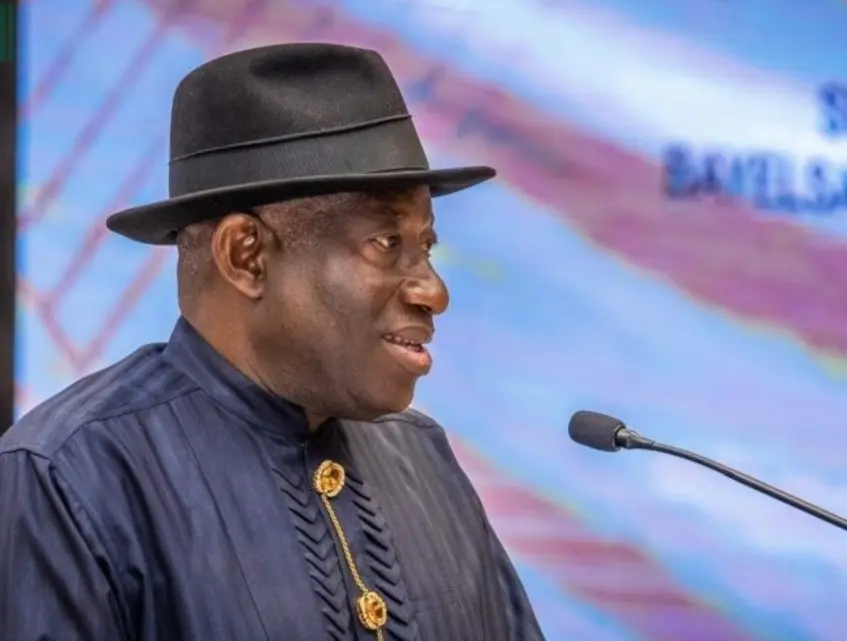
Former Nigerian President Goodluck Jonathan has warned that the increasing presence of high-ranking political figures from outside a state during off-cycle Elections poses a threat to democratic norms. In a statement reacting to the recent governorship election in Osun State, Jonathan described the trend as an emerging pattern that demands urgent national attention.
Jonathan acknowledged the conduct of the electoral process itself but raised concern over the mobilization of serving governors, senior government officials, party leaders, and their entourages into states holding elections. Reports indicated that approximately 16 governors elected on the platform of the ruling All Progressives Congress travelled to Osun State to campaign for the party’s candidate. Senate President Godswill Akpabio and other prominent national leaders were also present in the days preceding the vote, a development that drew public scrutiny over the intent and influence of such deployments.
“The growing practice whereby serving governors, senior political office holders, party leaders and other influential government functionaries, accompanied by large numbers of aides and heavy security details from outside a state, converge on states where elections are being conducted, raises an issue that demands national attention,” Jonathan said.
He noted that similar dynamics were observed during off-cycle elections in Ekiti and Ondo States, characterising the phenomenon as unusual for a functioning democracy. “It is not a practice that should become normal in a democratic society,” he added.
The former president’s intervention highlights a longstanding tension in Nigeria’s federal system, where the concentration of power at the centre often translates into outsized influence during subnational contests. Critics argue that the deployment of state resources, security apparatus, and political weight by incumbents from other states distorts the level playing field and undermines the autonomy of local electorates.
While the Independent National Electoral Commission has repeatedly emphasised its commitment to credible polls, the physical presence of powerful political actors with extensive logistical backing continues to fuel perceptions of intimidation and undue advantage. Jonathan’s remarks add a prominent voice to calls for legal and institutional safeguards to insulate off-cycle elections from external interference.
As Nigeria prepares for future off-cycle contests, the debate over the boundaries of legitimate political campaigning versus the abuse of incumbency is likely to intensify. Observers say addressing this trend will require more than statements, demanding concrete legislative action and enforcement mechanisms to preserve the integrity of subnational democracy.