The Democratic Republic of Congo’s 17th Ebola outbreak has become the deadliest in the country’s history, surpassing the toll of the 2018-2020 epidemic even as Health authorities warn the crisis has yet to peak. As of 15 August, the haemorrhagic fever has killed at least 2,325 people out of 4,945 confirmed cases, according to a national health ministry report seen by RFI.
The previous record was set during the 2018-2020 outbreak centred on North Kivu province, which lasted nearly two years before being declared over. The current epidemic, by contrast, is still spreading exponentially across 55 health zones in six provinces. In the most recent 24-hour reporting period, authorities recorded 101 new confirmed cases, 53 deaths and 34 recoveries.
The United Nations has described the outbreak as the fastest-growing Ebola epidemic on record in the country, with the disease killing roughly one person every 30 minutes. The outbreak was officially declared on 15 May, though the first suspected cases were detected on 24 April and the virus may have been circulating earlier.
This wave is driven by the Bundibugyo strain of Ebola, for which there is no specifically approved vaccine or treatment, although several candidates are under testing.
Ituri province remains the epicentre, accounting for 4,194 confirmed cases and 1,838 deaths — nearly 85 percent of all infections since the outbreak began. The province also registered 89 of the latest 101 cases. North Kivu is the second most affected, with 596 cases and 417 deaths, a fatality rate of about 70 percent. Haut-Uélé has recorded 138 cases and 62 deaths, while smaller numbers have been reported in Tshopo, South Kivu and Bas-Uélé.
A particularly concerning feature is the high proportion of deaths occurring outside healthcare facilities. The World Health Organization says more than 70 percent of those dying from Ebola are doing so in the community rather than in treatment centres. In the latest daily tally, 33 of the 53 deaths occurred outside health facilities — 30 in Ituri and three in North Kivu. Fear of treatment centres, mistrust of health authorities and confusion over symptoms continue to delay care in some areas.
Contact tracing has improved overall, with 20,791 of 24,383 identified contacts successfully followed up, a rate of 85.3 percent. But significant regional gaps persist: nearly 90 percent of contacts were traced in Ituri, compared with 79 percent in North Kivu and just under 62 percent in Haut-Uélé.
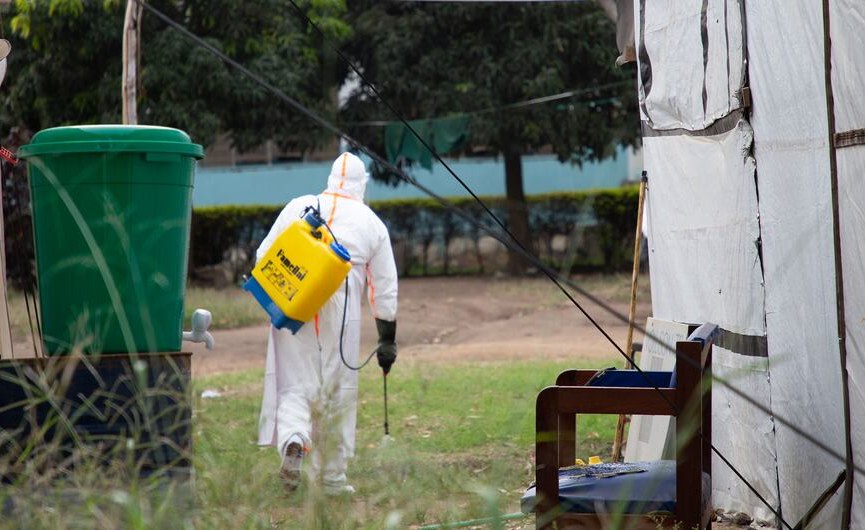
The response is also straining under resource shortages. Several Ebola treatment and transit centres in Ituri are reported full, while in North Kivu all 142 beds designated for suspected cases are occupied. None of the six affected health zones in Haut-Uélé has a treatment centre meeting required standards. Supplies of protective equipment and disinfectant are running low; stocks of hand sanitiser and protective goggles are near exhaustion, and only 349 kilograms of chlorine are available against an estimated need of 1,800 kilograms.
Response teams face additional hurdles including staff shortages, strikes over unpaid allowances and insecurity in areas where armed groups remain active. Fighting between the Congolese army and the Rwanda-backed M23 armed group in North and South Kivu continues to complicate access to some communities.