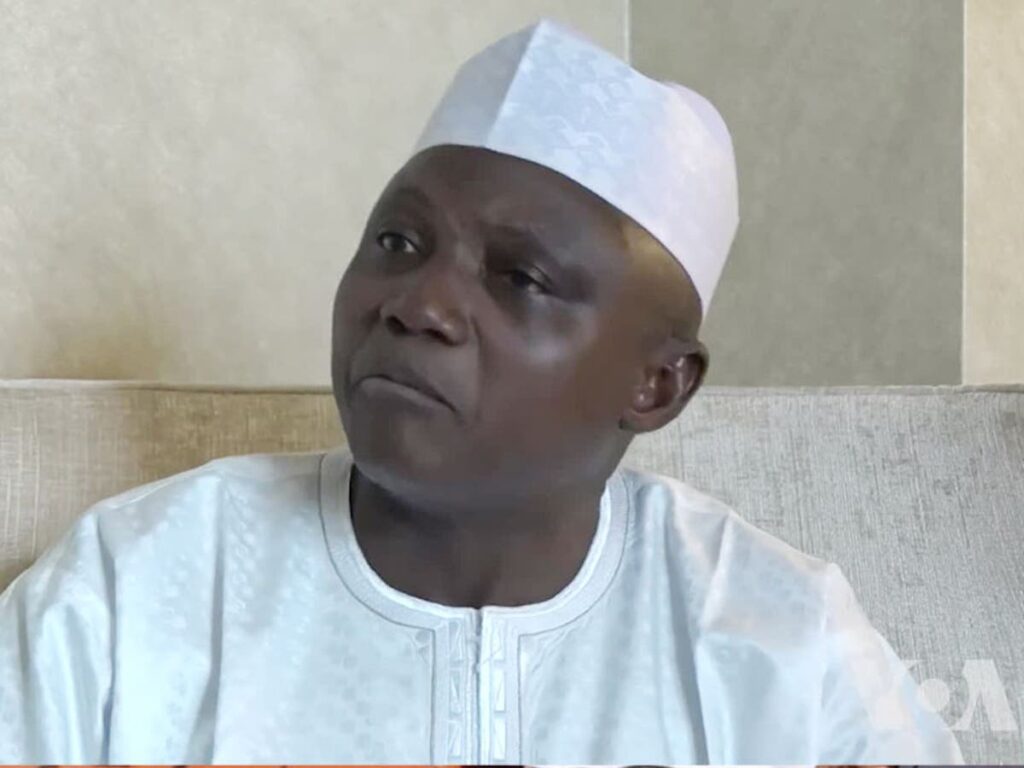
Garba Shehu, the former media aide to late ex-President Muhammadu Buhari, has stirred fresh conversation around Nigeria’s electoral history by declaring that Attahiru Jega, the ex-INEC chairman, oversaw the nation’s best poll since the disputed June 12, 1993, presidential election. But his latest remarks aren’t just a trip down memory lane—they’re a pointed challenge to the current INEC leadership.
In a statement titled “Where is Professor Amupitan,” Shehu praised the conduct of Saturday’s governorship election in Osun State, calling it a transparent triumph. Yet he couldn’t hide his bewilderment at the silence of INEC Chairman Joash Amupitan, who has remained out of the public eye despite the commission’s widely applauded performance.
Shehu, who admitted he has never met Amupitan, didn’t mince words about his initial skepticism. He recalled the controversy surrounding Amupitan’s 2020 legal brief to the international community, which claimed Nigeria’s violence was a Muslim pogrom against Christians—a narrative Shehu flatly rejected.
“The violence affected and still affects followers of all religions and speakers of every language,” Shehu wrote, explaining why he and many others doubted Amupitan’s suitability for the role.
But the former presidential spokesman was quick to acknowledge the arc of progress. He credited Jega with delivering the country’s most credible election since the annulled 1993 vote that many believe Chief MKO Abiola won. He also lauded Mahmood Yakubu, Jega’s successor, for rallying civil society and international observers to endorse his electoral processes without a single major rejection.
Now, under Amupitan, Shehu says the commission has reached another milestone. The seamless upload of Osun’s governorship results to INEC’s IReV portal drew glowing reviews from the European Union, local and foreign observers, and civil society groups. Yet, the man at the helm has stayed quiet.
“With all the loud acclaim that followed, however, I have been asking myself, where is the captain of the ship, Professor Amupitan?” Shehu asked. “He hasn’t picked up the microphone, 48 hours hence, or appeared before the TV cameras to proudly show off the success. Where is he?”
Shehu contrasted Amupitan’s restraint with the typical chest-thumping of Nigerian public officials, who often celebrate half-baked achievements. “We are not used to seeing this kind of humility, patience, and restraint. Isn’t it fair that the man should come out of his shell and dance to the drums in celebration?” he quipped.
The statement leaves Nigerians wondering: is Amupitan’s silence a rare act of modesty, or a missed opportunity to cement his legacy? Either way, Shehu has thrown the spotlight squarely on a man who seems determined to avoid it.