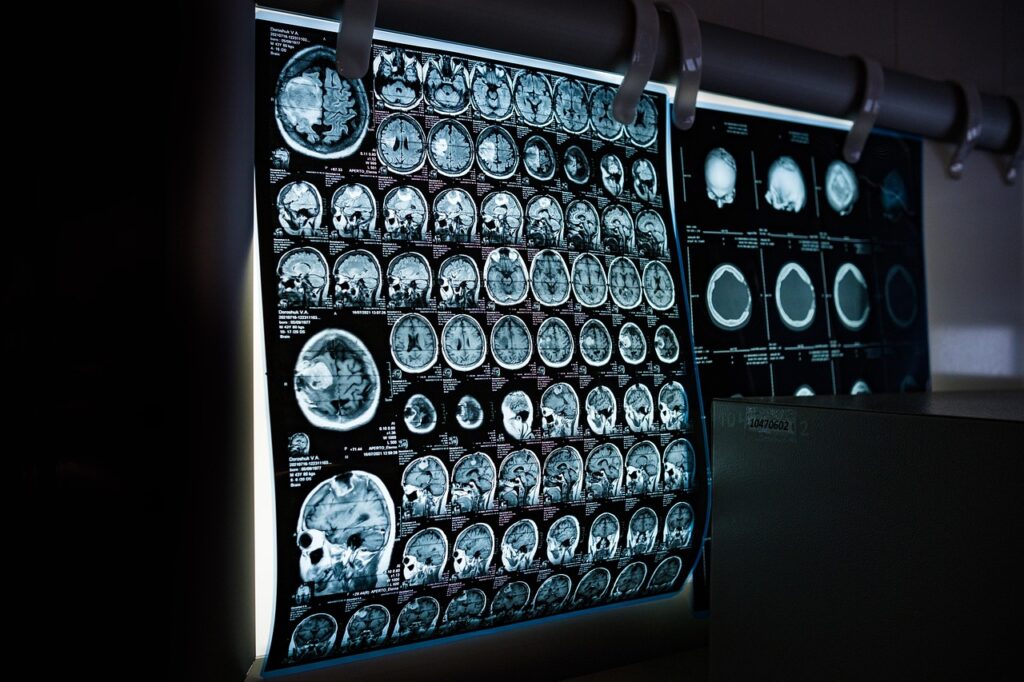
Every day, in hospitals around the world, beams of invisible energy pass through human flesh, bouncing back with secrets that once required a surgeon’s knife to uncover. This is radiology—the medical discipline that turns radiation into a window on the body’s inner landscape. It is not merely a tool; it is a revolution that has quietly reshaped how we diagnose, treat, and even understand disease.
The science behind it is deceptively simple. X-rays, gamma rays, and other ionizing radiation travel through tissue, but not all tissue treats them the same. Bone stops them cold. Soft tissue lets them slip through. That difference—the attenuation, as radiologists call it—creates the contrast that becomes an image. It is the same principle that lets a doctor spot a shadow on a lung or a fracture in a hip, and it has made radiology the first stop for countless diagnoses.
The imaging machines themselves have become marvels of engineering. CT scans spiral around the body, stitching together cross-sections in seconds. MRI machines use powerful magnets to coax hydrogen atoms into alignment, producing astonishingly detailed views of the brain and spinal cord. PET scans track radioactive tracers to reveal metabolic activity, while ultrasound offers a real-time look at organs and blood flow without a single dose of radiation. Each modality brings its own strengths, and together they give physicians a toolkit that would have seemed like science fiction half a century ago.
But radiology is not just about looking. It is also about acting. Interventional radiologists use imaging guidance to thread catheters through blood vessels, open blocked arteries, and deliver targeted treatments directly to tumors. Angioplasty, embolization, and radiofrequency ablation are all part of this minimally invasive arsenal. Patients who once faced major surgery now walk out of these procedures with little more than a bandage, their recovery times cut from weeks to days.
The field is also pushing into entirely new dimensions. Functional MRI, or fMRI, lets researchers watch the brain light up as a person thinks, feels, or moves. Diffusion tensor imaging maps the white matter pathways that connect different regions of the brain, revealing the architecture of thought itself. Spectroscopy goes even further, analyzing the chemical composition of tissues to distinguish between healthy cells and malignant ones. And now, artificial intelligence is entering the picture. Machine learning algorithms can scan thousands of images in minutes, flagging subtle abnormalities that a human eye might miss, and helping radiologists work faster and with greater precision.
What emerges is a portrait of a specialty that is both deeply rooted in physics and endlessly innovative in practice. Radiology has become the quiet backbone of modern medicine—the reason a cancer can be caught early, a stroke can be treated before permanent damage sets in, and a chronic condition can be monitored without invasive procedures. It is the intersection of science, technology, and clinical judgment, and it continues to evolve at a breathtaking pace.
As we peer into this invisible realm, we are reminded that the human body is not just a collection of organs but a dynamic, living system. Radiology lets us see it in motion, in detail, in ways that reveal both its fragility and its resilience. And while the images themselves are black and white, the possibilities they unlock are anything but. From the smallest lesion to the most complex neural pathway, radiology offers a view of life that is as profound as it is practical. It is a journey of discovery that is far from over, and the best images may still be ahead of us.