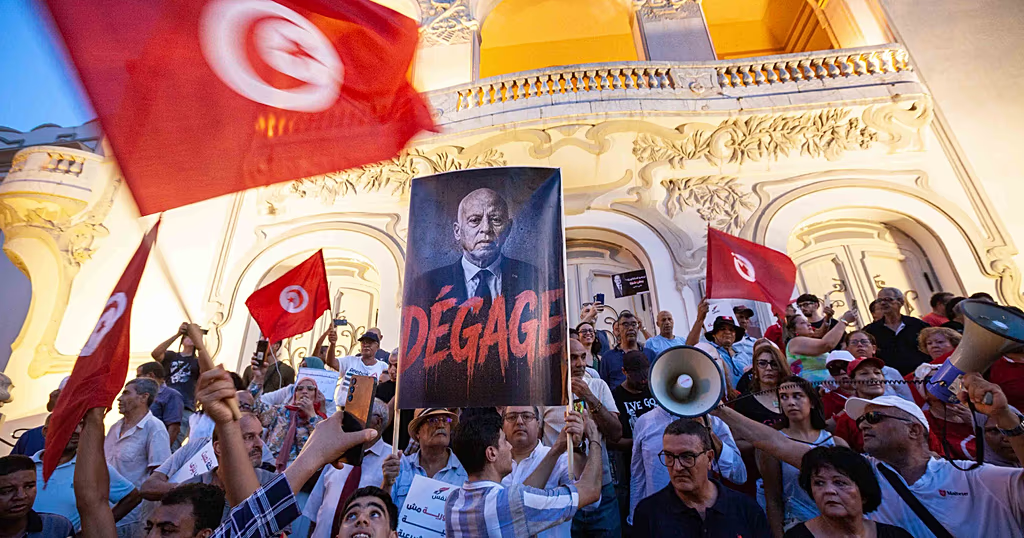
Hundreds of protesters marched through the streets of Tunis on Thursday demanding the resignation of President Kais Saied and a return to democratic governance, marking the latest escalation in a deepening political and economic crisis.
The demonstration, organized by the newly formed Nafas opposition collective, follows a similar rally in July that coincided with the anniversary of Saied’s 2021 dismissal of the government and suspension of parliament. Since then, the president has consolidated power through a series of constitutional changes, drawing accusations of authoritarian drift from rights groups and political opponents.
Thursday’s protest unfolded against a backdrop of severe economic strain. A punishing summer heat wave has driven electricity demand to record highs, prompting the state-owned utility STEG to impose rolling blackouts across multiple regions. The power cuts have disrupted water pumping stations, worsening chronic shortages of drinking water in parts of the country.
“I’m trying to defend my country because I see it heading towards the abyss, without any programmes or planning,” said Youssef Hleli, a protester. “The country has hit a wall. There is no water or electricity. What I see is that the country is going backwards, while others have moved ahead of us.”
The Nafas movement, launched in May, seeks to unite political parties and independent figures beyond Tunisia’s traditional opposition blocs. It has called for an end to what it describes as systemic government failure and injustice in the country that sparked the 2011 Arab Spring uprisings. Recent rallies have seen a sharpening of rhetoric, with demonstrators openly chanting the revolutionary slogan “the people want the fall of the regime” and “Dégage” — the rallying cry that once toppled longtime ruler Zine El Abidine Ben Ali.
Protesters also demanded immediate relief from medicine shortages, soaring living costs, and widening restrictions on civil liberties. Since 2021, authorities have intensified pressure on independent media, civil society organizations, and dissenting voices. Saied has repeatedly accused his critics of accepting foreign funding to destabilize the nation and undermine its sovereignty.
The convergence of political repression and collapsing public services has fueled growing public anger. Analysts say the government’s inability to address basic infrastructure needs — compounded by climate-driven extremes — risks eroding what remains of its social contract. With no clear roadmap for economic reform or political dialogue, Tunisia faces a deepening standoff between a presidency determined to centralize authority and a population increasingly unwilling to endure the consequences.