

Rivers State governorship candidate of the All Progressives Congress, Tonye Cole, spoke to Fatteh Hamid about the general election and the issues surrounding the Rivers State governorship poll. When asked to rate the conduct of the general election across the country, he noted several areas of concern, especially in the presidential election where promised technology failed. This failure, he said, called the integrity of the election into question, particularly where votes were mutilated and tampered with. He highlighted a massive failure involving the hijacking of results, ballot boxes, BVAS devices and electoral officers, notably in Rivers State where an entire polling unit was taken over. “If a polling unit is reported as no longer available, its results should be cancelled, not uploaded,” he argued. Yet the results were uploaded, accepted at the collation centre, and protests were ignored. Agent’s copies differed from those presented, but INEC still accepted the mutilated results, leaving the election’s integrity in doubt.
Cole explained that these anomalies did affect the outcome. First, voter intimidation was rampant; a week before the governorship election, thugs warned voters that anyone who did not vote for the Peoples Democratic Party would face death, maiming or whipping, which suppressed turnout. Second, those who defied the threats and voted faced violence—canings, shootings, and attacks with cutlasses. Third, aggressive vote‑buying by the PDP induced people to vote a certain way. These factors, he said, collectively shaped the election result.
Regarding INEC’s shortcomings, Cole pointed to the poor handling of the interface between technology and the human element. The timing of BVAS completion and subsequent human intervention was mishandled, and he urged a review of electronic voting. “We should not stop at accreditation, then revert to manual voting, and finally return to electronic transmission of results. That interface failed, and INEC did not manage it well,” he said.
On the police’s role, Cole asserted that in Rivers State some police units were complicit in vote hijacking, escorting state executives who seized ballot boxes and using police vehicles to transport electoral officers away from polling units. Police were present during voter intimidation and vote‑buying, indicating a need for substantial reform. When asked whether this would be presented as evidence to the tribunal, he replied that it would be up to the lawyers to decide, but there was ample evidence of police involvement.
Addressing allegations of vote‑buying by other parties, Cole denied any such activity by the APC, stating that the PDP was the party he believed engaged in it. He also dismissed claims of an APC‑PDP arrangement before the presidential election, noting that some individuals claiming to be APC members were actually sponsored by Governor Nyesom Wike to act as spoilers and create the impression of division within the APC. He affirmed that he was not part of any such arrangement.
With the PDP governorship candidate Sim Fubara declared the winner, Cole confirmed that the APC would challenge the result at the tribunal, questioning both the conduct and the announced outcome. He dismissed Governor Wike’s accusation that he was involved in the illegal sale of Rivers property as mere political rhetoric, emphasizing that the transaction was clean and had been unchallenged for eight years.
When asked about balancing his business, pastoral duties and political ambitions, Cole said he had stepped away from his business and now devotes his time entirely to politics, which has been his main focus for the past 20 years. He offered advice to President‑elect Bola Tinubu, stressing the importance of appointing the right people to the cabinet and transition council. “Nigeria cannot afford the wrong appointments; the legitimacy of the election depends on competent, acceptable leaders,” he said, urging a break from “business as usual.”
Regarding claims that he is not a grassroots politician, Cole refuted the allegation, noting that over the past four years he and his party have visited every local government, ward and unit, making him one of the most known politicians in Rivers State. He remains optimistic about becoming governor, contingent on the tribunal and judiciary delivering justice based on evidence.
On the notion of brotherly reconciliation, Cole dismissed the idea that riverine affiliation should influence legal action, emphasizing that the mandate was stolen and that intimidation, violence and vote‑rigging, not genuine campaigning, determined the outcome. He argued that the PDP’s candidate Sim Fubara did not campaign; instead, Governor Wike ran the election, handling all campaign activities and continuing to dominate post‑election discourse.
Cole described Rivers State as historically a PDP stronghold, not because of genuine support but due to systematic rigging and violence. He cited past elections (2015, 2019) as examples of the same modus operandi, asserting that only a free and fair election can reveal the true political preference of the people.
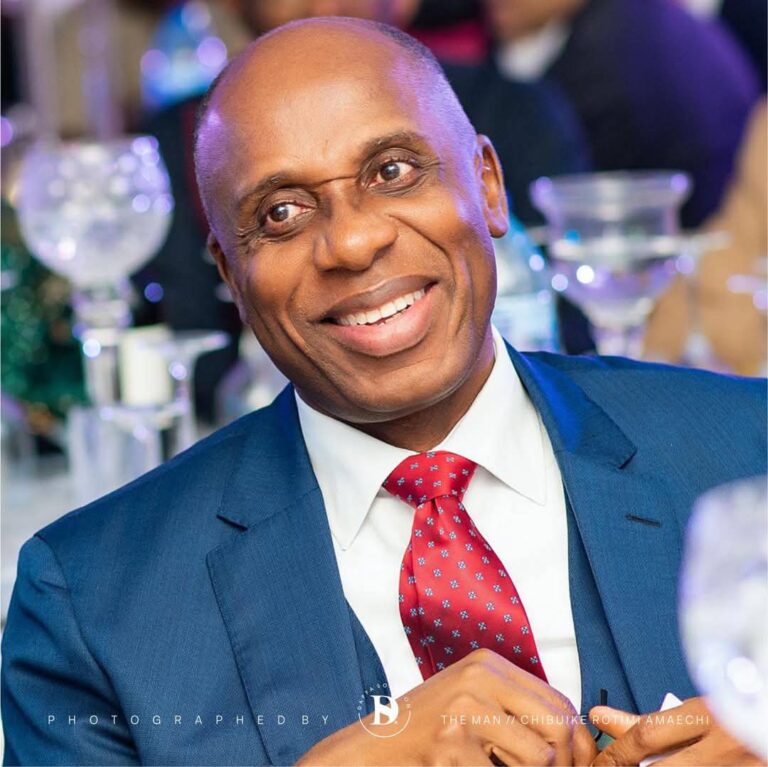
Finally, on former governor Rotimi Amaechi’s role, Cole observed that Amaechi largely stayed out of the campaign, appearing only in the final week before the elections—a brief involvement compared to six months of APC campaigning. Despite this, Cole maintained that the APC ran its own campaign, connected with the populace, won hearts and votes, and is prepared to continue its efforts.
Comments are closed for this story.