

WHO Director‑General sees the United Nations health agency as central to protecting future health
Geneva – Turning history’s page on its deadliest conflict, countries came together in 1948 to heal a bloodied world. After years of war, distrust and pain, nations across the globe forged a global pact to safeguard and advance health for all. That lofty ambition became practical reality on 7 April 1948, when the Constitution of the World Health Organization (WHO) came into force. WHO’s founding as a specialized United Nations agency dedicated to promoting human health gave the organization a unique mandate to elevate the wellbeing of all people—and a unique ability to convene governments and partners at the same table.
Fast forward to the present. As WHO celebrates its 75th anniversary on World Health Day, its mandate and convening ability remain as vital as ever. At the same time, the world needs a renewal of its commitment to put the health of all people first, from our grandparents to our children born today and in the future. This principle guides WHO’s work: to promote, provide and protect health for all. The challenges of SARS‑CoV‑2 (COVID‑19), conflict, climate change and commercial causes of ill‑health such as unhealthy foods and tobacco remind us of the precarious nature of our lives. Without constant commitment to advancing collective wellbeing, vulnerable communities worldwide will remain at risk. A clear‑eyed focus on delivering impact at the community level is essential.
A seminal line in WHO’s Constitution states that “the enjoyment of the highest attainable standard of health is one of the fundamental rights of every human being without distinction of race, religion, political belief, economic or social condition.” This value continues to guide our work and underpins our accomplishments. Smallpox is the only human infectious disease to be eradicated, declared so by WHO member states in 1980. Polio now persists in only a few places, with annual cases reduced by 99.9 % since the 1980s. Other successes include the elimination or near‑elimination of five tropical diseases, aided by increased childhood immunisation and global standards for safe drinking water. WHO has also supported countries in adopting a landmark treaty on tobacco control, regulating aggressive marketing of breast‑milk substitutes, and sharing information on health emergencies with pandemic potential. The organization played a catalytic role in developing and rolling out the first vaccines against Ebola and malaria, now saving lives across Africa. In humanitarian settings, WHO’s work has provided life‑saving care to millions. The list of achievements continues.
As WHO marks its 75th year, there is much for the organization and the countries that created it to be proud of, but great challenges remain. WHO is changing and adapting—applying lessons learned to future threats. COVID‑19 has shown that the global community is only as secure from pandemic threats as the least prepared nation. Lack of access to quality, affordable health services, climate‑induced food shortages, rampant air pollution and pervasive misinformation further compromise health. Our future plans focus on five areas: improving the health level of all people; ensuring equitable access to quality, affordable health services; protecting the world against novel and known pathogens; empowering science and scientific information to support good health; and strengthening WHO to meet today’s and tomorrow’s demands.
In the wake of COVID‑19, we are supporting countries negotiating a historic pandemic accord, rooted in the WHO Constitution, to prevent and respond to threats collectively. Nations are also amending the International Health Regulations to suit a post‑COVID world and are strengthening financial, governance and operational systems. The need for such measures is clear: COVID‑19 set back progress toward the health‑related Sustainable Development Goals and caused incalculable human, social and economic losses. We must reclaim lost gains by intensifying efforts to make universal health coverage a reality for all, driven by primary health care, and by strengthening national and global systems—from state‑of‑the‑art surveillance to investing in country preparedness. Data‑driven guidance enables WHO members to allocate resources where needs are greatest, while evidence‑based advice helps people make sound health choices. As COVID‑19 has shown, misinformation and disinformation make decision‑making for countries and individuals more difficult and, in extreme cases, deadly.
Three‑quarters of a century after its founding, the need for an efficient, effective World Health Organization is as vital now as ever. If the organization had not been created in 1948, we would have to create it today. On WHO’s birthday, I thank all countries and partners for their commitment to laying WHO’s foundations and for continuing to strengthen them for a healthier, safer and fairer future for all.
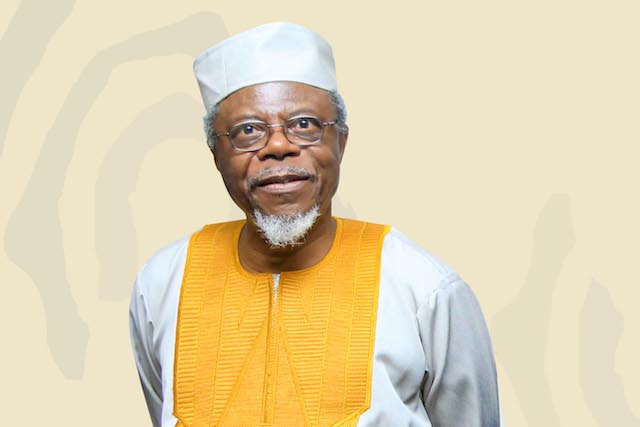
Dr. Tedros Adhanom Ghebreyesus, Director‑General of the World Health Organization. @DrTedros



Comments are closed for this story.