
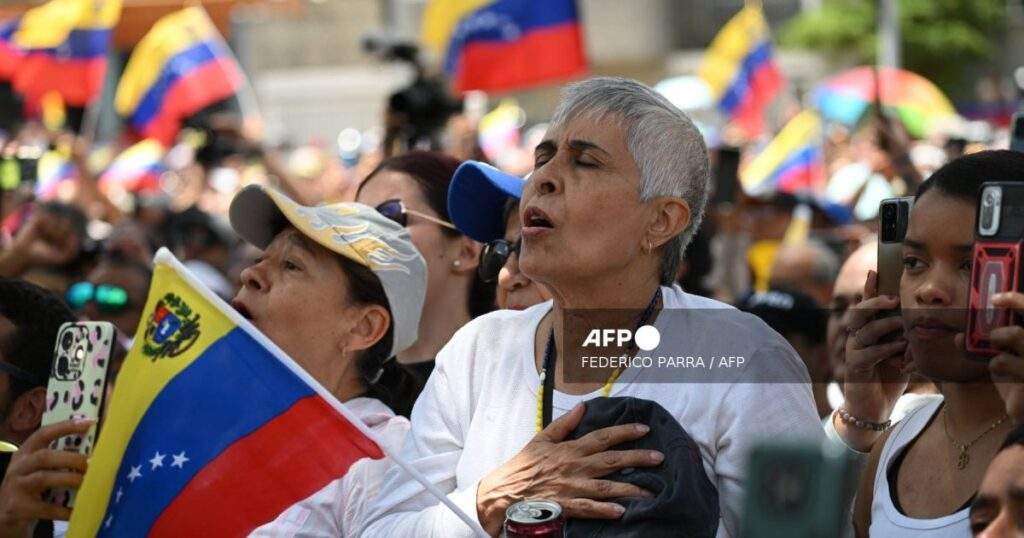
EU Refuses to Recognize Venezuela’s Presidential Election Results, Calls for Independent Verification
The European Union has dealt a significant blow to Venezuela’s disputed presidential election, refusing to recognize the results and calling for further independent verification of the electoral records. The decision comes as the country’s electoral authority has failed to produce the official voting records, casting further doubt on the credibility of the results.
According to the EU Council, the results published by Venezuela’s National Electoral Council on August 2 "cannot be recognised" and any attempt to delay the full publication of the official voting records will only add to the uncertainty. The EU has also refrained from recognizing opposition candidate Edmundo Gonzalez Urrutia as president-elect, unlike the United States and several other countries.
The EU’s statement highlighted that copies of the electoral voting records published by the opposition and reviewed by several independent organizations indicate that Edmundo Gonzalez Urrutia would appear to be the winner of the presidential elections by a significant majority. The EU has thus called for further independent verification of the electoral records, if possible by an internationally reputed entity.
Furthermore, the EU has urged Venezuelan authorities to put an end to arbitrary detentions, repression, and violent rhetoric against members of the opposition and civil society, and to release all political prisoners. The EU’s stance is a significant development in the ongoing political crisis in Venezuela, where opposition leader Juan Guaido has been recognized as the country’s interim president by many countries, including the United States.
The EU’s refusal to recognize the election results is a major blow to President Nicolas Maduro’s government, which has been facing increasing international isolation and economic crisis. The situation in Venezuela remains volatile, with ongoing protests and clashes between government forces and opposition supporters.
The EU’s statement has been met with widespread criticism from the Venezuelan government, which has accused the EU of interfering in the country’s internal affairs. However, the EU’s stance is seen as a crucial step towards promoting democracy and human rights in Venezuela, and towards finding a peaceful solution to the country’s political crisis.


Comments are closed for this story.