
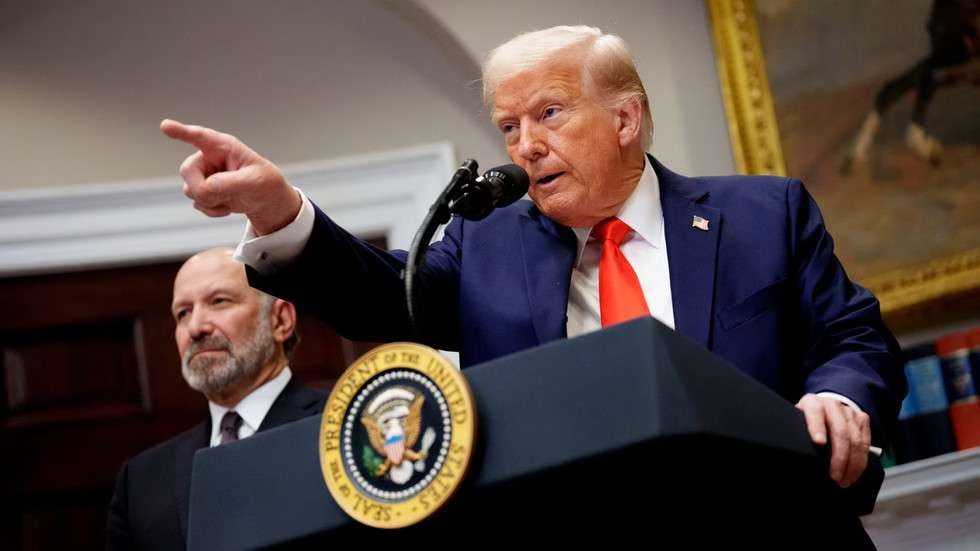
In a surprise move, US President Donald Trump announced plans to impose a 100% tariff on foreign-produced films, marking a significant expansion of his trade policies into the entertainment industry. The decision, revealed on the Truth Social platform, aims to address the decline of the American film industry, which Trump claims is dying “a very fast death” due to incentives offered by foreign countries to lure US filmmakers. This move is the latest in a series of sweeping tariffs introduced by Trump since his return to office in January. The ‘Liberation Day’ tariffs, introduced on April 2, target over 90 US trade partners, with most facing a 10% tariff, while China has been hit with a 145% tax on all imports. In response, Beijing has retaliated with 125% tariffs and new export controls on US goods. According to Trump, the new tariff on foreign-produced films is necessary to protect the US film industry, which he believes is under threat from foreign productions. “WE WANT MOVIES MADE IN AMERICA, AGAIN!” he declared, framing foreign film productions as a national security threat. Trump claims that other countries are using cinema as a vehicle for “messaging and propaganda,” and that the US needs to take action to protect its own industry. The decision follows a meeting between Trump and actor Jon Voight, as well as his manager, Steven Paul, at the Mar-a-Lago Club. The pair reportedly presented Trump with plans for more federal tax incentives for US film and TV production, a move that could help to boost the domestic industry. In January, Trump appointed Voight, along with actors Mel Gibson and Sylvester Stallone, as special ambassadors to Hollywood to promote US job growth in the entertainment sector. The US film industry has indeed been struggling in recent years, with production shifting overseas to countries such as the UK, Canada, Australia, and New Zealand, which offer attractive tax incentives. Film and television production in Los Angeles has declined by nearly 40% over the past decade, according to FilmLA, with studios seeking lower costs and bigger rebates abroad. Global content spending is expected to hit $248 billion in 2025, driven largely by streaming platforms, further fueling the push for more affordable production hubs. However, not everyone is supportive of Trump’s move, with some warning that retaliation against the tariffs could be devastating. William Reinsch, a former senior Commerce official, told Reuters that “we have a lot more to lose than to gain” and that justifying tariffs on national security or emergency grounds would be difficult. Trump’s decision follows China’s move to “moderately reduce” the number of Hollywood films permitted in the country, a retaliatory step against his aggressive tariff policies. As the situation continues to unfold, one thing is clear: the future of the US film industry hangs in the balance.
Global News
3 min read
Trump Imposes 100% Tariff on Foreign Films to Boost US Entertainment Industry
In a surprise move, US President Donald Trump announced plans to impose a 100% tariff on foreign-produced films, marking a […]

Comments are closed for this story.