
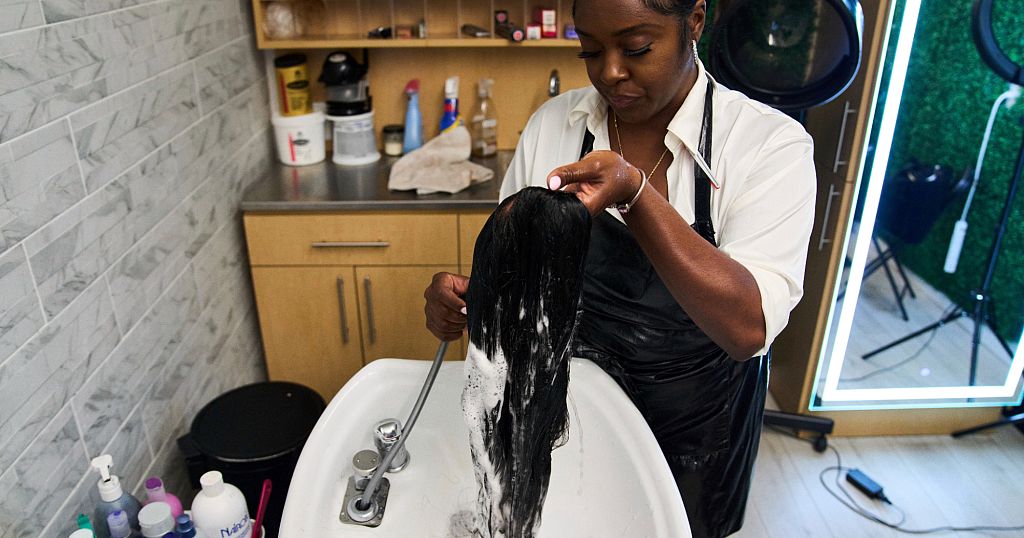
Tariffs Take a Toll on Black Hair Care Industry
The global Black hair care industry, valued at over $2.5 billion in 2023, is feeling the pinch of tariffs imposed by the Trump administration on imported goods from China. With many Black women spending hundreds of dollars each month on hair extensions, weaves, wigs, and braids, the rising costs are taking a significant toll on both stylists and clients.
Much of the synthetic and human hair used in the industry is imported from China, which was subject to a combined 145% tariff in April. Although the United States has since agreed to drop the tax to 30% while negotiating new trade agreements, experts warn that the damage has already been done. "The next 100 days are already shot for many items," says Marty Parker, a University of Georgia business professor and supply chain expert. "The costs companies faced at ports will make their way down to consumers, and supply shortages will get worse."
Stylists like Yana Ellis and AaNiyah Butler are already feeling the effects, with shipping costs for human hair from China more than doubling in recent months. Atlanta stylist Dajiah Blackshear visited a beauty supply store to find that the price of hair from China had increased by $100 in just three weeks. "If hair prices and other expenses continue to mount, I may have to raise my prices," she says. "Clients pay attention to where they’re spending their money, and some people are already looking for more affordable options."
The impact of the tariffs on the Black hair care industry is being felt across the board, from small businesses to large wholesale companies. With Black women spending six times more on hair care than other ethnicities, the rising costs are not only affecting their wallets but also their ability to maintain their hair health and style. As one stylist noted, "Weeks like Easter and Mother’s Day weren’t as busy as they used to be," suggesting that the economic strain is already being felt by clients.
As the trade negotiations between China and the United States continue, the future of the Black hair care industry remains uncertain. One thing is clear, however: the tariffs have already had a significant impact, and it will take time for the industry to recover. As Blackshear so eloquently puts it, "Clients are looking for someone who fits within their budget, and if we can’t provide that, they’ll go somewhere else." The question remains: what will happen to the Black hair care industry if the tariffs continue to drive up costs and force stylists to raise their prices? Only time will tell.



Comments are closed for this story.