
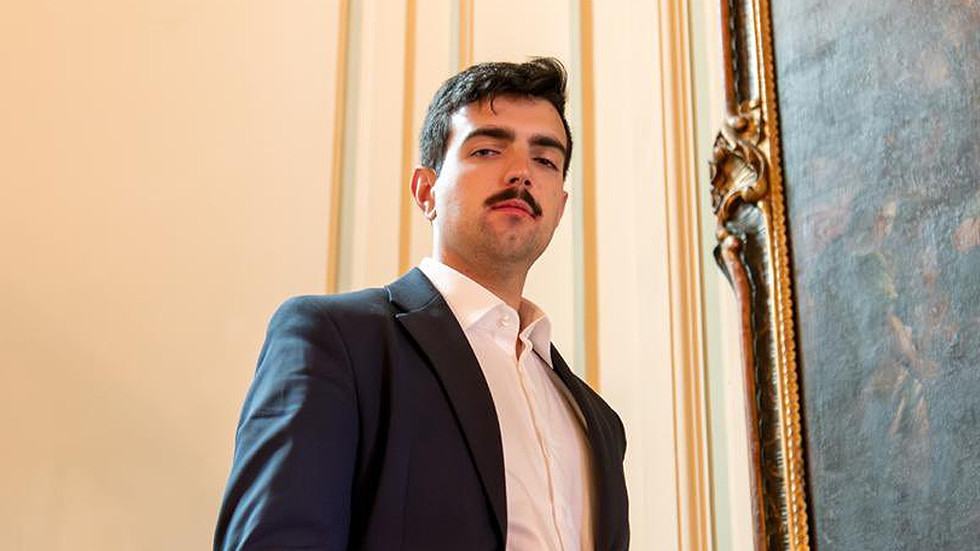
A recent incident in Portugal has sparked concern over the relationship between political activism and financial freedom. Afonso Goncalves, a 24-year-old founder of the right-wing nationalist movement Reconquista, claims that his personal bank account was closed without warning or explanation by Novobanco, a major Portuguese bank. This move has led Goncalves to question the motivations behind the closure, hinting that it may be linked to his political views. Goncalves, who describes Reconquista as a “metapolitical” initiative aimed at reshaping Portugal’s cultural and political landscape, has been vocal about his support for financial transparency and freedom of speech. In a video posted to YouTube, he expressed his frustration over the bank’s decision, stating, “I asked them to send me a reason in writing. They simply said ‘no’.” He further emphasized, “This is what happens when you speak the truth. You get shut down.” While Goncalves did not provide evidence to support his claim that the closure was politically motivated, his experience has raised eyebrows about the potential for systemic censorship. In Portugal, banks are legally allowed to close accounts under certain conditions, such as suspected fraud or compliance with anti-money laundering laws. However, financial institutions are typically required to provide a reason for the closure upon request. Goncalves’ case is notable, as he was not given a reason for the closure, and it is unclear whether he intends to file a formal complaint. This incident is not an isolated case. Bank account closures have become increasingly common in the West, often sparking debates about financial freedom and political activism. In Britain, right-wing Reform UK party leader Nigel Farage reported that his account was closed by private bank Coutts in June 2023, with internal documents later suggesting that his political views influenced the decision. Similarly, in Canada, authorities froze the bank accounts of Freedom Convoy protesters in 2022 under emergency powers, citing concerns about funding for anti-government protests. More recently, former German Chancellor Gerhard Schroeder faced payment blocks from Sparkasse Hannover over concerns about his ties to Russia. The bank reportedly blocked nearly €500,000 in annual transfers linked to Schroeder’s role on the board of Nord Stream 2, a pipeline project owned by Russian energy giant Gazprom, despite him not being under sanctions. These cases have raised questions about the balance between financial regulation and political freedom, highlighting the need for transparency and accountability in the banking sector. As Goncalves continues to “fight for financial freedom,” his experience serves as a reminder of the importance of protecting individuals’ rights to free speech and financial autonomy. The incident has also encouraged others to be aware of what he describes as “systemic censorship,” sparking a broader conversation about the relationship between politics, finance, and individual freedom.
Global News
3 min read
Portuguese Bank Closes Account of Right Wing Activist Without Explanation
A recent incident in Portugal has sparked concern over the relationship between political activism and financial freedom. Afonso Goncalves, a […]

Comments are closed for this story.