
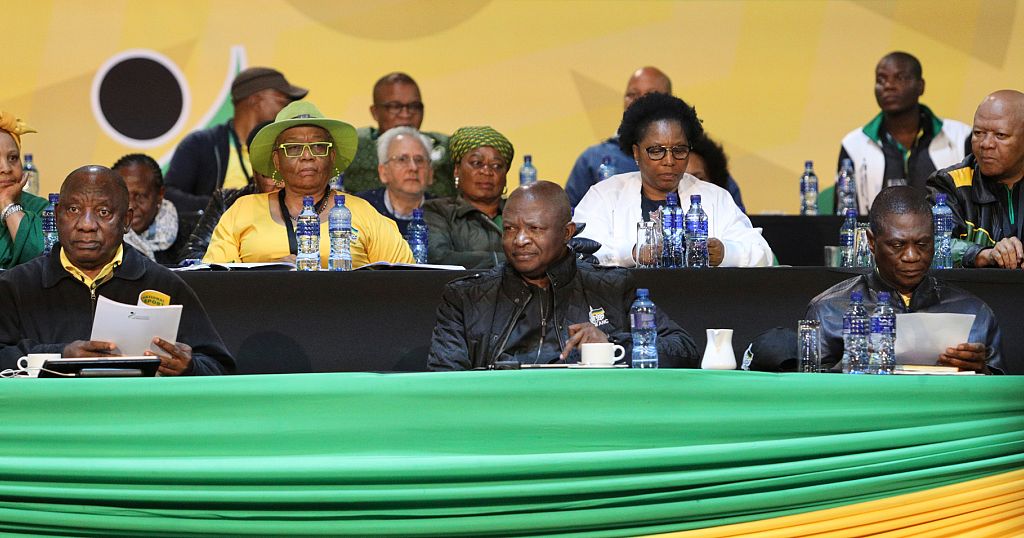
After months of political gridlock, South Africa’s National Assembly passed the contentious Appropriation Bill on Wednesday, finalizing the government’s 2025 budget and ending a prolonged stalemate between the ruling African National Congress (ANC) and its largest coalition partner, the Democratic Alliance (DA). The approval clears the way for allocating 2.3 trillion rand ($124 billion USD) to public spending, with a focus on reducing debt, bolstering social welfare, and rebuilding critical infrastructure. The bill, the third and most consequential component of the annual budget, determines funding distributions across government agencies and national initiatives. Its delay stemmed from clashes over fiscal priorities, stalling budget implementation and raising concerns about service delivery in a nation grappling with economic stagnation and high unemployment. In a statement, Parliament emphasized the budget’s aim to “support the poor and vulnerable” while strengthening healthcare, education, and infrastructure projects to stimulate job growth. The ANC, which has governed South Africa since the end of apartheid in 1994, faced rare resistance from the DA, its coalition ally, over spending allocations. While specifics of the compromise remain undisclosed, the resolution signals fragile cooperation in a government increasingly reliant on multiparty negotiations. Analysts suggest the agreement reflects mutual concessions to avoid further destabilizing Africa’s most industrialized economy, which has struggled with rising public debt—projected to reach 74% of GDP by mid-2025. Critics warn that without stricter fiscal discipline, the budget’s social spending goals could clash with its debt-reduction targets. However, officials argue the plan balances immediate needs with long-term stability. Roughly 30% of expenditure will fund social grants, healthcare, and education, while infrastructure projects prioritize energy, water, and transportation systems. The budget also earmarks funds to expand youth employment programs, addressing a 32% national jobless rate. The passage alleviates uncertainty for government departments awaiting funding, though implementation challenges loom. Persistent issues like bureaucratic inefficiencies, corruption, and structural inequality could hinder progress. Economists caution that global economic headwinds, including fluctuating commodity prices and inflationary pressures, add further complexity. With the legislative hurdle cleared, attention now shifts to execution. Finance Minister Enoch Godongwana described the budget as a “bridge to recovery,” stressing accountability in resource management. For millions of South Africans reliant on public services, the bill’s success will hinge on visible improvements in living standards and economic opportunity—a test that could shape the ANC’s political fortunes ahead of future elections.
Metro News Africa
2 min read
South Africa Passes 2025 Appropriation Bill After Political Deadlock
After months of political gridlock, South Africa’s National Assembly passed the contentious Appropriation Bill on Wednesday, finalizing the government’s 2025 […]
More stories like this

Metro News Africa
The Flat Screen Revolution: How We Learned to See the World in Pixels

Metro News Africa
Beyond the Double Helix: How Functional Genomics Is Rewriting the Blueprint of Life

Metro News Africa
Reno Omokri Wishes NDC Presidential Candidate a Happy Birthday
Metro News Africa
Comments are closed for this story.