
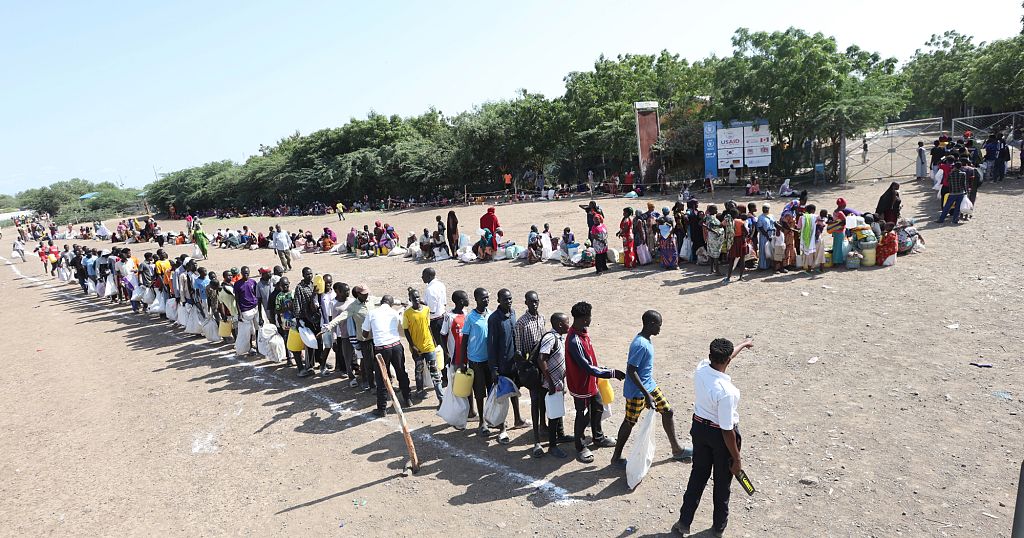
Hopes of safety for refugees approved for relocation to Germany were abruptly dashed earlier this year when the country’s new government suspended a United Nations resettlement program, stranding asylum seekers at the final stages of their journeys. Among them was Chaste Zamukunda, a Congolese mother who fled conflict in the Democratic Republic of Congo and had spent years in a Kenyan displacement camp. In April 2025, after receiving official approval to travel under the UN initiative, she and her son prepared to board a flight to Germany—only to have their plans revoked hours before departure. “We thought we were finally safe,” Zamukunda said, recalling the whiplash of emotions. After being transferred to temporary housing in Nairobi, where they received meals and shelter, the abrupt reversal left her family distraught. “We ate well, slept well—then came the news: Germany rejected us. We’re not going.” Germany’s sudden policy shift followed the February election victory of Chancellor Friedrich Merz’s center-right coalition, which campaigned on promises to reduce immigration. By April, the government halted admissions through the UN Refugee Agency’s (UNHCR) program, which relocates vulnerable refugees from third countries. According to UNHCR, 183 individuals—including families from conflict zones like South Sudan, Afghanistan, and the DRC—were returned to refugee camps that month. Dennis Kumer, a South Sudanese pastor, described the collapse of his family’s two-year resettlement process as devastating. After undergoing medical evaluations and interviews, the cancellation left them reeling. “No one could eat. Everyone fell sick from the stress,” he said. The decision has spurred legal challenges. Immigration attorney Matthias Lehnert, representing over 50 affected families and individuals, argued that Germany’s move disregards both humanitarian needs and legal obligations. “These people received binding approvals, yet the government is ignoring their cases and the law,” he said. Germany’s Interior Ministry confirmed 4,711 refugees have arrived via the program since 2024—well below its pledge to the European Commission to accept 13,000 refugees across 2024 and 2025. Critics argue the suspension undermines international commitments, while supporters cite rising domestic pressure to limit migration. For now, those like Zamukunda and Kumer face an uncertain future, their hopes of stability replaced by renewed uncertainty. As legal proceedings unfold, the case highlights tensions between national policy shifts and the global mechanisms designed to protect those fleeing crisis.
Metro News Africa
2 min read
Germany Halts UN Refugee Program, Leaving Hundreds in Limbo
Hopes of safety for refugees approved for relocation to Germany were abruptly dashed earlier this year when the country’s new […]
More stories like this
Metro News Africa
The Flat Screen Revolution: How We Learned to See the World in Pixels

Metro News Africa
Beyond the Double Helix: How Functional Genomics Is Rewriting the Blueprint of Life

Metro News Africa
Reno Omokri Wishes NDC Presidential Candidate a Happy Birthday

Metro News Africa
Comments are closed for this story.