
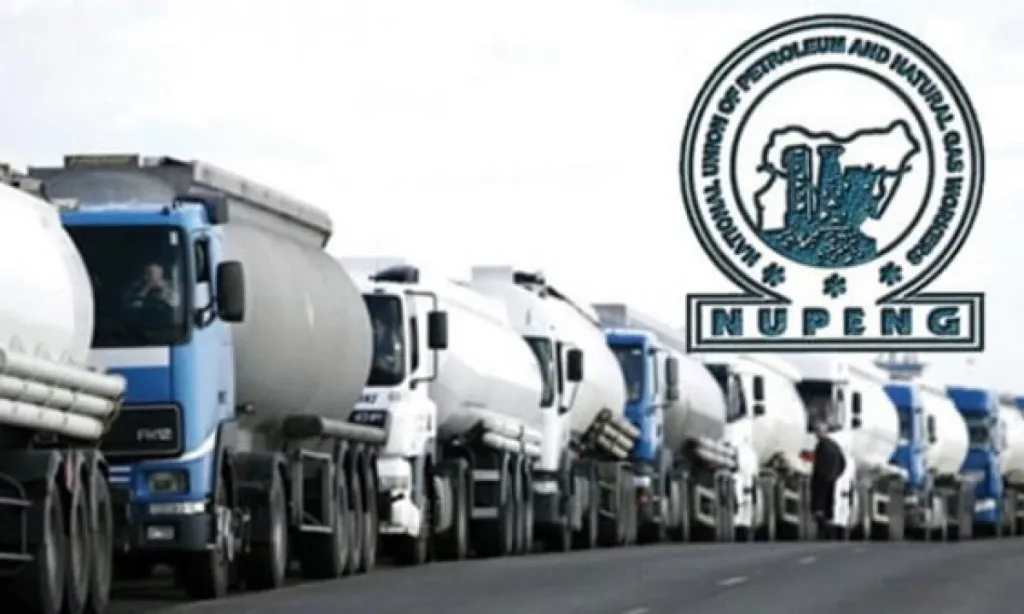
A citizens‑led group, Mass Action Against Economic Saboteurs, has warned the Nigeria Union of Petroleum and Natural Gas Workers (NUPENG) against proceeding with a threatened nationwide strike. The strike is intended to protest Dangote Petroleum Refinery’s plan to deploy 4,000 compressed natural gas‑powered trucks for fuel distribution, allegedly using drivers who are not union members.
George Priye West, president of the coalition, said the union’s threat to halt fuel loading nationwide is unwarranted and could destabilise the country. He emphasized that union membership is a personal choice, citing the Supreme Court’s affirmation of this fundamental right. West argued that any industrial action on these grounds is not about labour rights but an attempt to inflict suffering on ordinary citizens.
NUPENG had accused Dangote of anti‑labour practices by recruiting drivers who allegedly renounce union membership. The citizens’ group dismissed these accusations as baseless and part of a campaign to frustrate Nigeria’s most ambitious private‑sector project. The Dangote Refinery, a $20 billion investment, aims to reduce the country’s fuel‑import dependence and create thousands of jobs.
Describing NUPENG’s threat as insensitive given current economic pressures and uncertainty in the oil and gas sector, the group urged the federal government and security agencies to take firm measures to prevent any industrial action that could disrupt petroleum product supply nationwide, labeling such action as economic sabotage. While not opposed to unionism, the group stressed the importance of workers’ freedom to choose their associations.
The coalition called on Nigerians to remain calm and resolute, ignoring threats of scarcity and continuing daily activities without fear. They argued that the refinery represents Nigeria’s best chance to break free from decades of fuel‑import dependence and should be defended as a national asset. The situation highlights the tension between labour rights and economic development in Nigeria, underscoring the need for the government and stakeholders to balance workers’ needs with economic growth and stability. The outcome will have significant implications for the country’s energy sector and overall economic prospects.

![Troops, terrorists exchange gunfire in Kogi [VIDEO]](https://mediatalkafrica.com/wp-content/uploads/2026/01/Terrorists-Exchange-Gunfire-With-Nigerian-Troops-In-Kogi-State-768x576.jpeg)

Comments are closed for this story.