
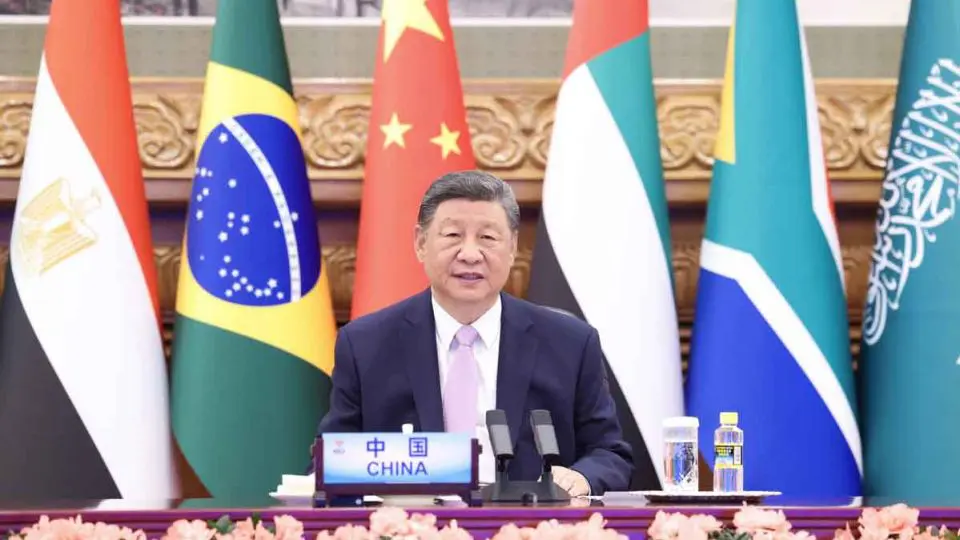
Chinese President Xi Jinping condemned the rise of protectionism and unilateralism, warning that trade and tariff wars are severely disrupting the global economy. Speaking at the virtual BRICS Summit on Monday, Xi stressed the need for countries to uphold the multilateral trading system and promote international cooperation. His comments come amid a significant increase in international trade tariffs, which some attribute to the new tax regime imposed by the United States earlier this year. Although Xi did not name any specific countries, his message was clear: protectionism and trade wars undermine international trade rules and hinder global economic growth.
The virtual BRICS Summit was convened to discuss pressing issues of common interest, especially as the world undergoes a “transformation unseen in a century.” Xi encouraged the BRICS nations—representing nearly half of the world’s population and one‑fifth of global trade—to defend the multilateral trading system and advance greater cooperation to promote international fairness, peace, and development. He emphasized that economic globalization is an irreversible trend and that countries cannot thrive without an open, cooperative international environment. Xi urged the BRICS member states to strongly uphold the World Trade Organization’s multilateral trading system and oppose all forms of protectionism.
Xi also expressed China’s readiness to work with fellow BRICS countries to implement the Global Development Initiative and advance high‑quality Belt and Road cooperation, a move seen as strengthening synergy for common development among the bloc. The summit was initiated by Brazilian President Luiz Inácio Lula da Silva; while Russian President Vladimir Putin’s speech was not released to the press, the meeting highlighted the growing importance of the BRICS alliance in promoting global economic cooperation and development. As the world navigates an increasingly complex and interconnected economic landscape, the BRICS nations are poised to play a significant role in shaping the future of international trade and cooperation.



Comments are closed for this story.