
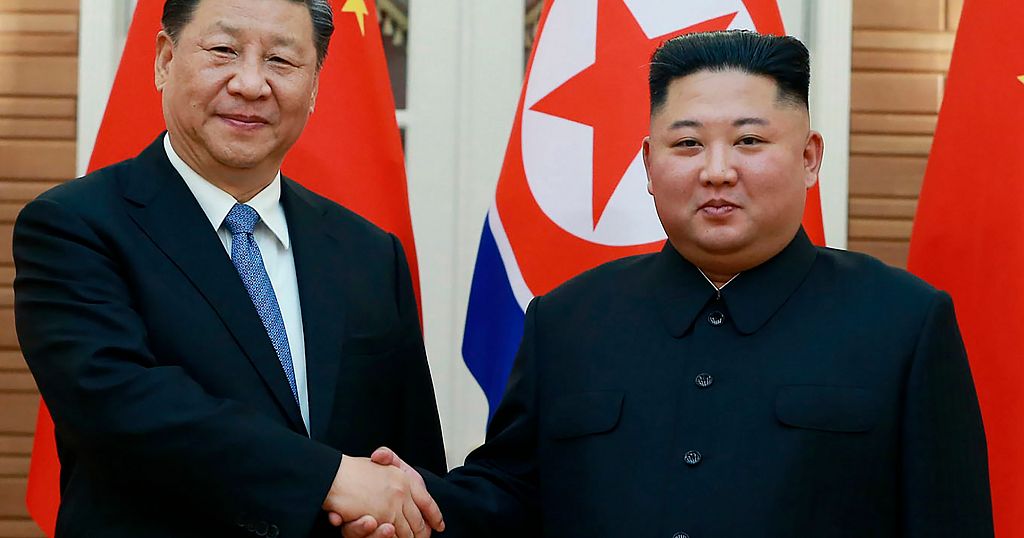
Chinese President Xi Jinping and North Korean leader Kim Jong Un reaffirmed their commitment to mutual support and cooperation during a meeting in Beijing. The talks followed a ceremony commemorating the 80th anniversary of the end of World War II, which Kim attended alongside other foreign leaders, including Russian President Vladimir Putin.
The meeting between Xi and Kim was held at the Great Hall of the People, with top officials from both countries present. Xi emphasized the “traditional friendship” between China and North Korea and pledged to consolidate and boost relations. According to Chinese state broadcaster CCTV, Xi said this stance would not change regardless of how the international situation evolves.
The two leaders discussed ways to increase high‑level visits and contacts, strengthen strategic cooperation, and protect shared interests in international and regional affairs. North Korea’s official Korean Central News Agency reported that Kim departed Beijing by his private train on Thursday evening after the meeting.
China has long been North Korea’s largest trading partner and aid provider, although the strength of their bilateral relationship has been subject to scrutiny. Kim’s visit to China—his first in six years—sparked interest, especially because he was accompanied by his young daughter, leading to speculation that she may be groomed as the country’s next leader.
On Wednesday, Kim joined 26 foreign leaders at a Chinese military parade marking the 80th anniversary of the end of World II. This was a significant appearance, as it was the first time he had participated in an event with a large group of world leaders since taking office in 2011.
The meeting between Xi and Kim reinforces the close ties between China and North Korea, with both countries seeking to strengthen cooperation on key issues. As the international situation continues to evolve, their relationship is likely to remain a significant factor in regional and global affairs. With Kim’s rare visit abroad now concluded, attention will turn to the next steps in their bilateral relationship and its impact on the broader geopolitical landscape.



Comments are closed for this story.