
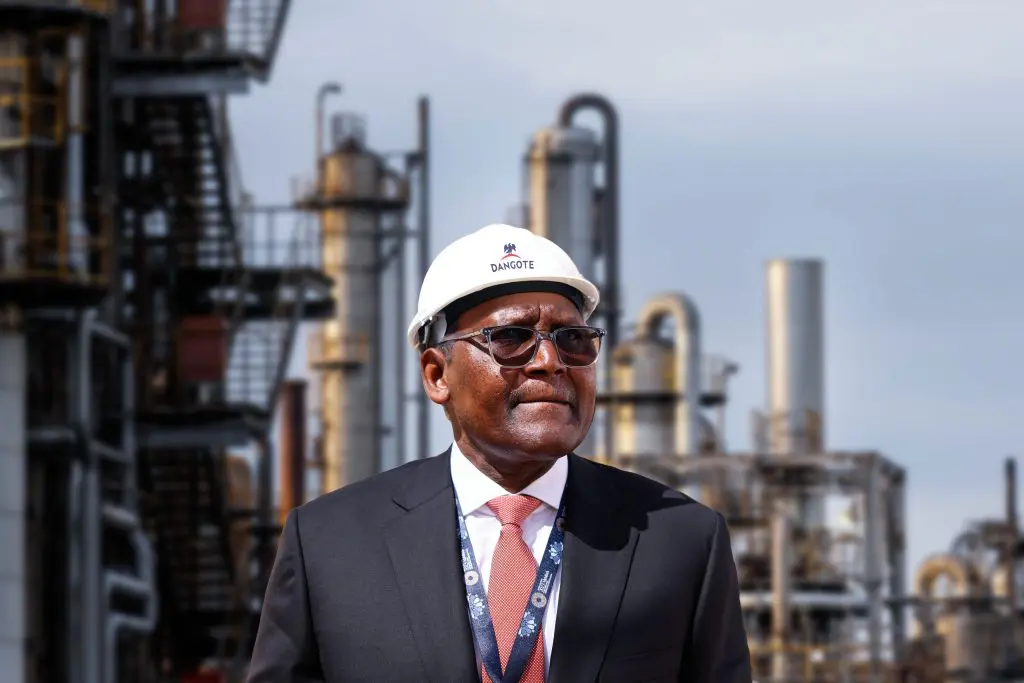
Aliko Dangote, chairman of the Dangote Group, disclosed that the fear of being labelled a monopoly stopped him from acquiring Mobil, Africa Petroleum and Oando’s petroleum‑products distribution companies. He made the remarks at a recent media briefing, which came amid the group’s ongoing dispute with the Nigerian Union of Petroleum and Natural Gas Workers (NUPENG).
Initially, Dangote intended for his company to focus solely on petroleum‑products production, with no plans to enter the retail market. However, while building his 650,000‑barrel‑per‑day refinery, opportunities emerged to purchase Mobil, AP and Oando. Dangote said the acquisition cost would have been relatively low—estimated at less than N500 million—and that, had he anticipated the present circumstances, he might have bought the firms to expand his operations. His primary concern, he explained, was avoiding the perception of monopolising the industry; instead, he chose to concentrate on production and allow other companies to become his customers.
Despite this restraint, Dangote now says he is ready to confront competitors in the downstream oil sector, noting that he has been prepared for such challenges throughout his career. The Dangote Group and NUPENG have clashed over unionisation issues, with the union accusing the refinery of anti‑labour practices linked to its fuel‑distribution scheme. Dangote has consistently denied any wrongdoing.
On Monday, the Dangote Refinery launched its nationwide fuel‑distribution scheme, despite opposition from key industry stakeholders. This launch marks a significant development in Nigeria’s oil sector. As the company navigates its disputes with NUPENG and other players, the outcome will likely have far‑reaching consequences for the industry and its stakeholders, especially as Dangote’s refinery is poised to become a major force in the country’s oil market.


Comments are closed for this story.