
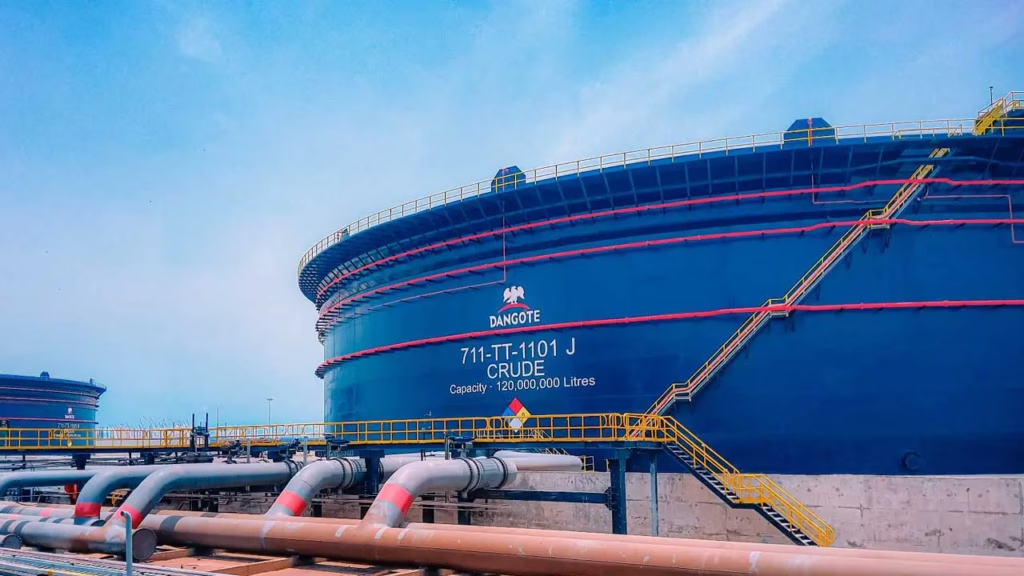
A dispute has emerged between Dangote Refinery and the Petroleum Products Marketers of Nigeria (DAPPMAN) over fuel‑subsidy claims amounting to N1.5 trillion. The $20 billion refinery, which can process 650,000 barrels per day, accuses DAPPMAN of seeking subsidies to match its gantry price of N820 per litre. Dangote Refinery says it will not raise its gantry price or pay a subsidy of more than N1.5 trillion, arguing that such practices have historically defrauded the federal government. Instead, the refinery has invited DAPPMAN and other marketers to lift products directly from its gantry, emphasizing its logistics‑free initiative.
Dangote also alleges that DAPPMAN is involved in smuggling and diverting petroleum products to neighboring countries. The refinery reported that between June and September 2025 it exported 3,229,881 metric tonnes of PMS, AGO and aviation fuel, while marketers imported 3,687,828 metric tonnes in the same period.
DAPPMAN has denied all of Dangote’s allegations and threatened legal action. It gave the refinery a seven‑day ultimatum to retract its statements and demanded proof of the claims. The marketers’ association further accused Dangote of offering a $40/MT discount to foreign traders while denying Nigerian marketers access to coastal vessel loading and restricting them to gantry‑only lifting. DAPPMAN challenged the refinery to present verifiable evidence of product diversion, noting that smuggling is a national‑security issue. It urged the relevant agencies to act against any complicit member and reserved the right to seek legal redress if the allegations are not withdrawn or substantiated.
In a related development, a court barred the Nigeria Union of Petroleum and Natural Gas Workers from striking against Dangote Refinery over alleged anti‑labour practices. This conflict is not the first between the two parties; the refinery previously sued DAPPMAN and the Nigerian Petroleum Company Limited over importation, a case it dropped in July 2025. The current feud underscores ongoing tensions in Nigeria’s petroleum sector and has significant implications for the country’s fuel‑subsidy regime and the operations of major industry players.


Comments are closed for this story.